
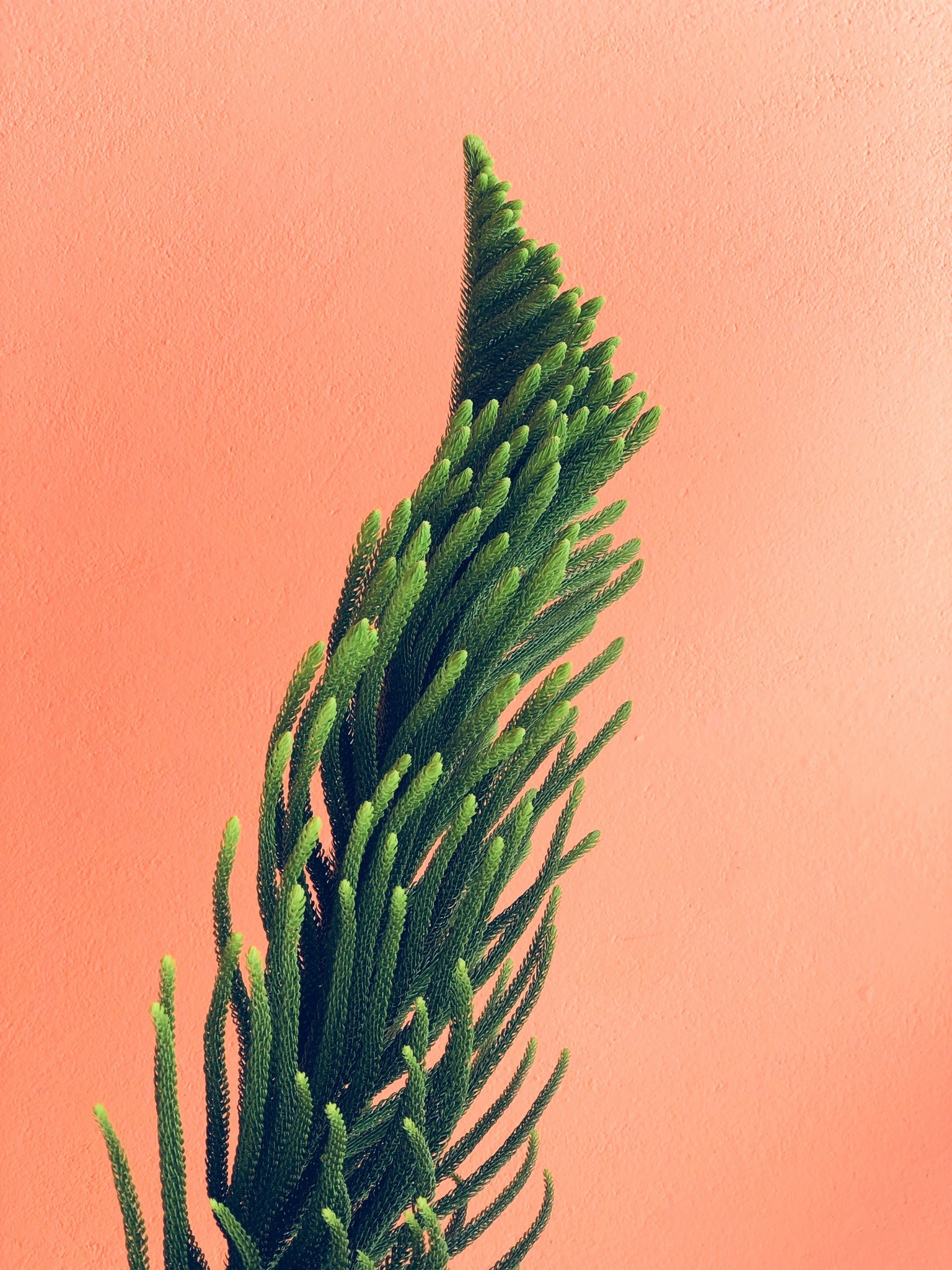
Norfolk Island Pine
Araucaria heterophylla
A coniferous evergreen with a distinctive symmetrical, tiered growth habit. It features bright green, needle-like foliage on arching branches that grow in whorls around a straight central trunk.
- Light
- Full sun to bright, indirect light. Indoors, it needs several hours of bright light daily; outdoors, it thrives in full sun.
- Water
- Water when the top inch of soil feels dry. It prefers consistent moisture but is sensitive to 'wet feet.' Drooping or yellowing needles can indicate over-watering or extreme dryness.
- Growth
- Perennial evergreen tree. In its native habitat, it can reach 100-200 feet tall. As an indoor houseplant, it typically grows slowly to 3-8 feet.
Care instructions
Provide bright indirect light; direct sun can scorch indoor plants. Keep soil consistently moist but never waterlogged. Use a well-draining potting mix and fertilize lightly during the spring and summer growing season. Maintain high humidity if possible.
Growing details
Sunlight
Full sun to bright, indirect light. Indoors, it needs several hours of bright light daily; outdoors, it thrives in full sun.
Watering
Water when the top inch of soil feels dry. It prefers consistent moisture but is sensitive to 'wet feet.' Drooping or yellowing needles can indicate over-watering or extreme dryness.
Soil
Well-draining, porous soil. A mix of peat moss and sand or perlite works well. Prefers slightly acidic pH (5.5 - 6.5).
Hardiness zone
USDA Zones 10-11; not frost-tolerant. Can withstand temperatures down to about 35°F (2°C) for short periods.
Growth habit
Perennial evergreen tree. In its native habitat, it can reach 100-200 feet tall. As an indoor houseplant, it typically grows slowly to 3-8 feet.
Bloom season
Non-flowering; it is a gymnosperm that produces seeds in large, globose cones rather than flowers.
Propagation
Propagated mainly by seeds or terminal stem cuttings. Cuttings from side branches will result in horizontal, asymmetrical growth rather than an upright tree.
Common pests & issues
Common pests include mealybugs and spider mites. Cultural issues include needle drop caused by low humidity, dry soil, or insufficient light.
Similar species
Cook Pine (Araucaria columnaris), which grows more columnar and often has a leaning trunk. Also resembles the Monkey Puzzle Tree (Araucaria araucana), which has much coarser, sharper, triangular leaves.