
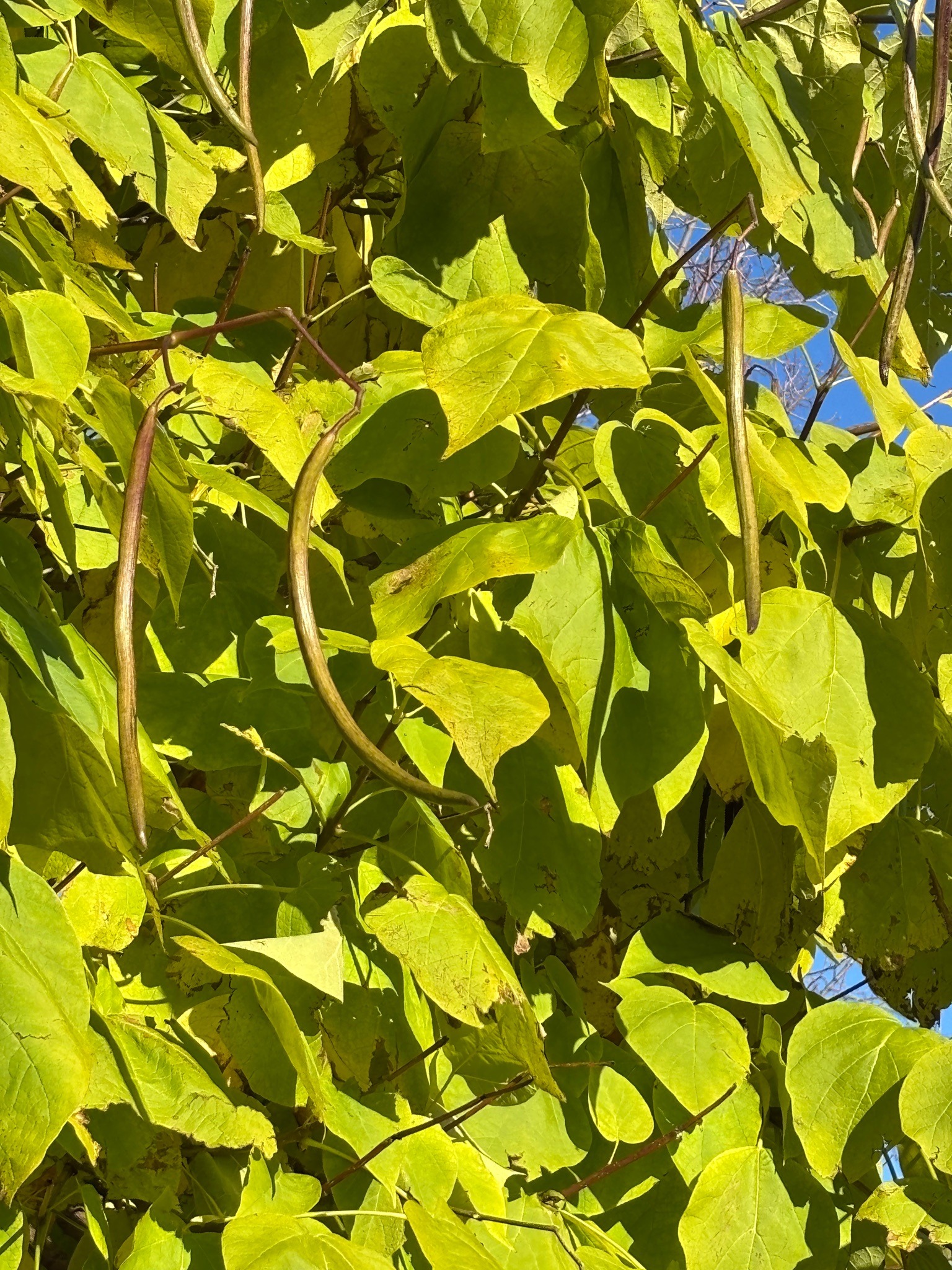
Northern Catalpa
Catalpa speciosa
A medium to large deciduous tree recognized by its very large, heart-shaped leaves, whorled leaf arrangement, showy white flower clusters in early summer, and long, slender bean-like seed pods that persist through winter.
- Light
- Full sun to partial shade, ideally 6 to 8 hours of direct sunlight daily
- Water
- Moderate water needs; drought-tolerant once established, but performs best with regular moisture and watering during dry spells
- Growth
- Deciduous tree with an irregular, rounded, and spreading crown, reaching heights of 40 to 70 feet with a similar spread and a medium to fast growth rate
Care instructions
Provide full sun to partial shade in moist, well-draining soil. Water regularly during establishment and periods of extended drought. Apply a balanced slow-release fertilizer in early spring if growth is slow.
Growing details
Sunlight
Full sun to partial shade, ideally 6 to 8 hours of direct sunlight daily
Watering
Moderate water needs; drought-tolerant once established, but performs best with regular moisture and watering during dry spells
Soil
Adaptable to a wide range of soils including clay, loam, and sand, provided they are well-draining; prefers slightly acidic to neutral pH (6.0 to 7.0)
Hardiness zone
USDA Hardiness Zones 4 through 8
Growth habit
Deciduous tree with an irregular, rounded, and spreading crown, reaching heights of 40 to 70 feet with a similar spread and a medium to fast growth rate
Bloom season
Late spring to early summer, featuring large, showy, bell-shaped white flowers with purple and yellow markings inside
Propagation
Propagated primarily from seeds sown in spring, or via softwood or hardwood cuttings taken during the growing season
Common pests & issues
Generally resilient, but may occasionally experience leaf spot, powdery mildew, verticillium wilt, and damage from catalpa sphinx moth larvae
Similar species
Southern Catalpa (Catalpa bignonioides), which is typically smaller, has smaller leaves with an unpleasant odor when crushed, and shorter seed pods