
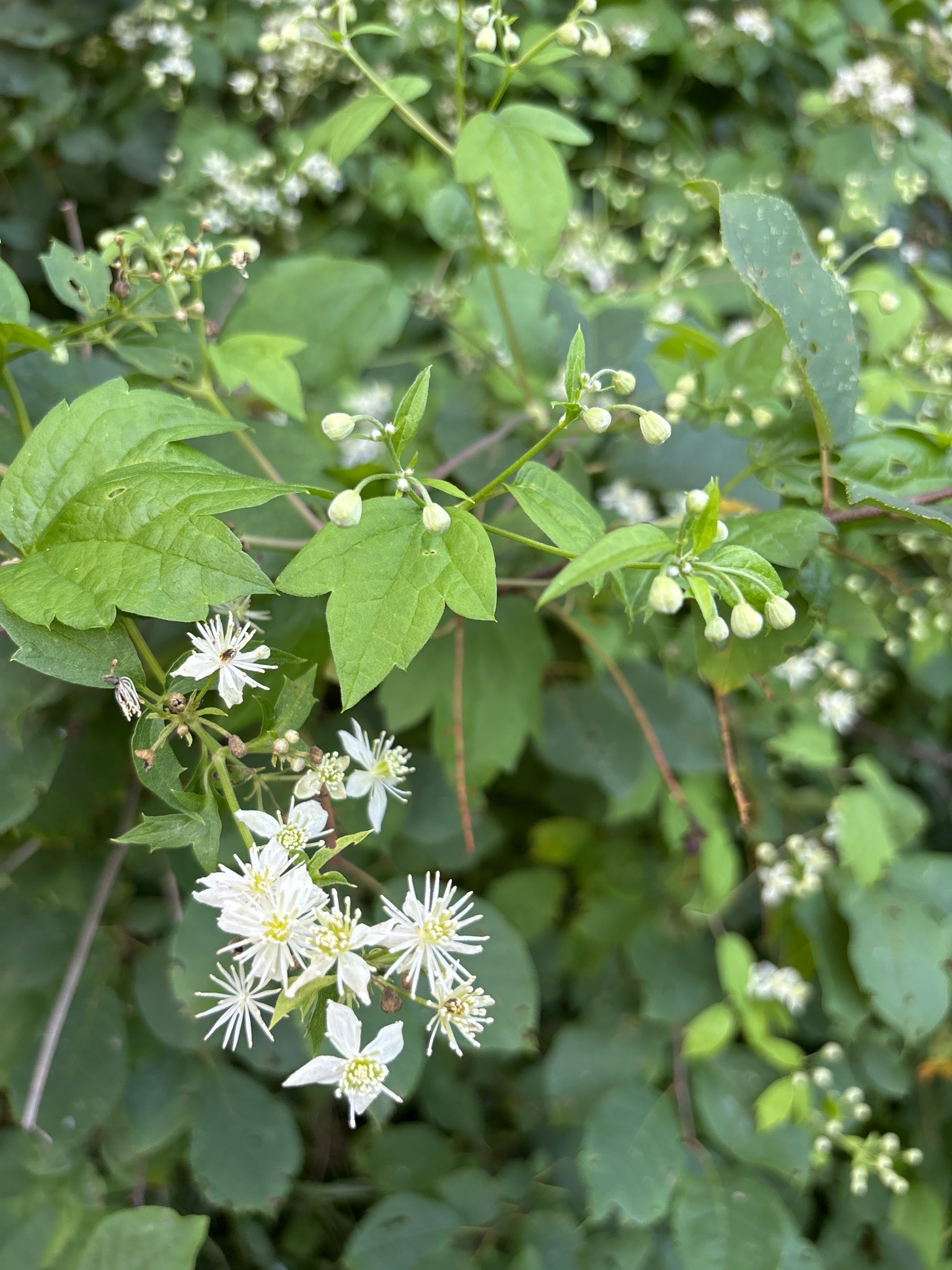
Old Man's Beard
Clematis vitalba
A vigorous deciduous climbing vine with compound leaves, woody stems, and clusters of small, fragrant greenish-white flowers followed by prominent feathery seed heads.
- Light
- Full sun to partial shade, requiring at least 6 hours of direct sunlight daily for optimal flowering.
- Water
- Moderate watering needs. Keep soil evenly moist, allowing the top inch to dry out between waterings. Drought tolerant once deeply established.
- Growth
- A perennial deciduous woody vine that climbs using twisting petioles, reaching mature heights of 10 to 30 feet or more with a rapid growth rate.
Care instructions
Provide full sun to partial shade with consistently moist, well-draining soil rich in organic matter. Water regularly during establishment and prune lightly in late winter or early spring to manage growth.
Growing details
Sunlight
Full sun to partial shade, requiring at least 6 hours of direct sunlight daily for optimal flowering.
Watering
Moderate watering needs. Keep soil evenly moist, allowing the top inch to dry out between waterings. Drought tolerant once deeply established.
Soil
Prefers fertile, loamy or chalky soils with excellent drainage and a neutral to slightly alkaline pH range between 6.5 and 7.5.
Hardiness zone
USDA Hardiness Zones 4 to 9
Growth habit
A perennial deciduous woody vine that climbs using twisting petioles, reaching mature heights of 10 to 30 feet or more with a rapid growth rate.
Bloom season
Blooms from mid-summer to early autumn, producing small, star-shaped white or greenish-white flowers with numerous stamens, followed by silky, feather-like seed tails.
Propagation
Propagated easily through semi-hardwood cuttings in summer or from seeds sown in autumn in cold frames.
Common pests & issues
Generally resilient, but can be affected by powdery mildew, stem rot, and aphids. Ensure good air circulation and avoid over-saturation at the root zone.
Similar species
Other wild clematis species such as Clematis flammula, distinguished primarily by leaflet shape, flower size, and regional distribution.