
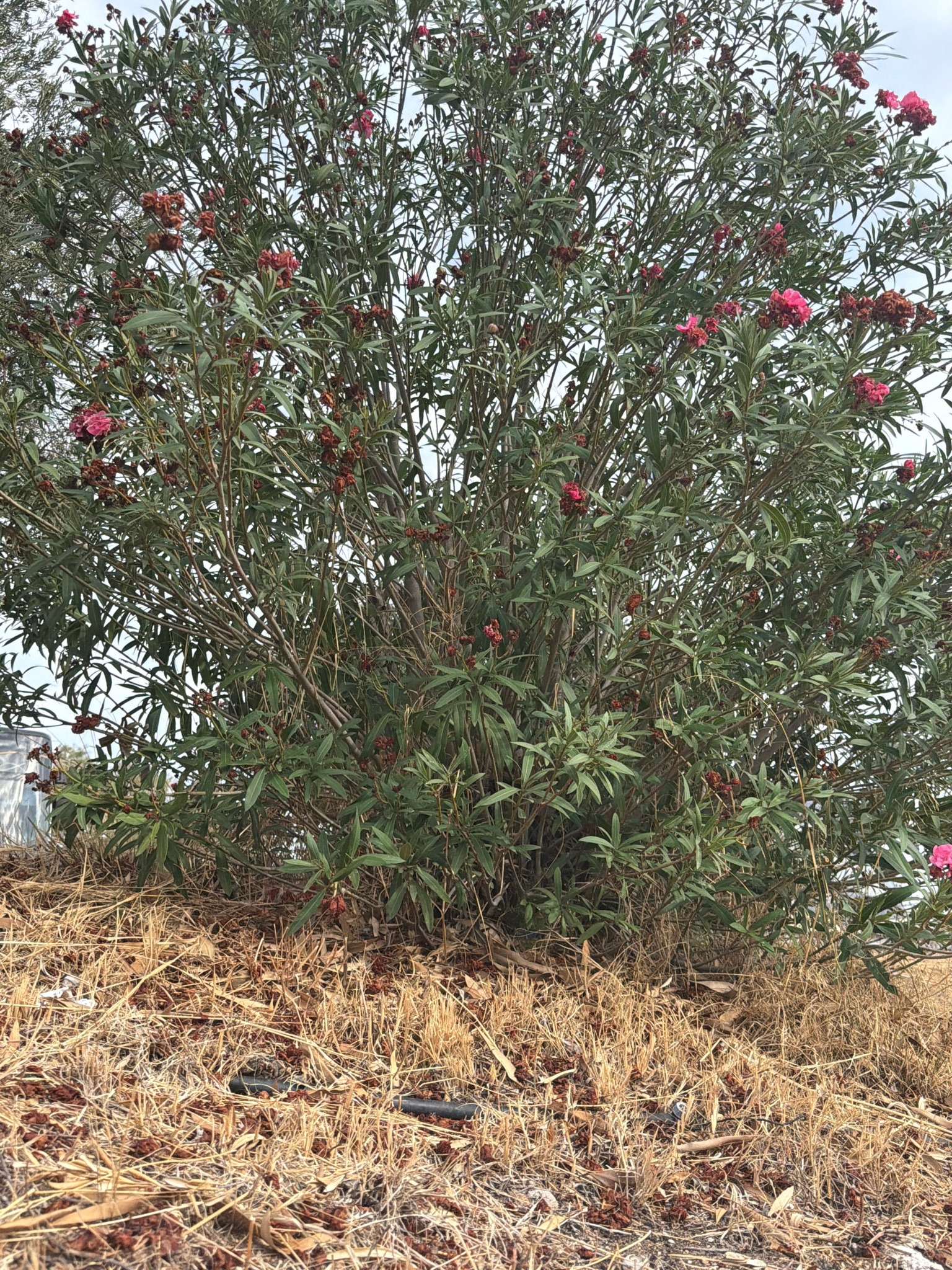
Oleander
Nerium oleander
A large, upright, evergreen shrub or small tree with dense foliage consisting of narrow, leathery, dark green leaves and clusters of showy flowers ranging in color from pink to red, white, and yellow.
- Light
- Full sun, requiring at least six to eight hours of direct sunlight daily
- Water
- Moderate watering when young; highly drought-tolerant once established. Allow the top few inches of soil to dry out completely before watering again. Avoid waterlogging.
- Growth
- Large evergreen shrub with a multi-stemmed, rounded, and upright growth habit. Typically matures to a height and spread of 6 to 20 feet with a moderate to fast growth rate.
Care instructions
Provide full sun and well-draining soil. Water deeply when establishing, then allow the soil to dry out between waterings as established plants have good drought tolerance. Feed with a balanced, slow-release fertilizer in early spring to promote vigorous growth and flowering.
Growing details
Sunlight
Full sun, requiring at least six to eight hours of direct sunlight daily
Watering
Moderate watering when young; highly drought-tolerant once established. Allow the top few inches of soil to dry out completely before watering again. Avoid waterlogging.
Soil
Adaptable to a wide range of soil types including clay, loam, or sand, provided it has excellent drainage. Prefers a neutral to slightly alkaline pH range between 6.5 and 7.5.
Hardiness zone
USDA zones 8 through 10, with some cultivars capable of tolerating brief dips into the upper single digits if well-established.
Growth habit
Large evergreen shrub with a multi-stemmed, rounded, and upright growth habit. Typically matures to a height and spread of 6 to 20 feet with a moderate to fast growth rate.
Bloom season
Blooms continuously from late spring through summer, producing terminal clusters of trumpet-shaped flowers in shades of pink, red, white, or salmon.
Propagation
Easily propagated through herbaceous stem cuttings taken in spring or summer, or semi-ripe wood cuttings in late summer. Cuttings root readily in water or directly in a moist, sandy potting medium.
Common pests & issues
Generally resilient, but can occasionally be affected by aphids, scale insects, and mealybugs. Fungal leaf spot can occur in excessively humid or wet conditions. Ensure good air circulation and avoid overhead watering to prevent fungal issues.
Similar species
Can be superficially confused with other Mediterranean shrubs like olive trees (Olea europaea) due to narrow leaf shape, but distinguished immediately by the showy trumpet-shaped flowers, milky sap, and arrangement of leaves in whorls of three.