
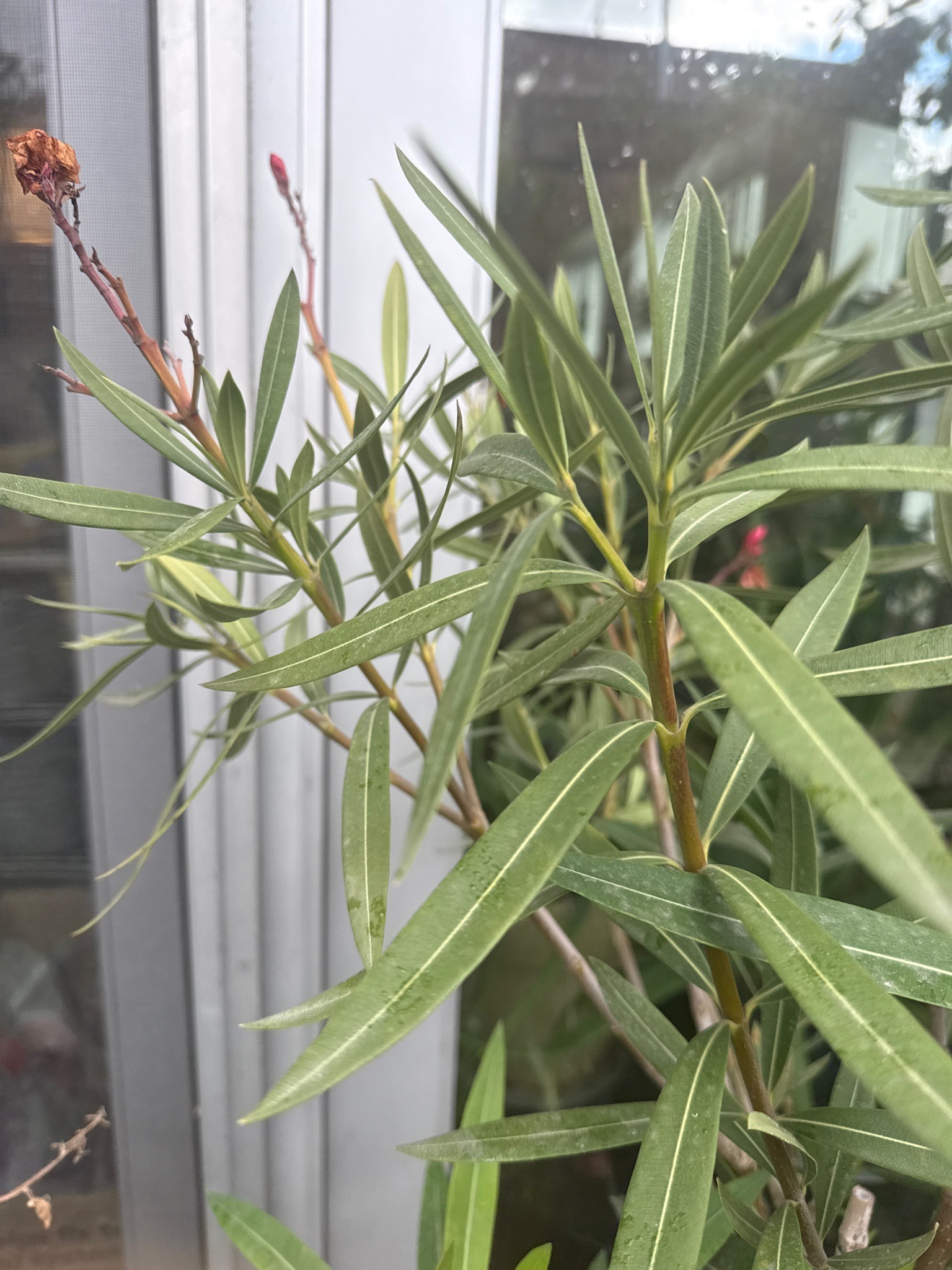
Oleander
Nerium oleander
An evergreen shrub or small tree with leathery, narrow, dark green leaves arranged in whorls of three, and clusters of showy flowers.
- Light
- Full sun, requiring at least 6 hours of direct sunlight daily for optimal flowering.
- Water
- Moderate drought tolerance once established. Water deeply when the top few inches of soil are dry. Avoid waterlogging.
- Growth
- An upright, multi-stemmed evergreen shrub with a dense, rounded canopy, typically growing 6 to 20 feet tall and 6 to 10 feet wide with a fast growth rate.
Care instructions
Grow in full sun with well-draining soil. Water deeply when established, but allow the soil to dry out between waterings. Fertilize in spring with a balanced, slow-release fertilizer to encourage robust growth and flowering.
Growing details
Sunlight
Full sun, requiring at least 6 hours of direct sunlight daily for optimal flowering.
Watering
Moderate drought tolerance once established. Water deeply when the top few inches of soil are dry. Avoid waterlogging.
Soil
Adaptable to a wide range of soil types including clay, loam, or sand, provided it has excellent drainage. Prefers a neutral to slightly alkaline pH between 6.5 and 7.5.
Hardiness zone
USDA zones 8 through 10; requires protection or indoor overwintering in colder climates.
Growth habit
An upright, multi-stemmed evergreen shrub with a dense, rounded canopy, typically growing 6 to 20 feet tall and 6 to 10 feet wide with a fast growth rate.
Bloom season
Blooms from late spring through late summer with clusters of single or double flowers in shades of pink, red, white, or yellow, featuring a subtle sweet fragrance.
Propagation
Easily propagated via stem cuttings taken in spring or summer, rooting readily in water or moist potting mix.
Common pests & issues
Generally resilient, but can occasionally be affected by aphids, scale insects, and mealybugs. Overwatering can lead to root rot.
Similar species
Cascabela thevetia (Yellow Oleander), which features similar narrow foliage but has distinct bright yellow, funnel-shaped flowers and differently structured fruit.