
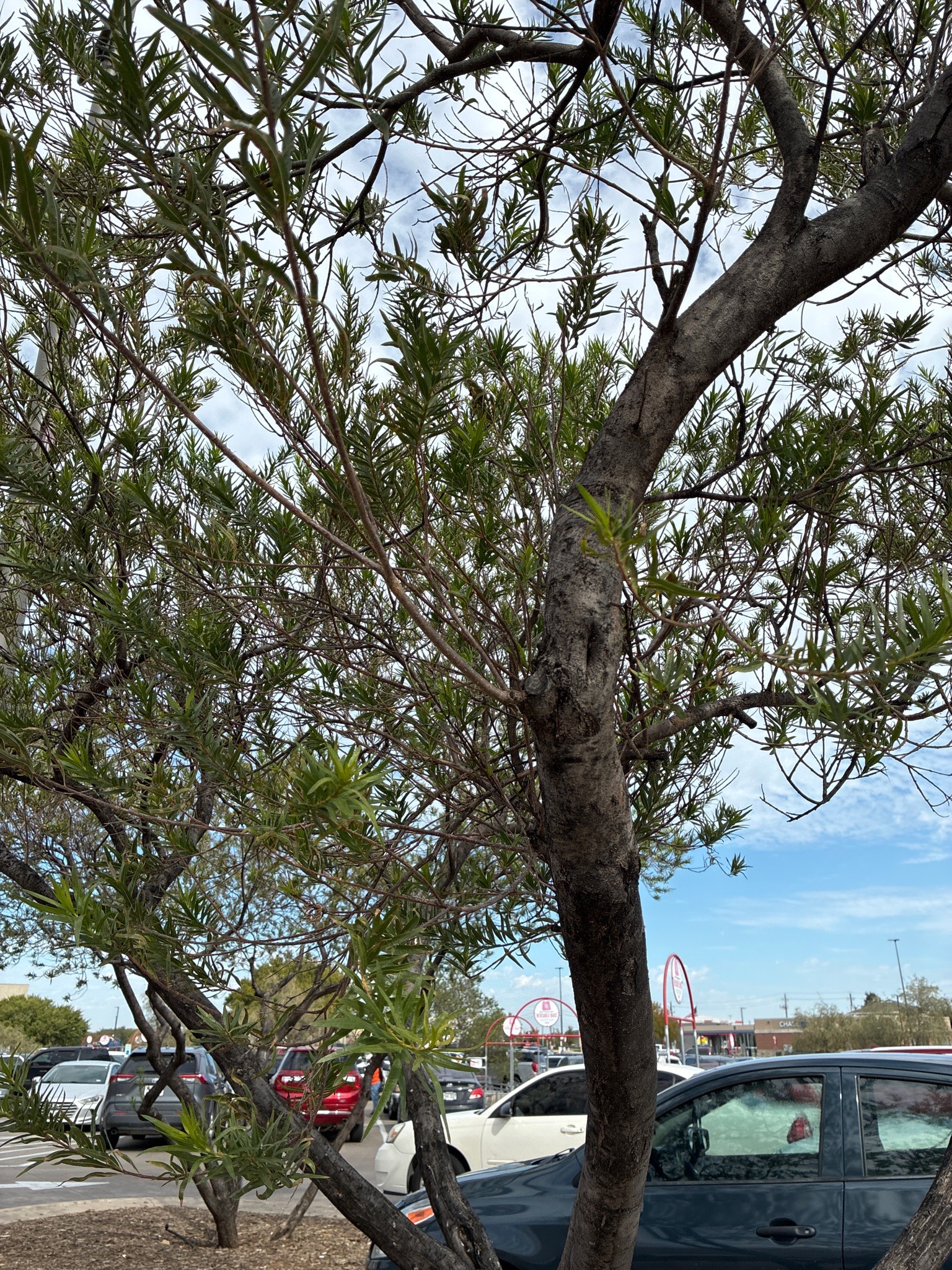
Oleander
Nerium oleander
An evergreen shrub or small tree with dense, upright branches, narrow linear-lanceolate dark green leathery leaves, and showy clusters of funnel-shaped flowers.
- Light
- Full sun, requiring at least 6 hours of direct sunlight per day.
- Water
- Water deeply when the soil is dry to the touch. Once established, it is notably drought-tolerant, though continuous dry spells may reduce flowering.
- Growth
- Perennial evergreen shrub or small tree growing in a multi-stemmed upright form, reaching mature heights and spreads of 6 to 20 feet with a moderate growth rate.
Care instructions
Provide full sun exposure, well-draining soil, and regular watering until established, after which it exhibits good drought tolerance. Feed with a balanced, slow-release fertilizer in early spring.
Growing details
Sunlight
Full sun, requiring at least 6 hours of direct sunlight per day.
Watering
Water deeply when the soil is dry to the touch. Once established, it is notably drought-tolerant, though continuous dry spells may reduce flowering.
Soil
Adaptable to a wide range of well-draining soils including loam, sand, or clay, with a neutral to slightly alkaline pH range between 6.5 and 7.5.
Hardiness zone
USDA Hardiness Zones 8 through 10, sensitive to prolonged freezing temperatures.
Growth habit
Perennial evergreen shrub or small tree growing in a multi-stemmed upright form, reaching mature heights and spreads of 6 to 20 feet with a moderate growth rate.
Bloom season
Blooms from late spring through late summer, producing clusters of pink, red, white, or yellow flowers with a subtle fragrance.
Propagation
Propagated easily through semi-hardwood stem cuttings taken in spring or summer, rooted either in water or moist potting mix.
Common pests & issues
Generally resilient, but can occasionally be affected by aphids, scale insects, and mealybugs, as well as fungal leaf spots during exceptionally humid periods.
Similar species
Can be confused with certain types of Eucalyptus or Olive trees due to similar narrow leaf shapes, but is distinguished by its distinct milky sap, clustered terminal blossoms, and whorled leaf arrangement.