
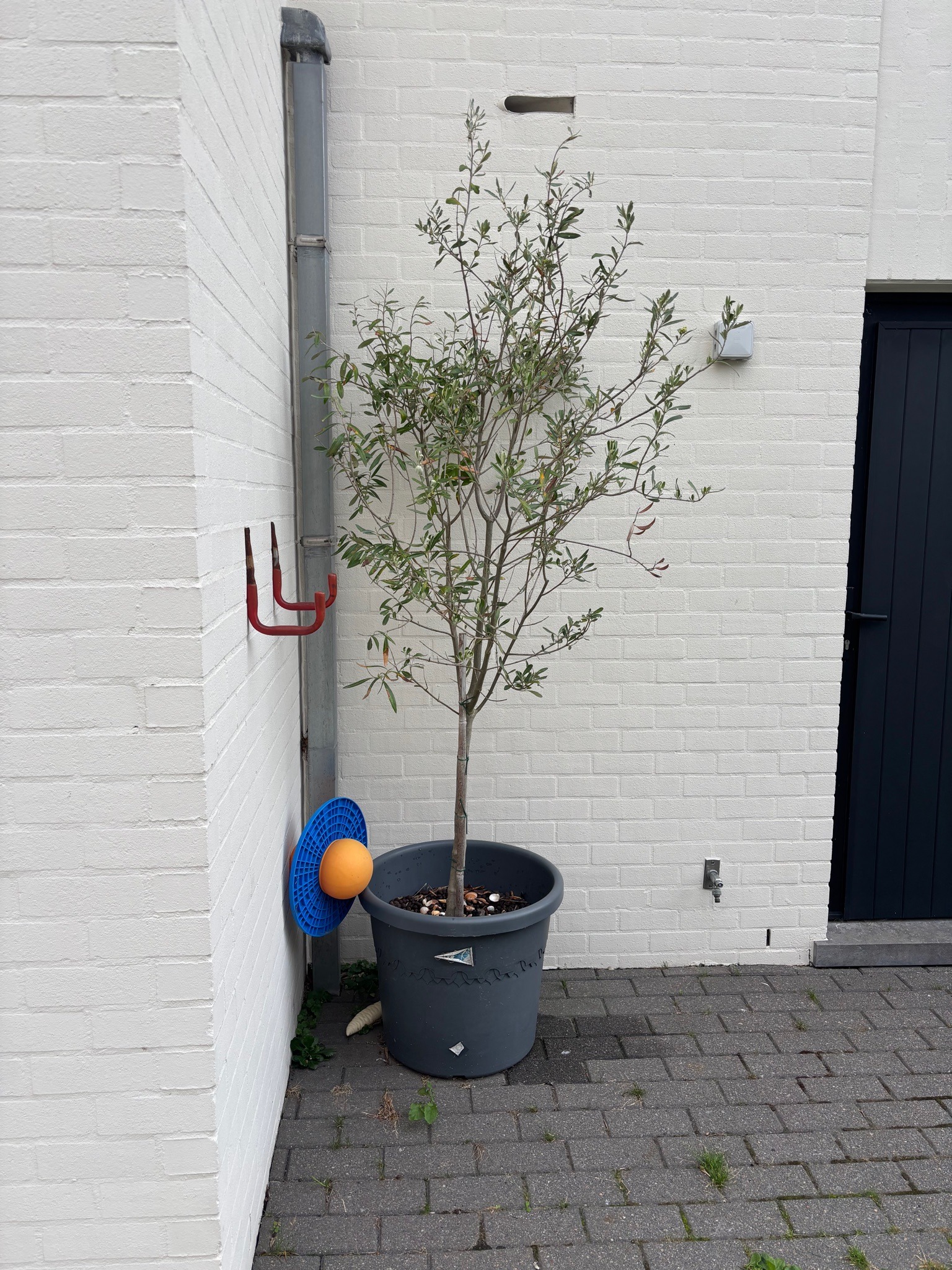
Olive tree
Olea europaea
An evergreen tree featuring a gnarled trunk with grayish-brown bark, narrow lanceolate grayish-green leaves with silvery undersides, and an upright to rounded branching habit.
- Light
- Full sun, requiring a minimum of 6 hours of direct sunlight per day.
- Water
- Drought-tolerant once established. Water thoroughly when the soil is dry to the touch, avoiding waterlogged conditions.
- Growth
- Perennial tree with a slow to moderate growth rate, reaching heights of 20 to 30 feet in landscape cultivation, or maintained smaller in containers.
Care instructions
Provide full sun exposure for at least 6 to 8 hours daily. Water deeply when the top few inches of soil dry out completely, ensuring excellent drainage. Apply a balanced slow-release fertilizer in early spring.
Growing details
Sunlight
Full sun, requiring a minimum of 6 hours of direct sunlight per day.
Watering
Drought-tolerant once established. Water thoroughly when the soil is dry to the touch, avoiding waterlogged conditions.
Soil
Well-draining sandy loam or chalky soil with a neutral to slightly alkaline pH range of 6.5 to 8.5.
Hardiness zone
USDA Hardiness Zones 8 through 11.
Growth habit
Perennial tree with a slow to moderate growth rate, reaching heights of 20 to 30 feet in landscape cultivation, or maintained smaller in containers.
Bloom season
Late spring, producing small, creamy-white, fragrant flowers arranged in short panicles.
Propagation
Propagated primarily through semi-hardwood stem cuttings taken in summer, or via grafting onto rootstocks.
Common pests & issues
Susceptible to scale insects, olive fruit fly, and fungal diseases such as verticillium wilt and peacock spot in overly wet conditions.
Similar species
Pistacia lentiscus and Nerium oleander share similar narrow leaf shapes, but differ significantly in floral structures and bark texture.