
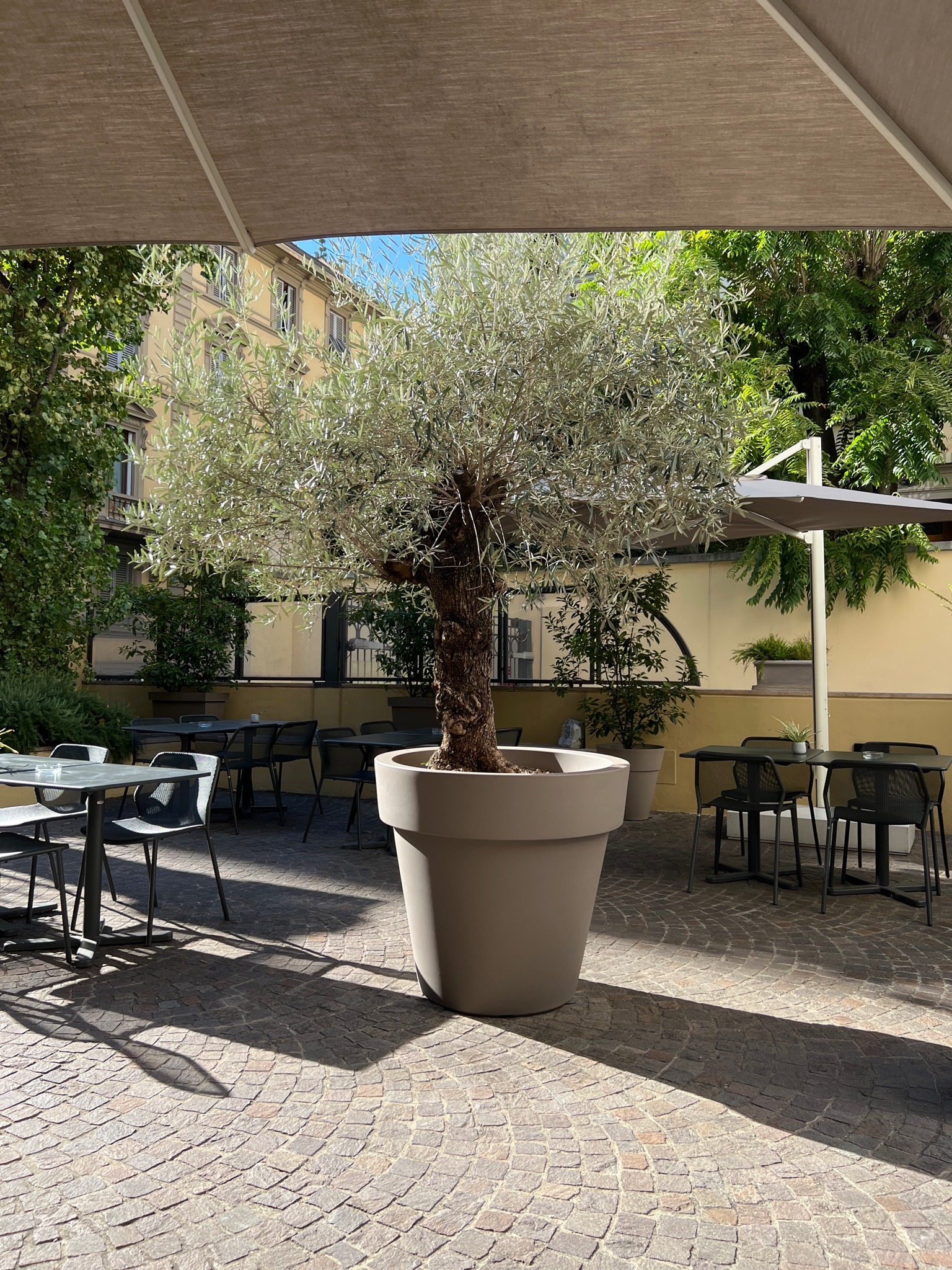
Olive tree
Olea europaea
An evergreen tree featuring a gnarled, twisted trunk with rough gray bark and silvery-green, lance-shaped leaves arranged oppositely.
- Light
- Full sun, requiring at least 6 to 8 hours of direct sunlight daily.
- Water
- Low water requirements once established. Highly drought-tolerant; allow the soil to dry between waterings. Avoid waterlogged conditions to prevent root issues.
- Growth
- Perennial evergreen tree featuring a slow to moderate growth rate, typically reaching mature heights of 20 to 30 feet with an equivalent spread when planted in the ground, though container-grown specimens remain much smaller.
Care instructions
Provide full sun and well-draining soil. Water deeply but infrequently, allowing the soil to dry out completely between watering sessions. Apply a balanced fertilizer in early spring.
Growing details
Sunlight
Full sun, requiring at least 6 to 8 hours of direct sunlight daily.
Watering
Low water requirements once established. Highly drought-tolerant; allow the soil to dry between waterings. Avoid waterlogged conditions to prevent root issues.
Soil
Well-draining sandy or loamy soils with a neutral to slightly alkaline pH range of 6.5 to 8.0.
Hardiness zone
USDA hardiness zones 8 through 11, tolerating mild frosts but requiring protection in severe freezing climates.
Growth habit
Perennial evergreen tree featuring a slow to moderate growth rate, typically reaching mature heights of 20 to 30 feet with an equivalent spread when planted in the ground, though container-grown specimens remain much smaller.
Bloom season
Spring, producing small, creamy-white, fragrant panicle flowers.
Propagation
Propagated through semi-hardwood cuttings taken in summer or by seed, though cuttings are preferred to maintain genetic traits.
Common pests & issues
Susceptible to scale insects, olive fruit fly, and fungal issues like verticillium wilt or leaf spot, typically managed by ensuring proper air circulation and avoiding overwatering.
Similar species
Pistachio (Pistacia vera), which features compound leaves rather than simple opposite leaves, and Willow trees (Salix species), which generally prefer much wetter soil conditions.