
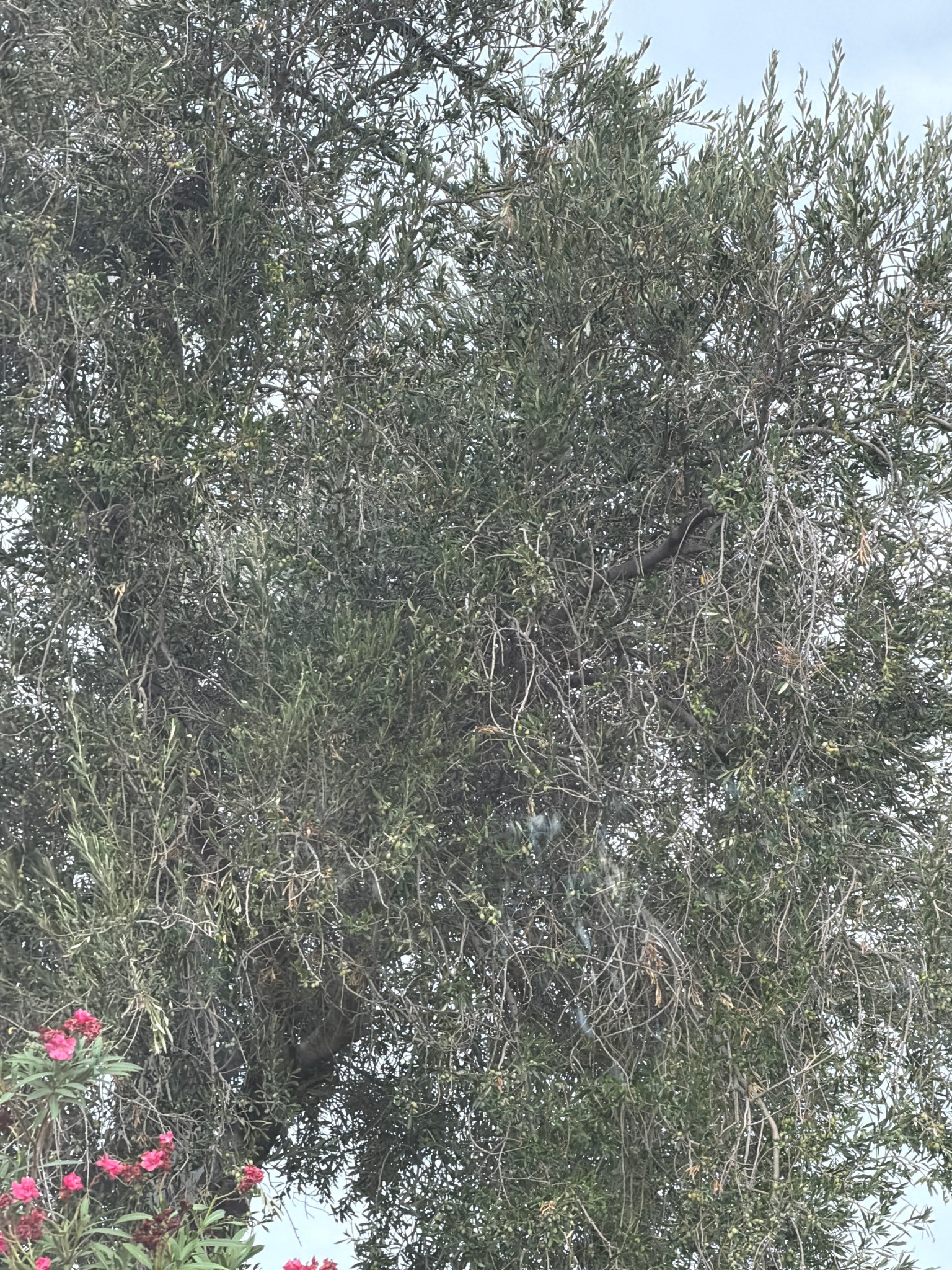
Olive tree
Olea europaea
An evergreen tree featuring a gnarled, twisted trunk with grey-green bark and dense, fine-textured silvery-green lanceolate leaves. Small oval structures develop along the branches.
- Light
- Full sun, requiring at least 6 to 8 hours of direct sunlight daily
- Water
- High drought tolerance once established. Water deeply when young, then reduce frequency significantly for mature trees; avoid standing water.
- Growth
- Perennial tree with a slow to moderate growth rate, typically reaching mature heights of 20 to 30 feet with a similar spread
Care instructions
Provide full sun exposure and well-draining soil. Water deeply but infrequently once established, allowing the soil to dry completely between waterings. Apply a balanced fertilizer in early spring.
Growing details
Sunlight
Full sun, requiring at least 6 to 8 hours of direct sunlight daily
Watering
High drought tolerance once established. Water deeply when young, then reduce frequency significantly for mature trees; avoid standing water.
Soil
Well-draining sandy, loamy, or chalky soils with a neutral to alkaline pH range of 6.5 to 8.5
Hardiness zone
USDA Hardiness Zones 8 through 11
Growth habit
Perennial tree with a slow to moderate growth rate, typically reaching mature heights of 20 to 30 feet with a similar spread
Bloom season
Spring, producing small, creamy-white, fragrant flowers in panicles
Propagation
Propagated primarily through semi-hardwood cuttings taken in summer or by grafting onto rootstocks
Common pests & issues
Prone to scale insects, olive fruit flies, and fungal issues such as verticillium wilt and peacock spot, managed through proper air circulation and copper-based fungicides
Similar species
Oleander (Nerium oleander), which features darker, glossier leaves and lacks the silvery undersides characteristic of olive foliage