
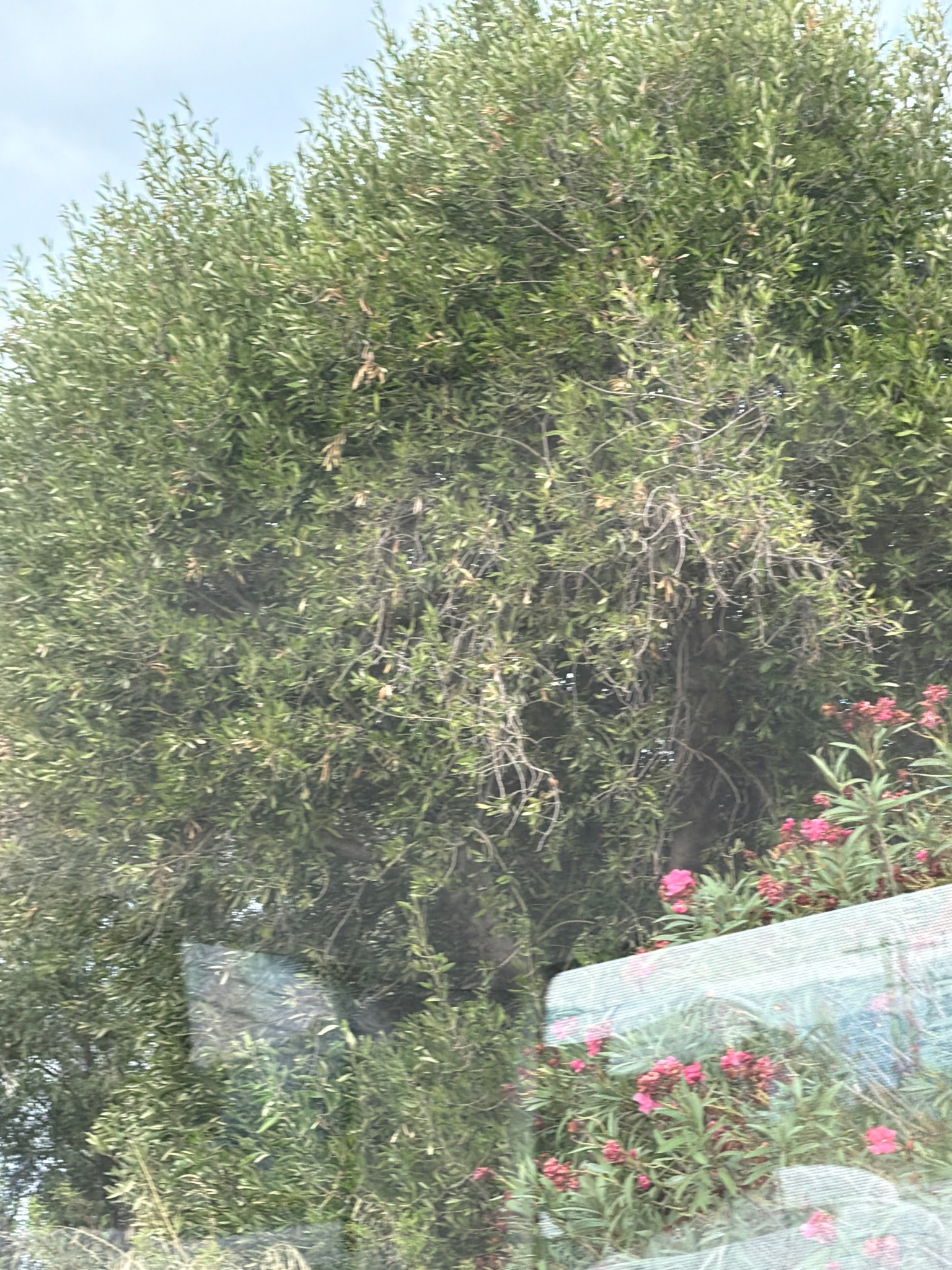
Olive Tree
Olea europaea
An evergreen tree featuring a gnarled trunk, grey-green narrow lanceolate leaves with silvery undersides, and a dense, rounded canopy.
- Light
- Full sun, requiring 6 to 8 hours of direct sunlight per day.
- Water
- Low watering needs once established. Highly drought tolerant. Water deeply every 2 to 3 weeks during hot summer months, and reduce watering significantly in winter. Avoid waterlogged soils to prevent root rot.
- Growth
- Perennial evergreen tree with a slow to moderate growth rate. Reaches a mature height of 20 to 30 feet and a spread of 15 to 25 feet with a twisting trunk and dense canopy.
Care instructions
Provide full sun exposure for at least six hours daily. Water deeply but infrequently, allowing the soil to dry out completely between waterings. Plant in well-draining, sandy or loamy soil with a neutral to slightly alkaline pH. Apply a balanced fertilizer in early spring to support active growth.
Growing details
Sunlight
Full sun, requiring 6 to 8 hours of direct sunlight per day.
Watering
Low watering needs once established. Highly drought tolerant. Water deeply every 2 to 3 weeks during hot summer months, and reduce watering significantly in winter. Avoid waterlogged soils to prevent root rot.
Soil
Prefers well-draining sandy, loamy, or chalky soils with a pH range between 6.5 and 8.5. Excellent drainage is essential.
Hardiness zone
USDA zones 8 through 11. Can tolerate mild frosts down to approximately 10°F (-12°C) when fully dormant, but extreme cold can damage branches.
Growth habit
Perennial evergreen tree with a slow to moderate growth rate. Reaches a mature height of 20 to 30 feet and a spread of 15 to 25 feet with a twisting trunk and dense canopy.
Bloom season
Late spring to early summer. Produces small, creamy-white, four-petaled clustered flowers that are wind-pollinated and feature a subtle fragrance.
Propagation
Propagated primarily through semi-hardwood cuttings taken in late spring or summer, or via grafting onto established rootstocks. Can also be grown from seed, though germination is slow and variable.
Common pests & issues
Susceptible to olive fruit fly, scale insects, and black scale. Common fungal diseases include verticillium wilt, peacock spot, and root rot caused by overwatering or poor drainage. Prevent by ensuring good air circulation, proper spacing, and well-draining soil.
Similar species
Oleander (Nerium oleander) shares a similar lance-shaped leaf silhouette and preference for warm climates, but oleander features distinctly showy, trumpet-shaped pink, red, or white flowers and milky sap, whereas olive tree leaves have a characteristic silvery underside and cream-colored small blossoms.