
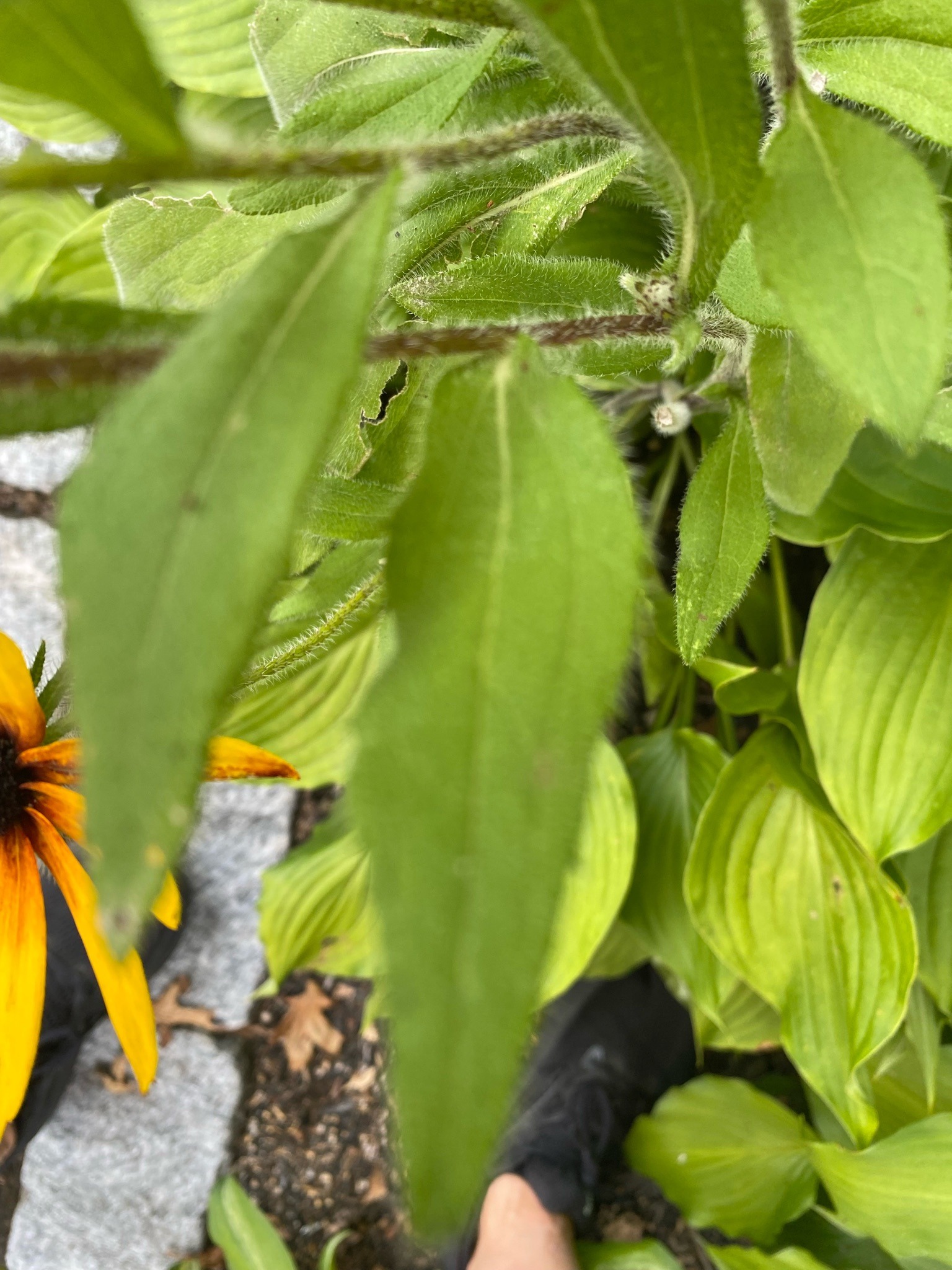
Orange Coneflower
Rudbeckia fulgida
Perennial plant featuring rough, hairy green leaves and stems, with bright daisy-like flowers possessing dark central cones and yellow-orange ray petals.
- Light
- Full sun, requiring at least 6 hours of direct sunlight daily
- Water
- Moderate watering needs; water deeply during dry spells, allowing soil to dry slightly between waterings
- Growth
- Herbaceous perennial forming upright clumps with a height of 2 to 3 feet and a spread of 1.5 to 2 feet, exhibiting a moderate growth rate
Care instructions
Provide full sun exposure, water regularly until established, and plant in well-draining soil with moderate fertility.
Growing details
Sunlight
Full sun, requiring at least 6 hours of direct sunlight daily
Watering
Moderate watering needs; water deeply during dry spells, allowing soil to dry slightly between waterings
Soil
Adaptable to most soil types as long as they are well-draining, preferring a neutral pH range between 6.0 and 7.0
Hardiness zone
USDA Hardiness Zones 3 through 9
Growth habit
Herbaceous perennial forming upright clumps with a height of 2 to 3 feet and a spread of 1.5 to 2 feet, exhibiting a moderate growth rate
Bloom season
Blooms from mid-summer through autumn, producing vibrant yellow to orange ray flowers surrounding a prominent dark brown central cone
Propagation
Propagated easily through division of established clumps in spring or autumn, or grown from seeds sown directly in spring
Common pests & issues
Generally resilient, though susceptible to powdery mildew and leaf spots in humid environments; easily prevented by providing adequate air circulation and avoiding overhead watering
Similar species
Easily confused with other coneflower species like Echinacea purpurea, but distinguished by Rudbeckia's more golden-yellow petals and distinct bristly stem hairs