
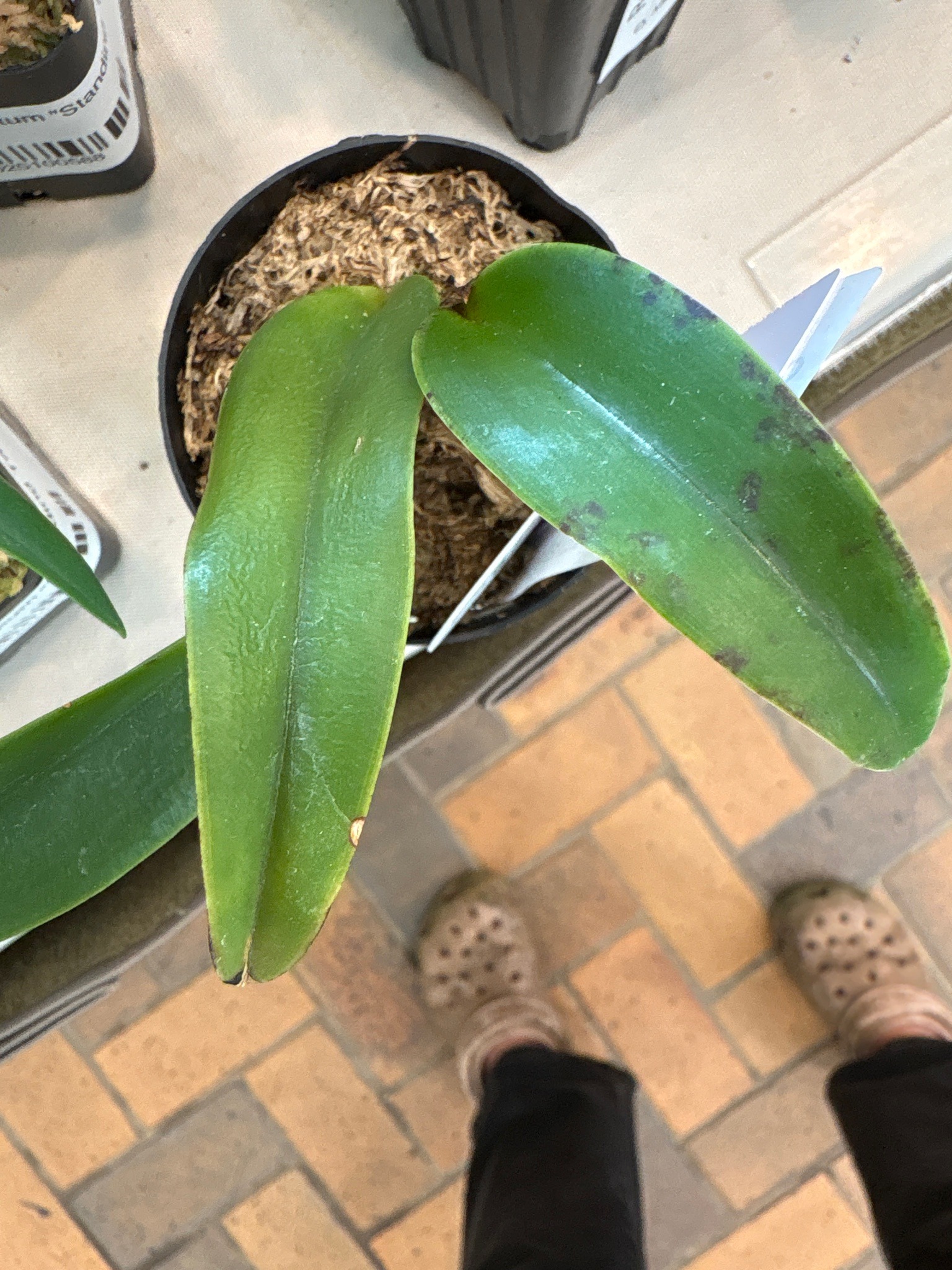
Orchid
Phalaenopsis spp.
Epiphytic plants characterized by thick, fleshy, dark green leaves growing in a single alternating fan pattern, along with thick, silvery-grey aerial roots that absorb moisture from the air.
- Light
- Bright, indirect light, approximately 10 to 12 hours daily; avoid harsh direct sun which can scorch the leaves.
- Water
- Water deeply when the potting mix is dry to the touch and the roots turn silvery-grey. Allow excess water to drain completely. Avoid letting the plant sit in standing water to prevent root rot.
- Growth
- Monopodial epiphyte growing vertically from a single central stem with a slow growth rate, reaching a foliage spread of 8 to 24 inches.
Care instructions
Provide bright, indirect sunlight for 10-14 hours daily. Water thoroughly when the potting medium becomes dry and the roots inside the pot appear silvery rather than plump and green. Use a specialized coarse orchid bark mix that allows rapid drainage, and fertilize lightly with a balanced orchid fertilizer once a month during the active growing season.
Growing details
Sunlight
Bright, indirect light, approximately 10 to 12 hours daily; avoid harsh direct sun which can scorch the leaves.
Watering
Water deeply when the potting mix is dry to the touch and the roots turn silvery-grey. Allow excess water to drain completely. Avoid letting the plant sit in standing water to prevent root rot.
Soil
Coarse, highly porous orchid bark mix or sphagnum moss with exceptional drainage and an acidic to neutral pH range of 5.5 to 6.5.
Hardiness zone
USDA Hardiness Zones 10 through 12; typically grown indoors as a houseplant in cooler temperate regions.
Growth habit
Monopodial epiphyte growing vertically from a single central stem with a slow growth rate, reaching a foliage spread of 8 to 24 inches.
Bloom season
Generally blooms in late winter to spring, producing long arching spikes bearing symmetrical, long-lasting flowers in shades of white, pink, purple, yellow, or patterned.
Propagation
Propagated primarily through tissue culture commercially or via keikis (plantlets that occasionally grow along the flowering stems) once they develop sufficient independent root systems.
Common pests & issues
Susceptible to root rot from overwatering or poorly draining soil. Common pests include mealybugs, scale, and spider mites, which can be treated with targeted horticultural oils or manual removal.
Similar species
Other monopodial orchids such as Vanda species, which differ in having longer, strap-like leaves and extensive dangling root systems typically grown in hanging baskets without media.