
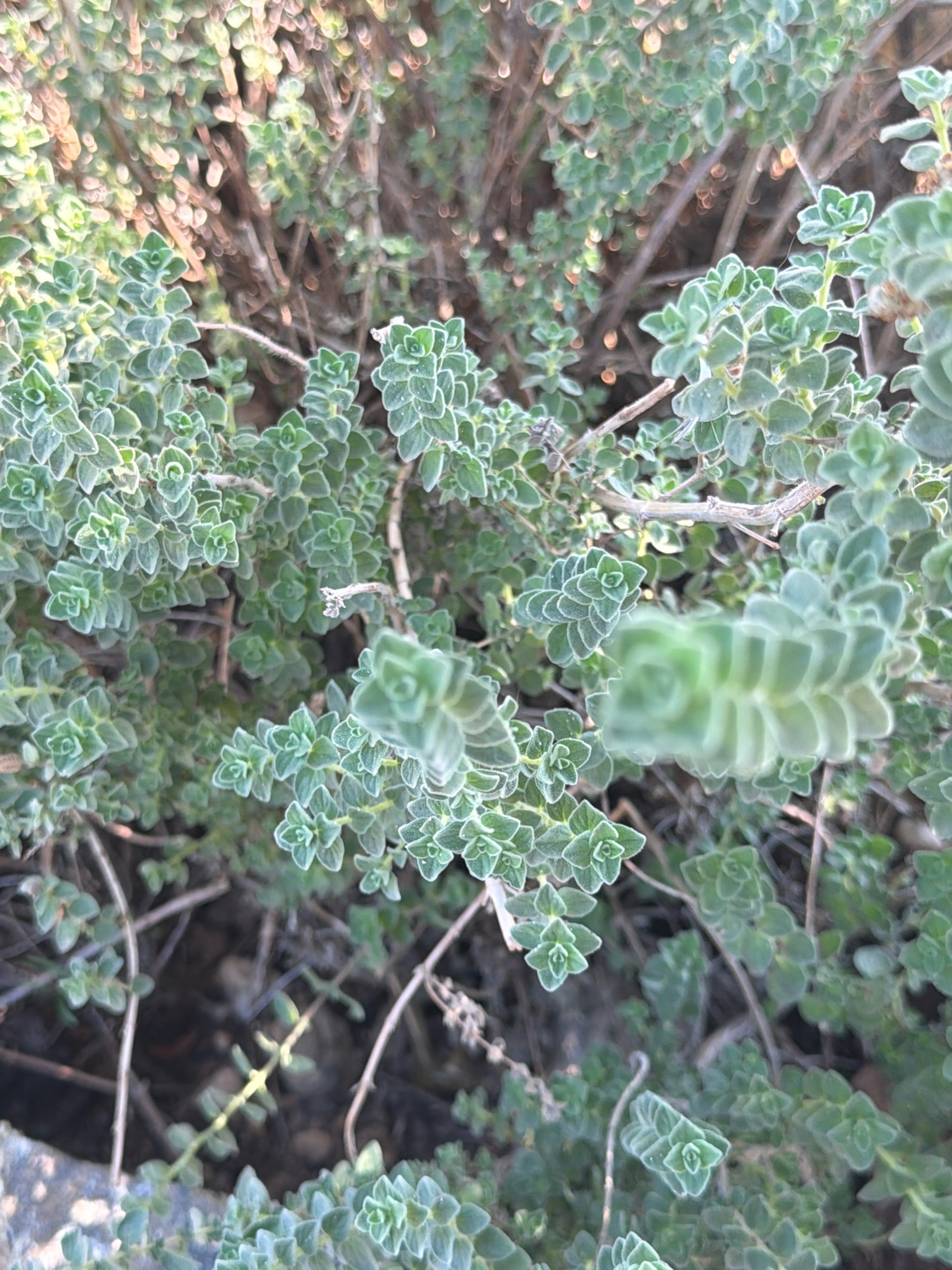
Oregano
Origanum vulgare
A bushy perennial subshrub featuring small, oval, opposite leaves that are slightly hairy, with woody stems at the base and a dense, sprawling growth habit.
- Light
- Full sun, requiring at least 6 to 8 hours of direct sunlight daily
- Water
- Low to moderate water needs. Highly drought-tolerant once established. Allow the soil to dry out completely between watering sessions to prevent root rot.
- Growth
- Deciduous to semi-evergreen perennial subshrub with a mounding and spreading habit, typically reaching a height of 1 to 2 feet and spreading up to 2 feet.
Care instructions
Provide full sunlight and plant in well-draining soil. Water deeply only when the top few inches of soil are dry. Prune back in early spring to encourage bushy new growth.
Growing details
Sunlight
Full sun, requiring at least 6 to 8 hours of direct sunlight daily
Watering
Low to moderate water needs. Highly drought-tolerant once established. Allow the soil to dry out completely between watering sessions to prevent root rot.
Soil
Well-draining, sandy or loamy soils with a neutral to slightly alkaline pH ranging from 6.0 to 8.0.
Hardiness zone
USDA zones 5 through 9, exhibiting strong cold tolerance during winter months.
Growth habit
Deciduous to semi-evergreen perennial subshrub with a mounding and spreading habit, typically reaching a height of 1 to 2 feet and spreading up to 2 feet.
Bloom season
Blooms from mid-summer to early autumn, producing small tubular flowers in shades of pink, white, or purple gathered in compact clusters.
Propagation
Propagated easily from stem cuttings taken in spring or summer, division of established clumps in early spring, or by sowing seeds on the soil surface.
Common pests & issues
Susceptible to root rot in poorly draining soils and occasionally bothered by aphids or spider mites in overly humid environments.
Similar species
Marjoram (Origanum majorana), which features sweeter-scented, downier grey-green leaves and is often more tender with a more compact growth form.