
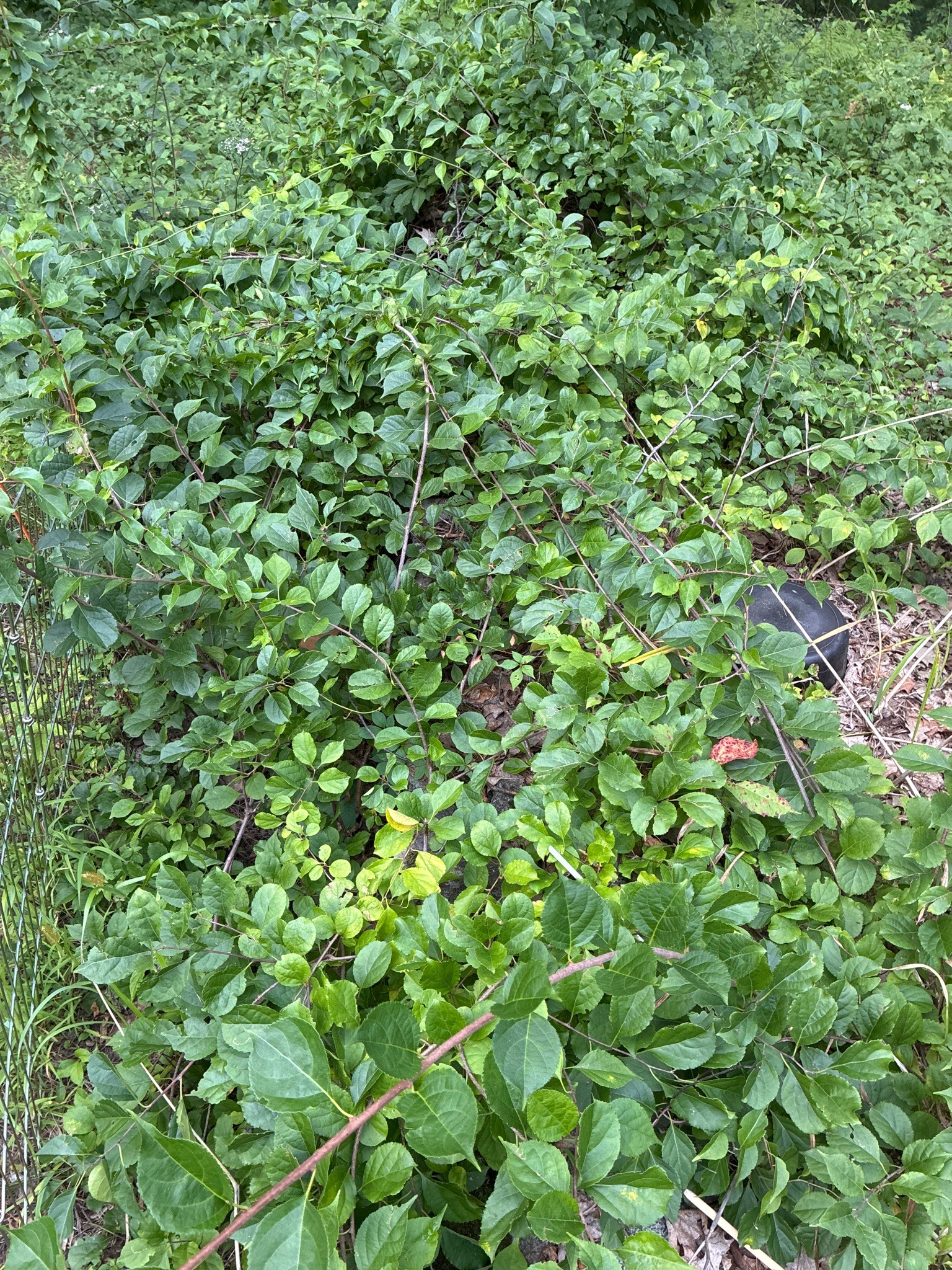
Oriental Bittersweet
Celastrus orbiculatus
A vigorous woody deciduous vine characterized by alternate, glossy, rounded to oval leaves with finely toothed margins, and twining stems that climb aggressively over supports and other vegetation.
- Light
- Full sun to partial shade, requiring at least 6 hours of direct sunlight daily for optimal growth
- Water
- Moderate watering when young; highly drought-tolerant once established. Water deeply when the top few inches of soil become dry.
- Growth
- Perennial woody vine growing rapidly up to 60 feet or more in length, utilizing twining stems to climb trees, shrubs, and structures.
Care instructions
Thrives in full sun to partial shade with average, well-draining soil. Requires regular watering during establishment, though it is quite resilient once mature. Pruning is typically focused on containment due to its rapid and aggressive vining habit.
Growing details
Sunlight
Full sun to partial shade, requiring at least 6 hours of direct sunlight daily for optimal growth
Watering
Moderate watering when young; highly drought-tolerant once established. Water deeply when the top few inches of soil become dry.
Soil
Adaptable to a wide range of soil types including clay, loam, and sandy soils, provided they are well-draining, with a preferred pH between 6.0 and 7.5.
Hardiness zone
USDA Hardiness Zones 2 through 8
Growth habit
Perennial woody vine growing rapidly up to 60 feet or more in length, utilizing twining stems to climb trees, shrubs, and structures.
Bloom season
Spring, producing small, inconspicuous greenish flowers clustered in the leaf axils.
Propagation
Propagated easily through seeds or stem cuttings taken during the growing season.
Common pests & issues
Generally resistant to severe pests and diseases, though management primarily involves controlling its aggressive spread and dense vining habit.
Similar species
American bittersweet (Celastrus scandens), which can be distinguished by its terminal flower and fruit clusters rather than axillary clusters.