
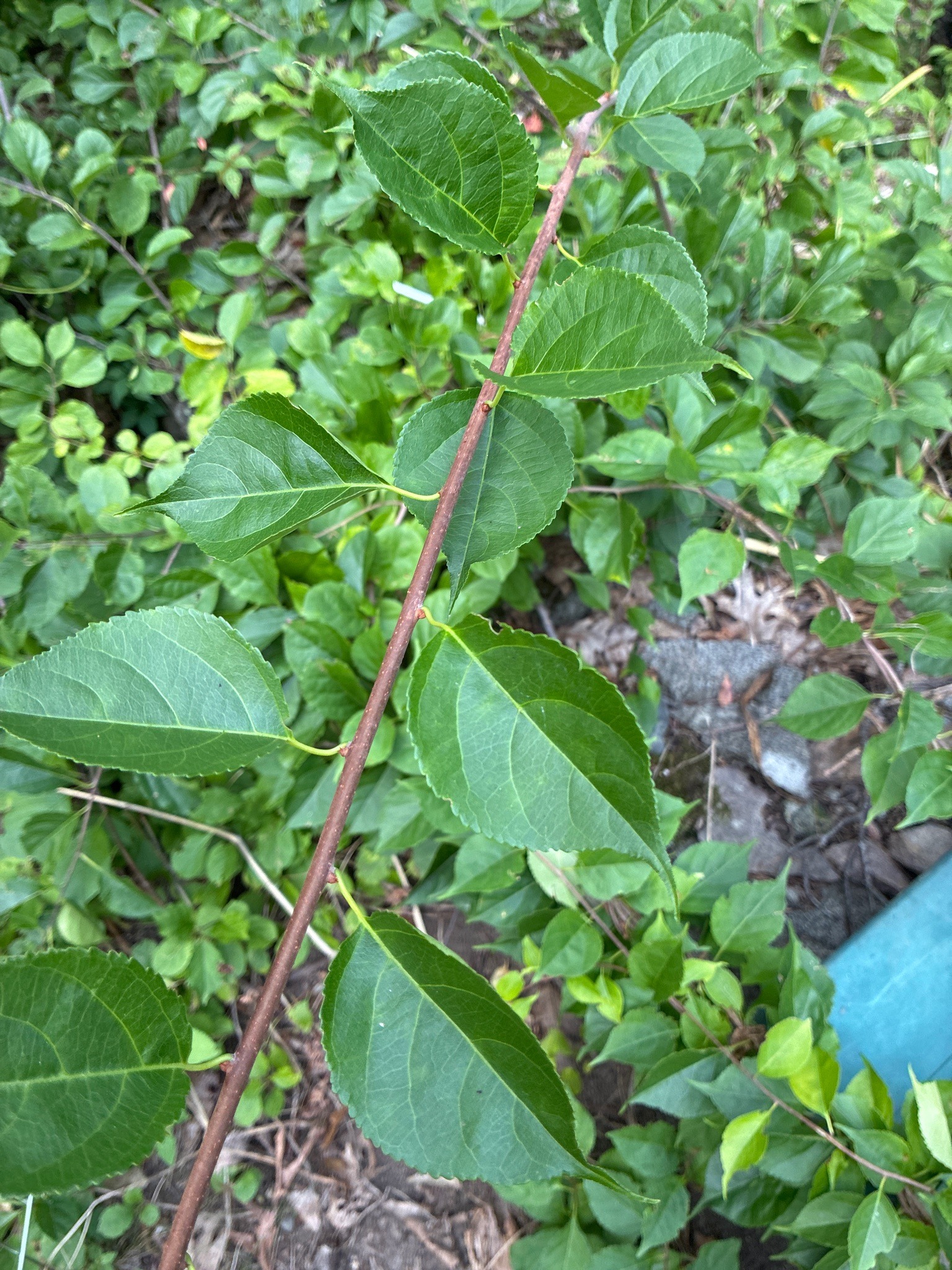
Oriental Bittersweet
Celastrus orbiculatus
A woody, deciduous vine with alternate, rounded to oval leaves featuring finely toothed margins. The stems are typically brown and twining, capable of climbing high into trees and structures.
- Light
- Full sun to partial shade, requiring at least 6 hours of direct sunlight daily for optimal development.
- Water
- Requires regular moisture during the establishment phase, but exhibits high drought tolerance once mature. Avoid waterlogged soils.
- Growth
- Perennial woody vine growing up to 60 feet or more in length by twining tightly around supports. Exhibits a rapid, aggressive growth rate.
Care instructions
This species is extremely vigorous and adaptable. It thrives best in well-drained soils with moderate moisture and full sun exposure, though it can tolerate partial shade.
Growing details
Sunlight
Full sun to partial shade, requiring at least 6 hours of direct sunlight daily for optimal development.
Watering
Requires regular moisture during the establishment phase, but exhibits high drought tolerance once mature. Avoid waterlogged soils.
Soil
Adapts to a wide range of soil types including clay, loam, and sand, provided there is adequate drainage. Prefers a neutral to slightly acidic pH range of 6.0 to 7.0.
Hardiness zone
USDA zones 4 through 8, demonstrating strong cold hardiness.
Growth habit
Perennial woody vine growing up to 60 feet or more in length by twining tightly around supports. Exhibits a rapid, aggressive growth rate.
Bloom season
Flowers in late spring (May to June) with small, inconspicuous greenish-yellow blossoms clustered in the leaf axils.
Propagation
Propagates readily from seeds or by root and stem cuttings taken during the growing season.
Common pests & issues
Generally resilient against major pests and diseases, though it can occasionally be affected by scale insects or leaf spots.
Similar species
American Bittersweet (Celastrus scandens); distinguished by flower and fruit clusters located primarily at the branch tips rather than along the leaf axils, and leaves that are more noticeably longer than wide.