
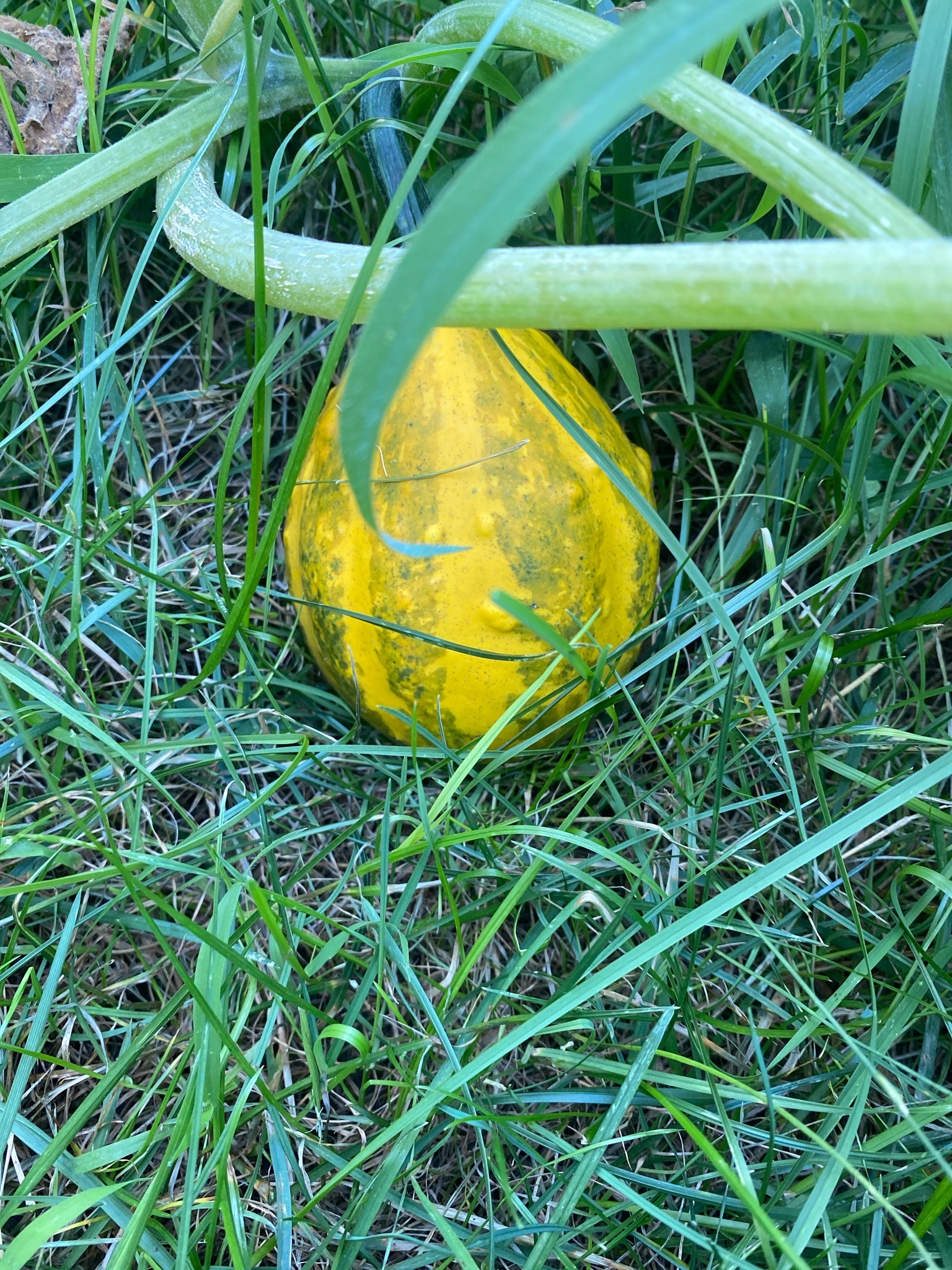
Ornamental Gourd
Cucurbita pepo
A trailing or climbing vine producing hard-shelled, brightly colored, and intricately textured or patterned ornamental fruits.
- Light
- Full sun, requiring 6 to 8 hours of direct sunlight daily
- Water
- Provide regular moisture, about 1 inch of water per week through rainfall or deep watering. Allow the top inch of soil to dry slightly between watering sessions; avoid prolonged drought or waterlogged soil conditions.
- Growth
- A vigorous herbaceous annual vine that spreads up to 10 to 15 feet along the ground or climbs via tendrils when provided with vertical support.
Care instructions
Provide full sun exposure with at least six to eight hours of direct light daily. Water consistently at the base to keep the soil evenly moist, avoiding overhead watering to prevent foliage dampening. Use rich, well-draining soil amended with organic matter, and apply a balanced, slow-release fertilizer during the active growing season.
Growing details
Sunlight
Full sun, requiring 6 to 8 hours of direct sunlight daily
Watering
Provide regular moisture, about 1 inch of water per week through rainfall or deep watering. Allow the top inch of soil to dry slightly between watering sessions; avoid prolonged drought or waterlogged soil conditions.
Soil
Rich, loamy, well-draining soil with an optimal pH range between 6.0 and 6.8.
Hardiness zone
Typically grown as an annual across USDA hardiness zones 3 through 11, sensitive to frost.
Growth habit
A vigorous herbaceous annual vine that spreads up to 10 to 15 feet along the ground or climbs via tendrils when provided with vertical support.
Bloom season
Summer to early autumn, featuring large, showy, funnel-shaped yellow flowers.
Propagation
Propagated easily from seeds sown directly in the garden after the final spring frost, or started indoors in biodegradable pots 3 to 4 weeks prior to transplanting.
Common pests & issues
Susceptible to fungal problems such as powdery mildew and downy mildew, as well as insect pests like cucumber beetles and vine borers. Prevent issues by ensuring adequate air circulation, using row covers early in the season, and practicing crop rotation.
Similar species
Winter squash and pumpkins belong to the same species (Cucurbita pepo) and share similar vegetative traits and vine habits, but are typically distinguished by larger, smoother, and less decorative mature fruit forms.