
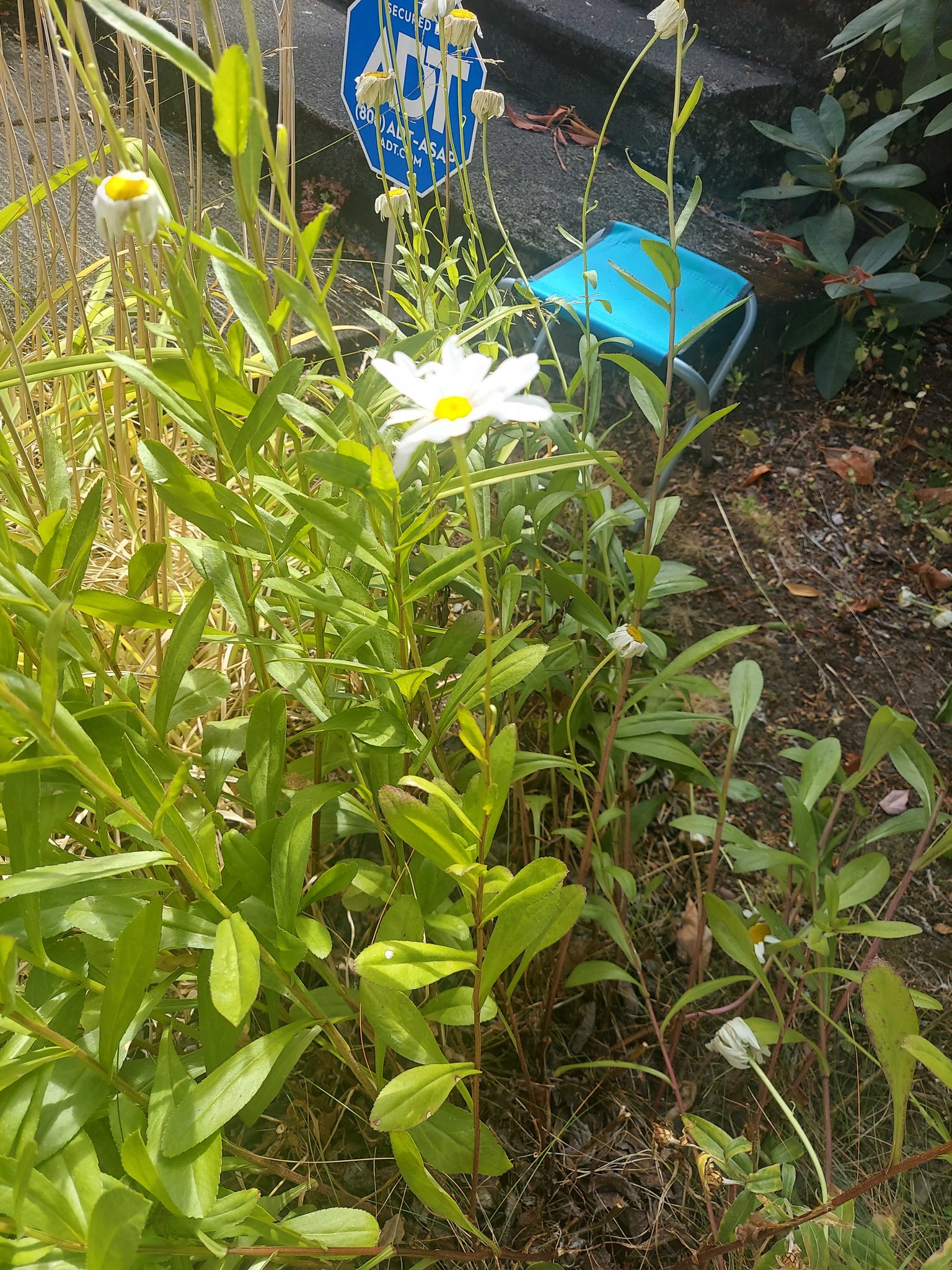
Oxeye Daisy
Leucanthemum vulgare
An herbaceous perennial featured by erect, slender stems bearing simple lanceolate to spoon-shaped leaves with toothed margins. It produces classic daisy-like flower heads with bright white ray florets surrounding a dense, yellow central disc.
- Light
- Prefers full sun (6+ hours of direct sunlight daily), though it tolerates partial shade.
- Water
- Requires moderate watering while young. Established plants prefer average moisture but can tolerate dry spells once root systems are developed.
- Growth
- Rhizomatous perennial forming clumped basal rosettes. Typically reaches heights of 1 to 3 feet (30-90 cm) with a spread of 1 to 2 feet (30-60 cm). Moderate to fast growth rate.
Care instructions
Grow in full sun to light shade in well-draining soil. Water regularly until established, after which it is moderately drought tolerant. Feed sparingly with a balanced general-purpose fertilizer in spring, as overly rich soil promotes excessive leaf growth at the expense of flowers.
Growing details
Sunlight
Prefers full sun (6+ hours of direct sunlight daily), though it tolerates partial shade.
Watering
Requires moderate watering while young. Established plants prefer average moisture but can tolerate dry spells once root systems are developed.
Soil
Thrives in average, moist, well-drained soils. Tolerates poor, sandy, or clay soils; prefers a neutral to slightly acidic pH (6.0-7.0).
Hardiness zone
USDA Zones 3 through 9
Growth habit
Rhizomatous perennial forming clumped basal rosettes. Typically reaches heights of 1 to 3 feet (30-90 cm) with a spread of 1 to 2 feet (30-60 cm). Moderate to fast growth rate.
Bloom season
Late spring to mid-summer. Flowers feature bright white ray petals encircling a central yellow disc floret, supported on long, thin stalks.
Propagation
Propagates easily by seed sown in autumn or early spring, or by root division of mature clumps during spring or early fall.
Common pests & issues
Generally low-maintenance. Can occasionally suffer from powdery mildew, leaf spot, or aphid infestations in damp or overcrowded conditions.
Similar species
Shasta Daisy (Leucanthemum x superbum) is a cultivated hybrid that grows taller with significantly larger flower heads. Scentless Mayweed (Tripleurospermum inodorum) has finely divided, fern-like foliage unlike the simple, toothed leaves of the Oxeye Daisy.