
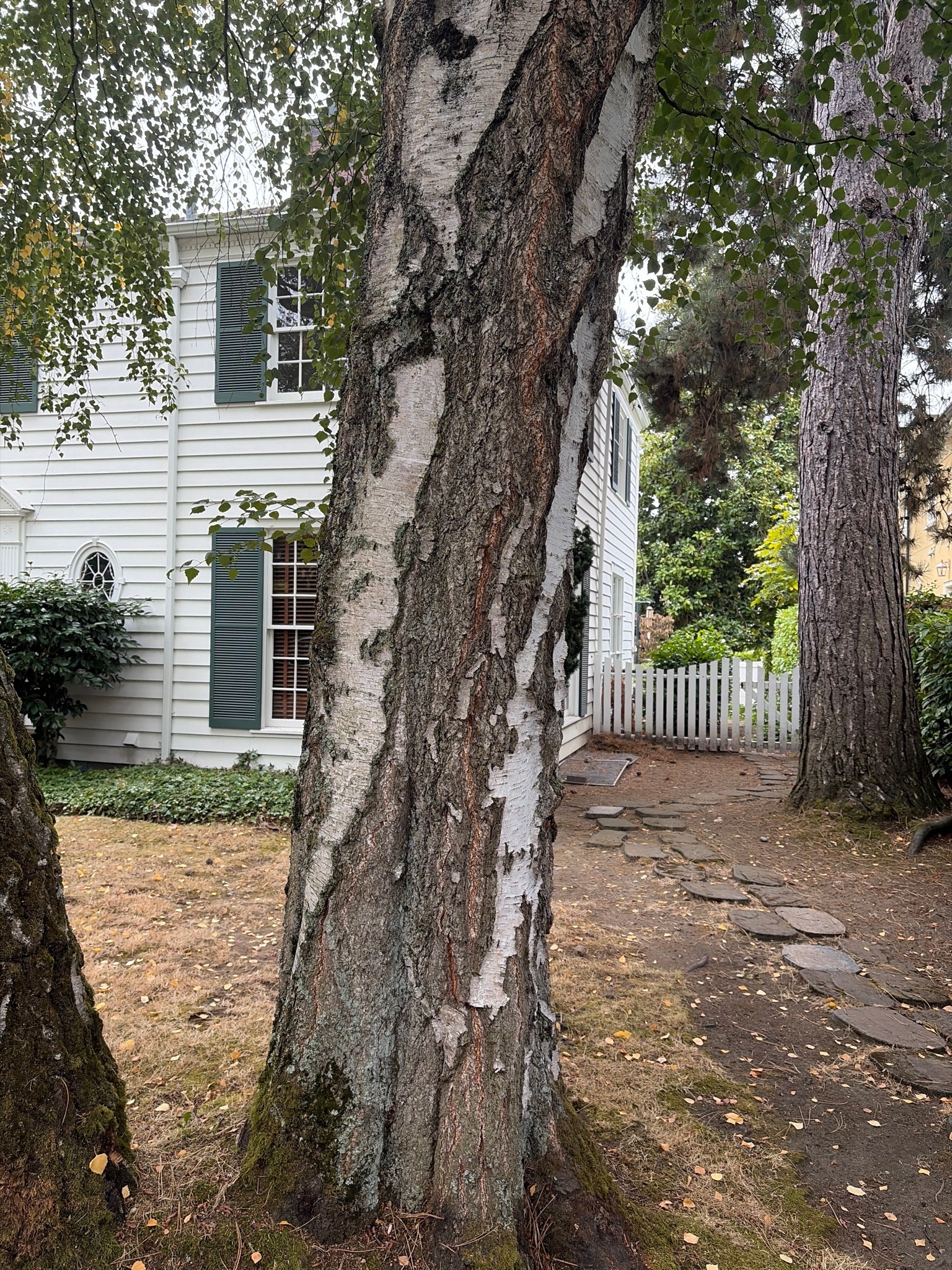
Paper Birch
Betula papyrifera
A medium-sized deciduous tree recognized by its striking white, papery bark that peels off in thin layers, dark green triangular leaves, and slender branches.
- Light
- Full sun, requiring at least six hours of direct sunlight daily, though it can tolerate light afternoon shade in hotter southern climates.
- Water
- Requires regular moisture, especially when young. Prefers deep watering during dry spells and does not tolerate prolonged drought conditions well.
- Growth
- A deciduous tree growing in a single or multi-stemmed upright form with an open, oval canopy. Typically reaches heights of 50 to 70 feet with a spread of 35 to 50 feet, exhibiting a medium to fast growth rate.
Care instructions
Provide full sun to partial shade with consistently moist, well-draining acidic soil. Mulch around the base to keep the root system cool and retain moisture. Apply a balanced, slow-release fertilizer in early spring if soil fertility is low.
Growing details
Sunlight
Full sun, requiring at least six hours of direct sunlight daily, though it can tolerate light afternoon shade in hotter southern climates.
Watering
Requires regular moisture, especially when young. Prefers deep watering during dry spells and does not tolerate prolonged drought conditions well.
Soil
Thrives in rich, moist, sandy or loamy soils with good drainage and an acidic to neutral pH range between 5.0 and 6.5.
Hardiness zone
USDA Hardiness Zones 2 through 7, preferring cooler summer climates.
Growth habit
A deciduous tree growing in a single or multi-stemmed upright form with an open, oval canopy. Typically reaches heights of 50 to 70 feet with a spread of 35 to 50 feet, exhibiting a medium to fast growth rate.
Bloom season
Flowers in early spring before leaf emergence, producing brownish-yellow male catkins and smaller greenish female catkins.
Propagation
Propagated primarily through seeds sown in autumn or via hardwood and softwood cuttings taken in summer, though cuttings can be challenging to root successfully.
Common pests & issues
Susceptible to bronze birch borer infestations, particularly when stressed by drought or heat. Can also be affected by leaf miners, rust, and cankers. Prevent by maintaining proper soil moisture and vigor.
Similar species
European White Birch (Betula pendula), which has more deeply pendulous branchlets and deeply furrowed dark bark at the base, and River Birch (Betula nigra), which features darker, coppery-brown, peeling bark.