
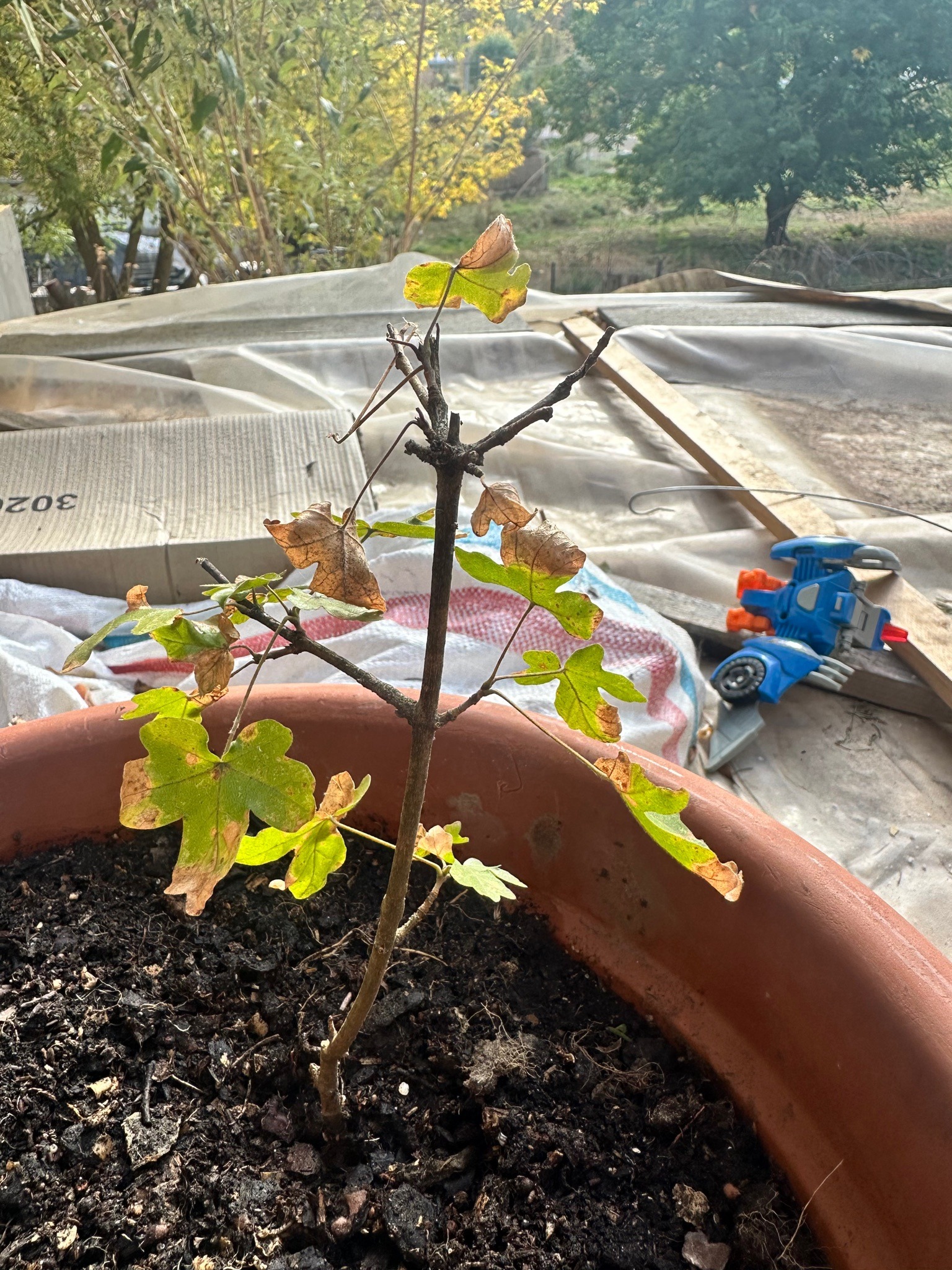
Paper Mulberry
Broussonetia papyrifera
A small deciduous tree or large shrub currently showing some autumn leaf browning and defoliation, characterized by variable leaf shapes ranging from simple oval to deeply lobed.
- Light
- Full sun to partial shade, requiring at least 6 hours of direct sunlight daily
- Water
- Moderate water needs; water deeply when the top few centimeters of soil become dry. Drought tolerant once fully established.
- Growth
- Fast-growing deciduous tree or large shrub with an upright and spreading form, capable of reaching 10 to 20 meters in height at maturity when planted in the ground, though kept smaller in containers.
Care instructions
Provide full sun to partial shade with well-draining soil. Water regularly during the growing season, allowing the top layer of soil to dry out between waterings. Fertilize lightly in spring with a balanced slow-release fertilizer.
Growing details
Sunlight
Full sun to partial shade, requiring at least 6 hours of direct sunlight daily
Watering
Moderate water needs; water deeply when the top few centimeters of soil become dry. Drought tolerant once fully established.
Soil
Adaptable to a wide range of well-drained soils including loam, clay, or sand, with a preferred pH range of 6.0 to 7.5
Hardiness zone
USDA Hardiness Zones 6 through 9
Growth habit
Fast-growing deciduous tree or large shrub with an upright and spreading form, capable of reaching 10 to 20 meters in height at maturity when planted in the ground, though kept smaller in containers.
Bloom season
Spring; flowers are inconspicuous, with separate male and female catkins appearing as the leaves unfold.
Propagation
Propagated easily via hardwood or softwood cuttings, root cuttings, or by sowing seeds in spring.
Common pests & issues
Susceptible to occasional aphid infestations and leaf spot fungi, preventable by ensuring good air circulation and avoiding overhead watering.
Similar species
White Mulberry (Morus alba), which can be distinguished by smoother, less variable leaf margins and different fruit structures.