
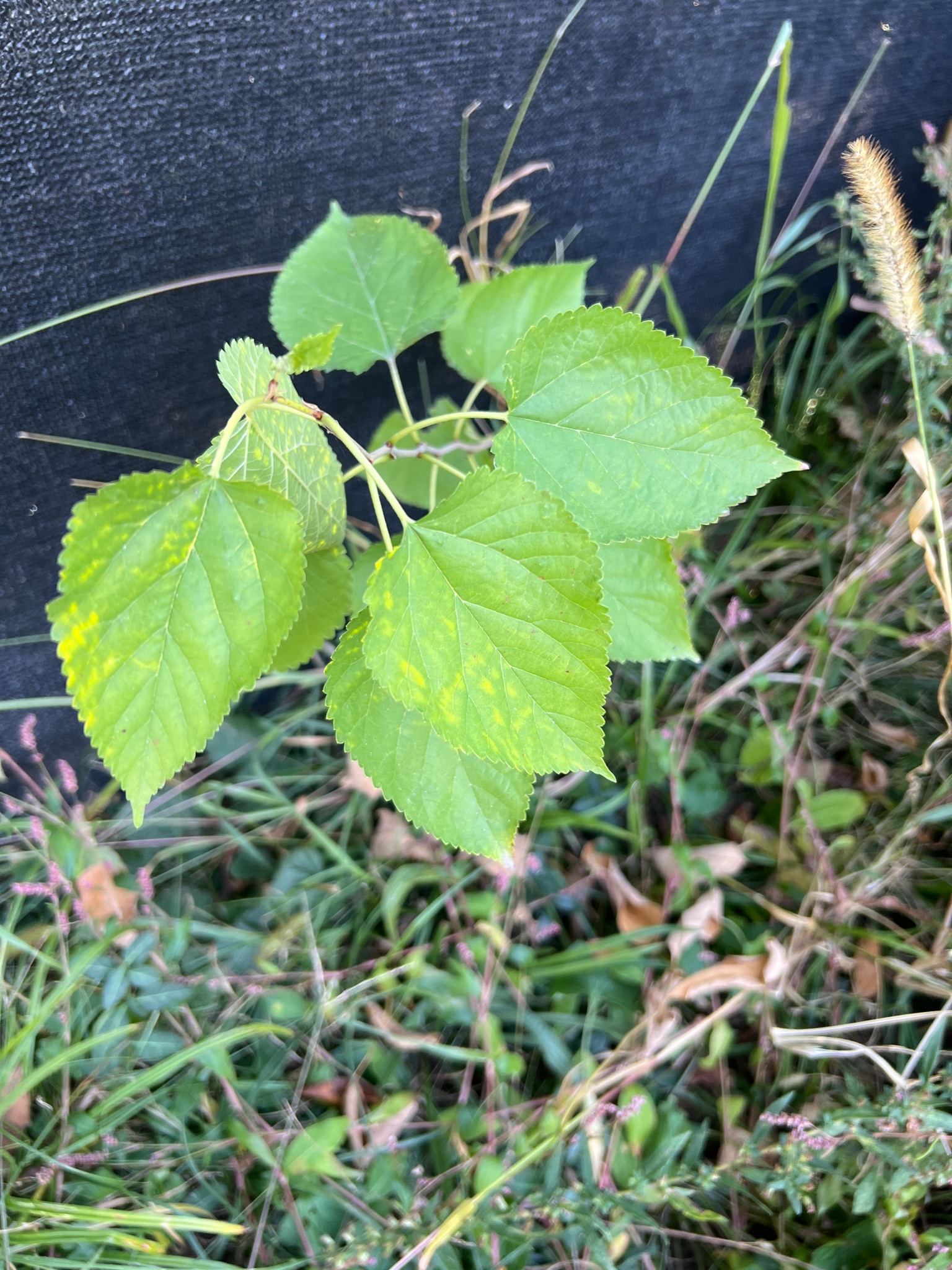
Paper Mulberry
Broussonetia papyrifera
A fast-growing deciduous tree or large shrub with distinctively fuzzy, heart-shaped or lobed leaves featuring finely serrated margins and soft, velvety undersides.
- Light
- Full sun to partial shade, requiring at least 6 hours of direct sunlight daily for optimal growth.
- Water
- Moderate water needs when young; highly drought-tolerant once established. Allow the top few inches of soil to dry out between watering sessions.
- Growth
- Deciduous perennial tree or multi-stemmed large shrub with a rapid growth rate, reaching mature heights of 30 to 50 feet with a broad, spreading canopy.
Care instructions
Plant in full sun to partial shade with well-draining soil. Water regularly during the establishment phase, transitioning to high drought tolerance once mature. Fertilization is generally unnecessary unless growing in poor soils.
Growing details
Sunlight
Full sun to partial shade, requiring at least 6 hours of direct sunlight daily for optimal growth.
Watering
Moderate water needs when young; highly drought-tolerant once established. Allow the top few inches of soil to dry out between watering sessions.
Soil
Adaptable to a wide range of soil types including clay, loam, and sand, provided it has adequate drainage. Prefers a neutral to slightly acidic pH range of 6.0 to 7.0.
Hardiness zone
USDA zones 6 through 10, demonstrating strong adaptability to varying climate temperatures.
Growth habit
Deciduous perennial tree or multi-stemmed large shrub with a rapid growth rate, reaching mature heights of 30 to 50 feet with a broad, spreading canopy.
Bloom season
Spring, producing inconspicuous greenish catkins followed by spherical, fleshy, reddish-orange fruits on female plants.
Propagation
Propagated easily through hardwood or softwood stem cuttings, root cuttings, or by sowing seeds in spring.
Common pests & issues
Generally resilient against major pests and diseases, though can occasionally be affected by leaf spots or root rot in poorly draining soils.
Similar species
White Mulberry (Morus alba), which can be distinguished by smoother leaves that often display a wider variety of deeply lobed shapes on the same branch.