
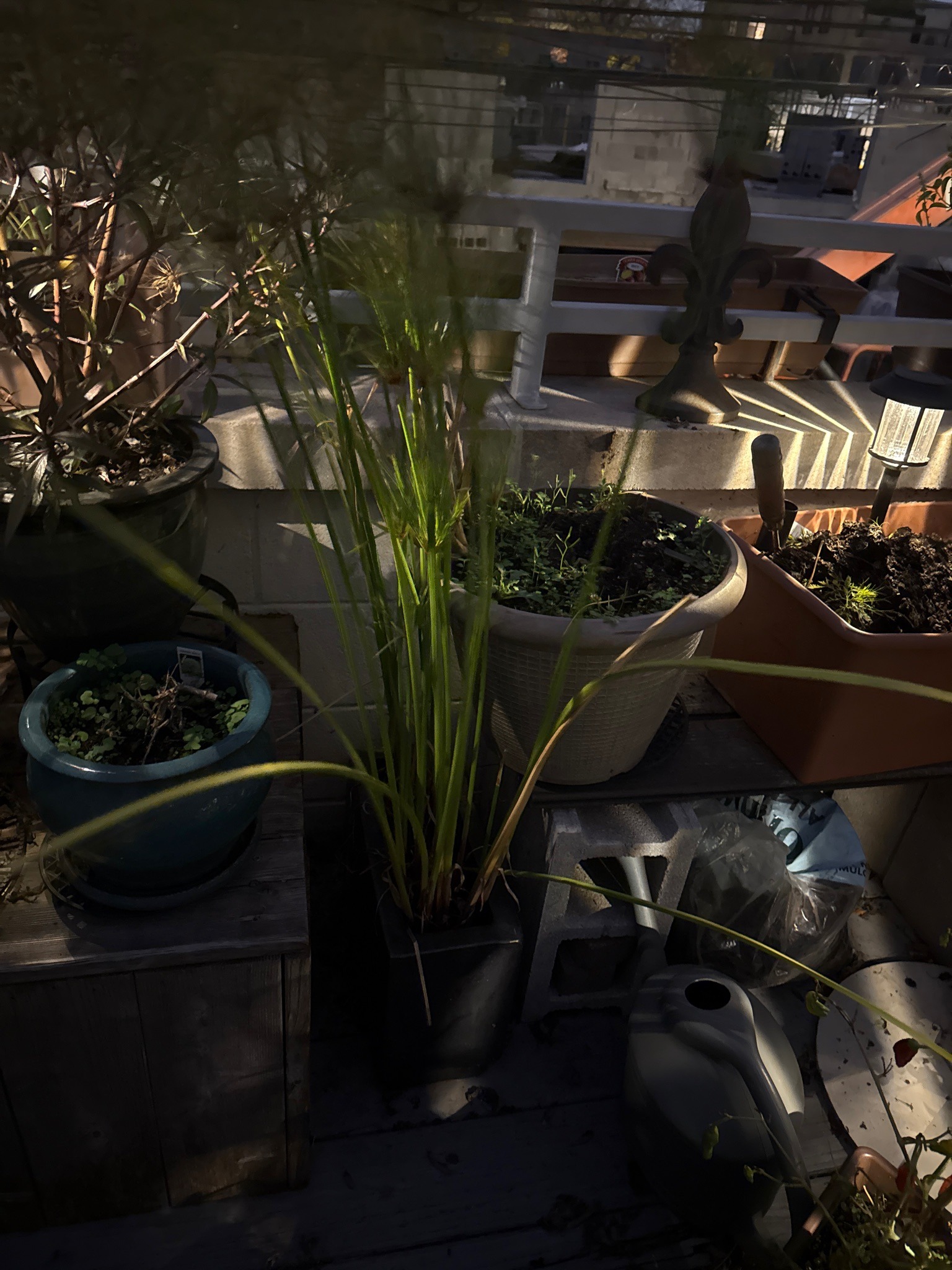
Papyrus
Cyperus papyrus
An aquatic perennial sedge featuring tall, bright green triangular stems topped with fine, thread-like bracts arranged in a distinctive umbrella-like formation.
- Light
- Full sun to partial shade, requiring at least 6 hours of direct sunlight daily for optimal growth.
- Water
- Very high watering needs; soil must be kept constantly saturated or waterlogged. It thrives as a marginal aquatic plant standing in a few inches of water.
- Growth
- An evergreen perennial sedge forming dense clumps of upright stems, growing anywhere from 3 to 16 feet tall depending on conditions, with a moderate to fast growth rate.
Care instructions
Provide abundant moisture by keeping the soil consistently wet or growing it in shallow standing water. Position it in full sun to partial shade and feed with a balanced aquatic fertilizer during the growing season.
Growing details
Sunlight
Full sun to partial shade, requiring at least 6 hours of direct sunlight daily for optimal growth.
Watering
Very high watering needs; soil must be kept constantly saturated or waterlogged. It thrives as a marginal aquatic plant standing in a few inches of water.
Soil
Heavy, rich, loamy, or clay-based soils with a slightly acidic to neutral pH range of 6.0 to 7.0.
Hardiness zone
USDA hardiness zones 9 through 11, typically grown as a container plant or annual in cooler climates.
Growth habit
An evergreen perennial sedge forming dense clumps of upright stems, growing anywhere from 3 to 16 feet tall depending on conditions, with a moderate to fast growth rate.
Bloom season
Summer to early autumn, producing inconspicuous brownish flower spikelets followed by thread-like bracts.
Propagation
Propagated through division of established root clumps in spring, or by stem cuttings placed in water until roots develop.
Common pests & issues
Generally resilient, but may suffer from brown tips if allowed to dry out. Pests can include spider mites or aphids in drier indoor environments.
Similar species
Cyperus alternifolius (Umbrella Plant), which is typically smaller and has wider, more robust leaf-like bracts compared to the finer, more numerous threads of Cyperus papyrus.