
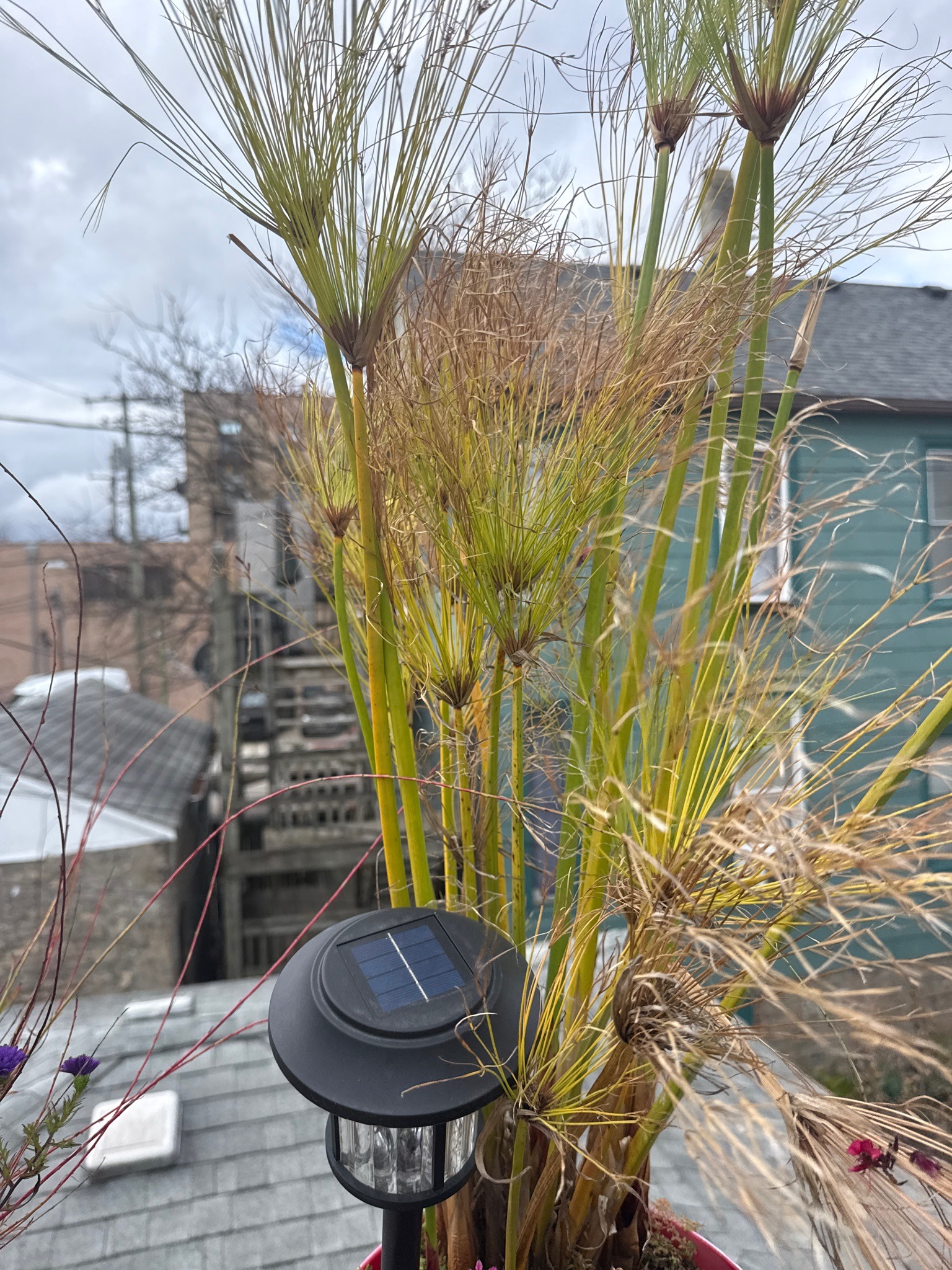
Papyrus
Cyperus papyrus
An aquatic or semi-aquatic perennial sedge featuring tall, triangular green stems topped with graceful, umbrella-like whorls of thread-like bracts.
- Light
- Full sun to partial shade, requiring at least 6 hours of direct sunlight daily.
- Water
- Requires extremely high moisture levels; soil should never be allowed to dry out. Best grown in standing water or saturated soil.
- Growth
- Stiff, upright clumping perennial growing from thick rhizomes, reaching heights of 6 to 16 feet with a spread of 3 to 6 feet.
Care instructions
Provide constant moisture or sit in standing water. Position in full sun to partial shade. Use rich, loamy soil and feed occasionally with a balanced water-soluble fertilizer during the active growing season.
Growing details
Sunlight
Full sun to partial shade, requiring at least 6 hours of direct sunlight daily.
Watering
Requires extremely high moisture levels; soil should never be allowed to dry out. Best grown in standing water or saturated soil.
Soil
Rich, heavy loam or clay soil with high organic content. Tolerates a wide pH range from 6.0 to 7.5.
Hardiness zone
USDA zones 9 through 11, treated as an annual or overwintered indoors in cooler climates.
Growth habit
Stiff, upright clumping perennial growing from thick rhizomes, reaching heights of 6 to 16 feet with a spread of 3 to 6 feet.
Bloom season
Summer to early autumn, producing inconspicuous green-brown flower spikelets at the tips of the bracts, followed by brownish nut-like fruits.
Propagation
Propagated easily through division of the rhizomes in spring or by rooting stem cuttings placed upside down in shallow water.
Common pests & issues
Generally pest-free, though occasionally affected by mealybugs or spider mites when grown indoors. Browning of the tips usually indicates insufficient moisture or low humidity.
Similar species
Cyperus alternifolius (Umbrella Plant), which is typically smaller and more slender, and Cyperus involucratus, which features broader bracts.