
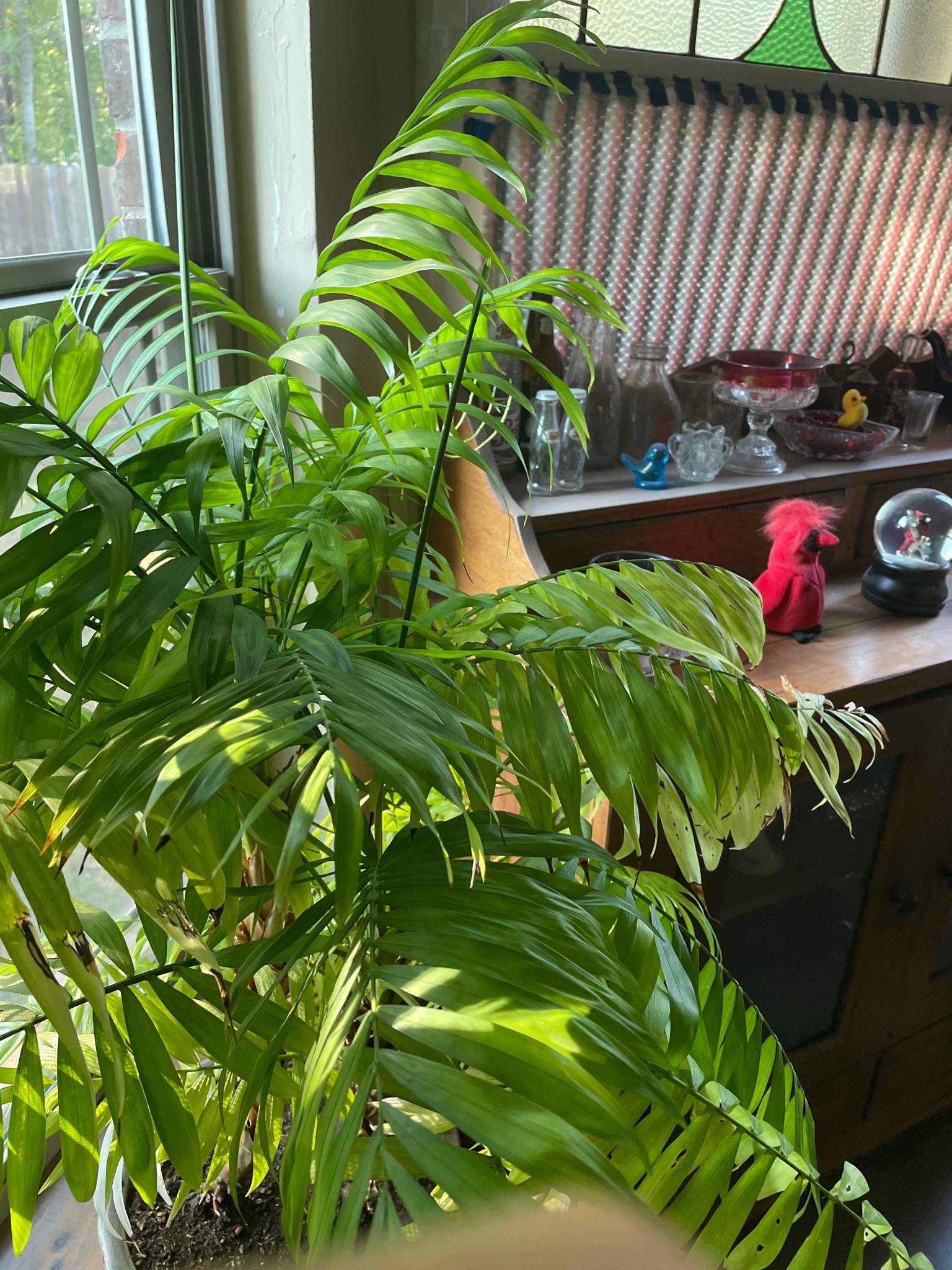
Parlor Palm
Chamaedorea elegans
A small, elegant palm with slender, cane-like stems and feathery, pinnate fronds composed of numerous narrow, bright green leaflets.
- Light
- Prefers bright, indirect light for 4 to 6 hours daily; tolerates lower light conditions but growth will slow.
- Water
- Water when the top inch of soil feels dry to the touch. Reduce watering frequency slightly during the winter months.
- Growth
- Perennial evergreen palm with a slow growth rate, typically reaching 2 to 6 feet in height indoors with a spread of 2 to 3 feet.
Care instructions
Provide bright, indirect sunlight and keep the soil consistently lightly moist without letting it become waterlogged. Maintain moderate indoor humidity and fertilize lightly during the active growing season.
Growing details
Sunlight
Prefers bright, indirect light for 4 to 6 hours daily; tolerates lower light conditions but growth will slow.
Watering
Water when the top inch of soil feels dry to the touch. Reduce watering frequency slightly during the winter months.
Soil
Requires a rich, fast-draining potting mix with a slightly acidic to neutral pH between 6.0 and 6.5.
Hardiness zone
USDA zones 10 through 11; grown primarily as an indoor houseplant in cooler temperate regions.
Growth habit
Perennial evergreen palm with a slow growth rate, typically reaching 2 to 6 feet in height indoors with a spread of 2 to 3 feet.
Bloom season
Spring; produces small, insignificant yellow or cream-colored flowers on branched panicles, often when mature.
Propagation
Propagated primarily by seed, though germination can be slow and challenging; division of established multi-stem clumps is also possible.
Common pests & issues
Prone to spider mites and mealybugs, particularly in dry indoor air. Overwatering can lead to root rot.
Similar species
Cat Palm (Chamaedorea cataractarum), which generally prefers much wetter soil, and the Areca Palm (Dypsis lutescens), which has more yellowish stems and an upright clustering habit.