
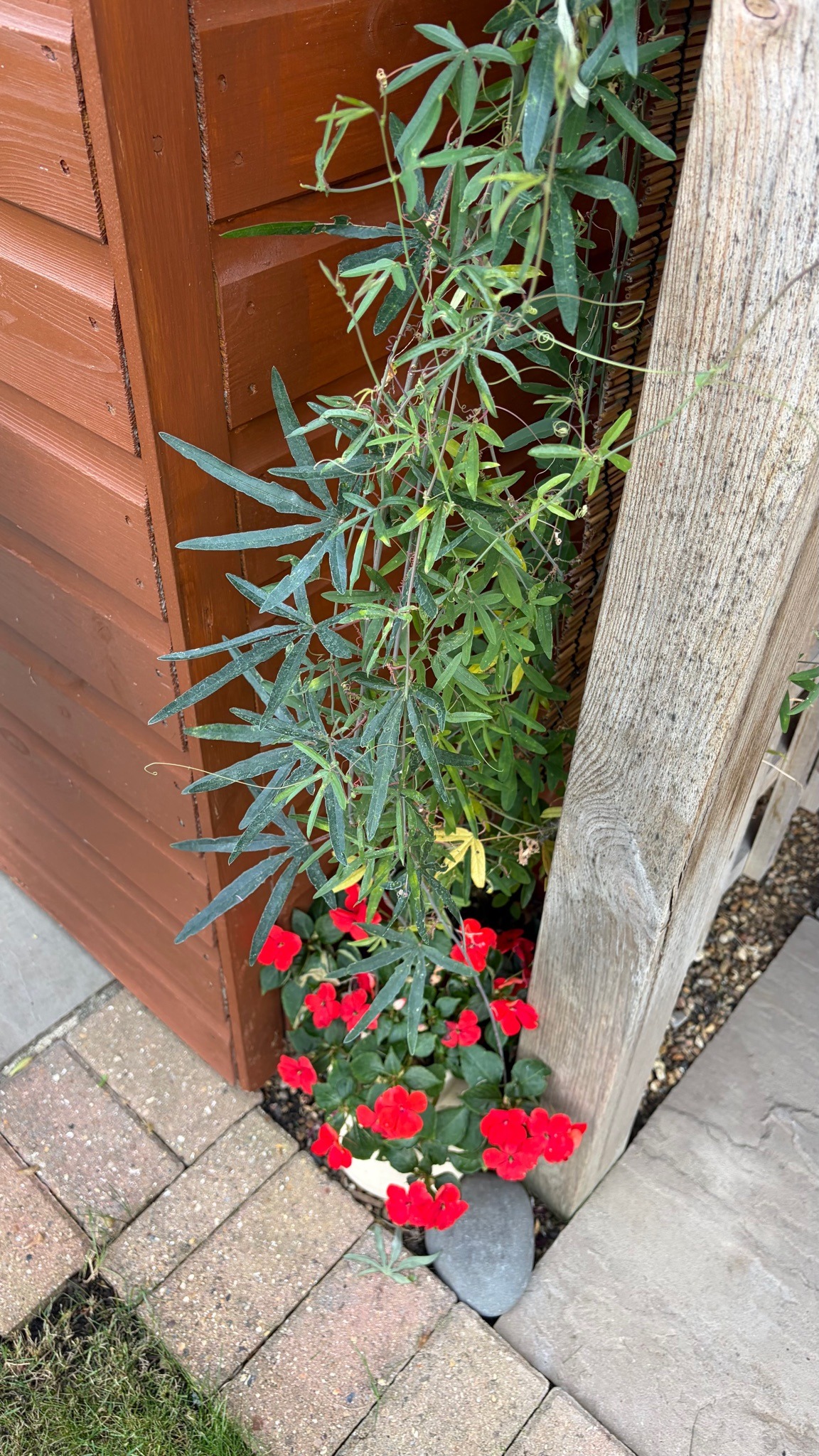
Passionflower (Blue Passionflower vine visible with mixed bedding plants below)
Passiflora caerulea
Passiflora caerulea is a vigorous, tendril-climbing evergreen or semi-evergreen woody vine characterized by distinctive palmate or deeply lobed leaves (usually with five to seven lobes) and wiry stems that climb surfaces using slender tendrils. The image also shows a separate bedding plant with bright red flowers planted at the base.
- Light
- Full sun to partial shade, ideally requiring at least six hours of direct sunlight daily for optimal flowering.
- Water
- Moderate watering needs. Keep the soil evenly moist during the spring and summer active growth phase, reducing frequency in winter. Mature established vines exhibit moderate drought tolerance.
- Growth
- Perennial climbing vine with a fast growth rate, capable of reaching mature heights of 10 to 30 feet (3 to 9 meters) with a spread of 3 to 6 feet.
Care instructions
Provide full sun to partial shade and a sturdy trellis or support structure for climbing tendrils. Water regularly during the growing season, allowing the top inch of soil to dry out between waterings. Use well-draining, moderately fertile soil and apply a balanced, slow-release fertilizer in early spring to support vigorous vine growth.
Growing details
Sunlight
Full sun to partial shade, ideally requiring at least six hours of direct sunlight daily for optimal flowering.
Watering
Moderate watering needs. Keep the soil evenly moist during the spring and summer active growth phase, reducing frequency in winter. Mature established vines exhibit moderate drought tolerance.
Soil
Thrives in rich, loamy, well-draining soils with a neutral to slightly acidic pH range between 6.0 and 7.0.
Hardiness zone
USDA Hardiness Zones 7 through 10; foliage may die back in colder winters but often regrows from the roots in zone 7.
Growth habit
Perennial climbing vine with a fast growth rate, capable of reaching mature heights of 10 to 30 feet (3 to 9 meters) with a spread of 3 to 6 feet.
Bloom season
Flowers from mid-summer through autumn, producing complex, intricate blossoms featuring prominent central stamens, a radial corona of blue, purple, or white filaments, and greenish-white sepals and petals.
Propagation
Propagated easily through semi-hardwood cuttings taken in late spring or summer, or by sowing seeds in warm spring conditions. Layering and root division can also be utilized successfully.
Common pests & issues
Generally resilient, but may occasionally experience infestations of spider mites, whiteflies, or aphids, particularly when grown indoors or in protected environments. Overwatering can lead to root rot in poorly draining soils.
Similar species
Passiflora incarnata (purple passionflower), which features more sharply three-lobed leaves and pinkish-purple flowers, and Passiflora quadrangularis (giant granadilla), which has much larger square stems and massive reddish-purple flowers.