
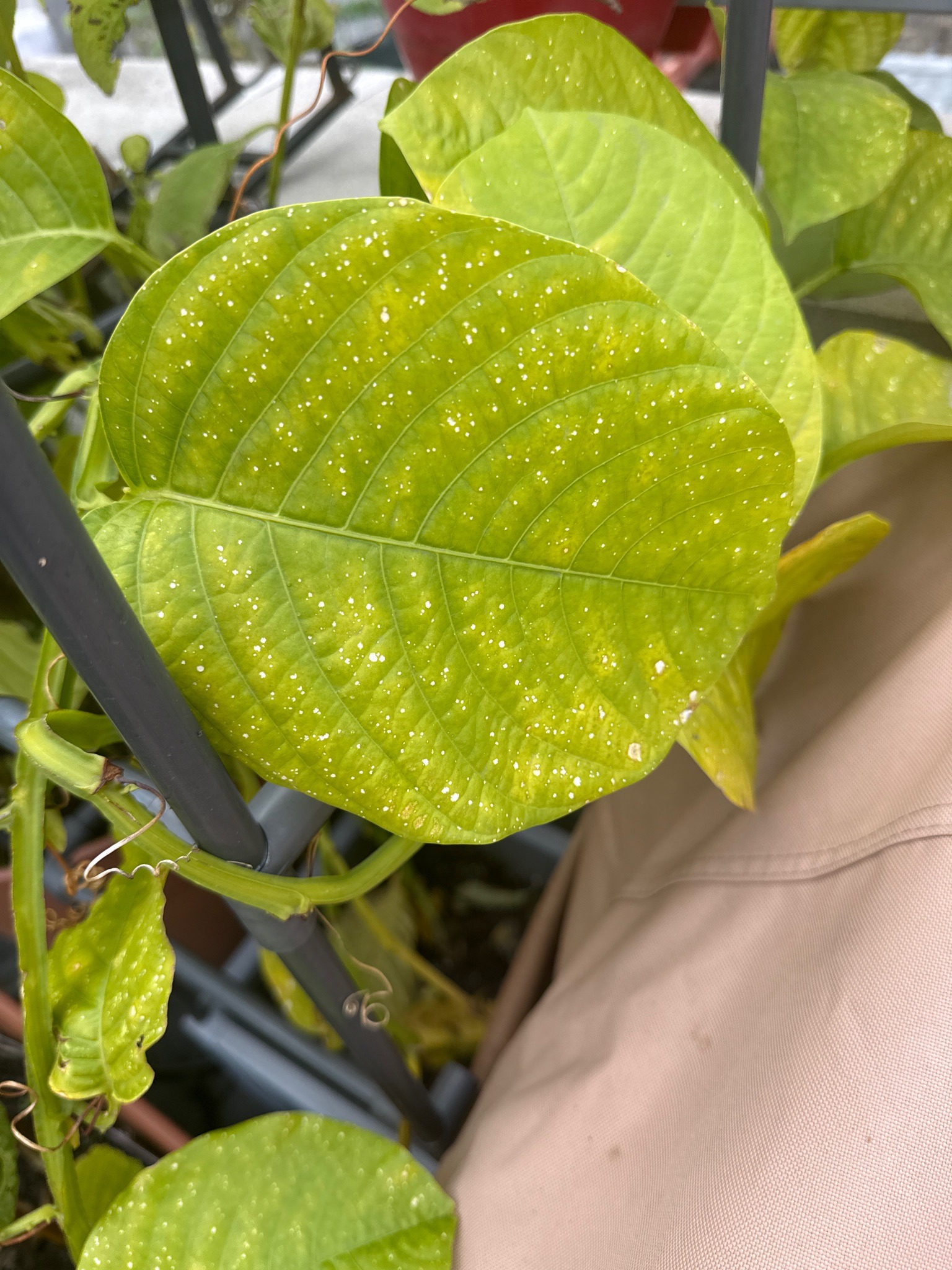
Passionflower Vine
Passiflora incarnata
A vigorous climbing vine featuring distinctive alternate leaves, tendrils for support, and complex, intricate flowers followed by fleshy fruits.
- Light
- Full sun to partial shade, requiring at least six hours of direct sunlight daily for optimal growth and flowering
- Water
- Water deeply and regularly during the growing season, allowing the top inch of soil to dry out between waterings. Drought tolerant once established, but requires more frequent watering in extreme heat.
- Growth
- A fast-growing perennial climbing vine that utilizes tendrils to ascend structures, reaching mature heights of 10 to 30 feet with a moderate to rapid spread.
Care instructions
Provide full sun to partial shade, regular watering allowing soil to dry slightly between sessions, and well-draining, fertile soil enriched with organic matter. Feed with a balanced fertilizer during the active growing season.
Growing details
Sunlight
Full sun to partial shade, requiring at least six hours of direct sunlight daily for optimal growth and flowering
Watering
Water deeply and regularly during the growing season, allowing the top inch of soil to dry out between waterings. Drought tolerant once established, but requires more frequent watering in extreme heat.
Soil
Prefers loose, well-draining sandy loam or clay loam soils with a slightly acidic to neutral pH range of 6.0 to 7.5.
Hardiness zone
USDA Hardiness Zones 5 through 9, depending on the specific species and winter protection
Growth habit
A fast-growing perennial climbing vine that utilizes tendrils to ascend structures, reaching mature heights of 10 to 30 feet with a moderate to rapid spread.
Bloom season
Blooms from mid-summer through early autumn, producing elaborate, multi-layered flowers featuring prominent corona filaments in shades of purple, pink, and white.
Propagation
Propagated easily through semi-hardwood cuttings taken in summer, root cuttings in winter, or by sowing seeds in spring after a period of stratification.
Common pests & issues
Susceptible to caterpillars, spider mites, and aphids. Fungal issues such as root rot or powdery mildew may occur in poorly draining soils or overly humid conditions; ensure good air circulation and proper drainage.
Similar species
Other Passiflora species such as Passiflora caerulea, distinguished mainly by differences in floral color patterns, leaf lobe counts, and geographic origin.