
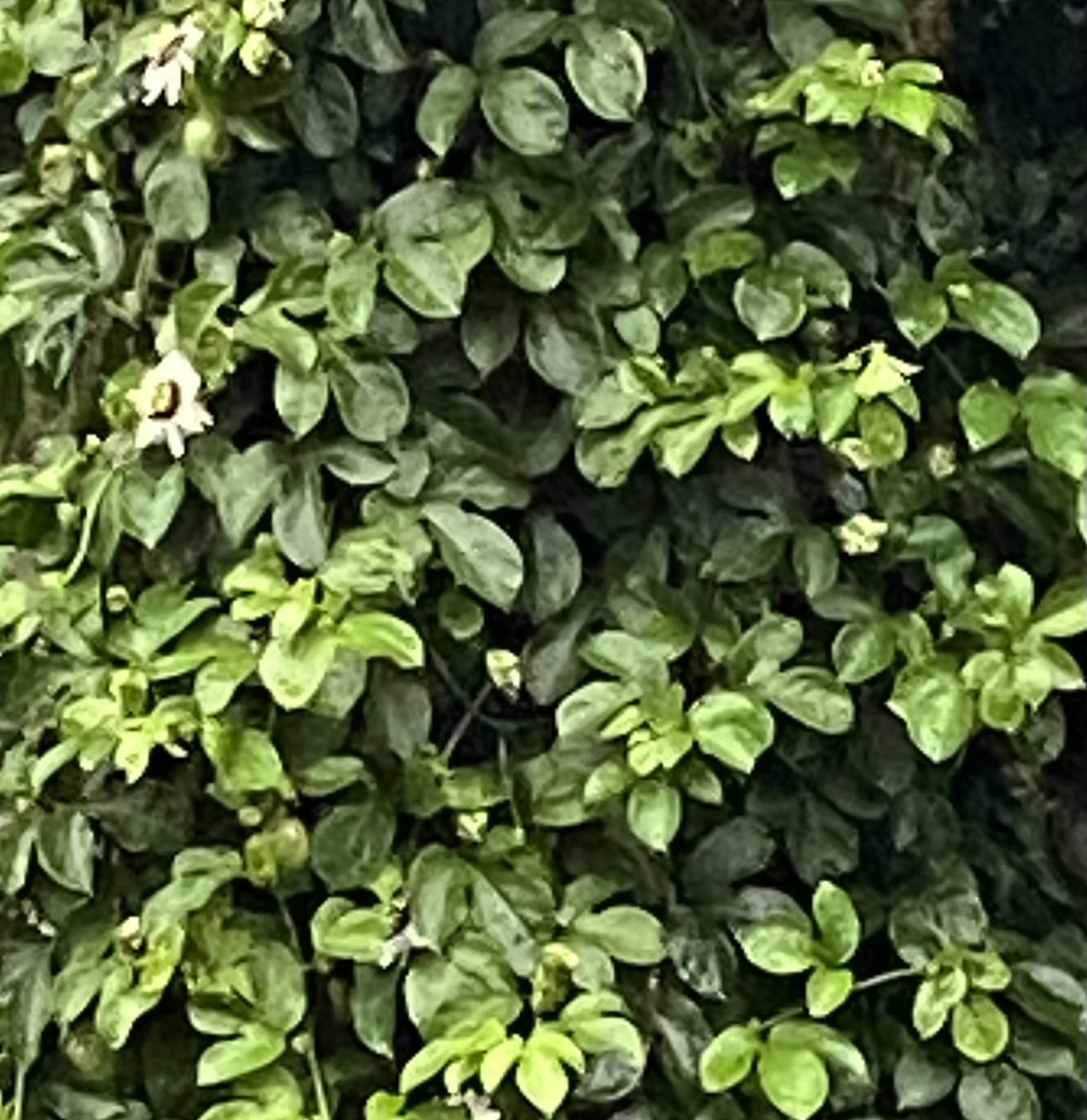
Passionflower
Passiflora incarnata
A vigorous climbing vine featuring deeply lobed, alternate dark green leaves and complex, highly intricate flowers with prominent radial filaments and central reproductive structures.
- Light
- Full sun to partial shade, requiring at least six hours of direct sunlight daily for optimal flower production.
- Water
- Moderate water needs; water deeply and regularly during dry spells. Avoid prolonged waterlogging while preventing complete soil desiccation.
- Growth
- Perennial climbing vine utilizing tendrils for support, capable of reaching lengths of 15 to 30 feet with a rapid growth rate under favorable conditions.
Care instructions
Provide full sun to partial shade with consistently moist, well-draining soil. Water regularly during the growing season, allowing the top inch to dry out between waterings. Apply a balanced, slow-release fertilizer in early spring to support vigorous vine growth and abundant flowering.
Growing details
Sunlight
Full sun to partial shade, requiring at least six hours of direct sunlight daily for optimal flower production.
Watering
Moderate water needs; water deeply and regularly during dry spells. Avoid prolonged waterlogging while preventing complete soil desiccation.
Soil
Prefers rich, loamy, or sandy soils with excellent drainage and a neutral to slightly acidic pH range between 6.0 and 7.5.
Hardiness zone
USDA Hardiness Zones 5 through 9, demonstrating good cold hardiness in the northern parts of its range where top growth may die back in winter to re-emerge from roots in spring.
Growth habit
Perennial climbing vine utilizing tendrils for support, capable of reaching lengths of 15 to 30 feet with a rapid growth rate under favorable conditions.
Bloom season
Blooms from mid-summer through early autumn, producing intricate flowers featuring white to light purple petals and a central fringe of purple, pink, or white filaments.
Propagation
Propagated easily through semi-hardwood stem cuttings taken in summer, division of established root systems in early spring, or by sowing scarified seeds.
Common pests & issues
Susceptible to caterpillars of certain butterfly species that feed on the foliage, as well as occasional fungal leaf spots or root rot in poorly draining soils.
Similar species
Passiflora caerulea (Blue Passionflower), which can be distinguished by its more deeply divided, five-to-seven-lobed leaves and pronounced blue-and-white filaments.