
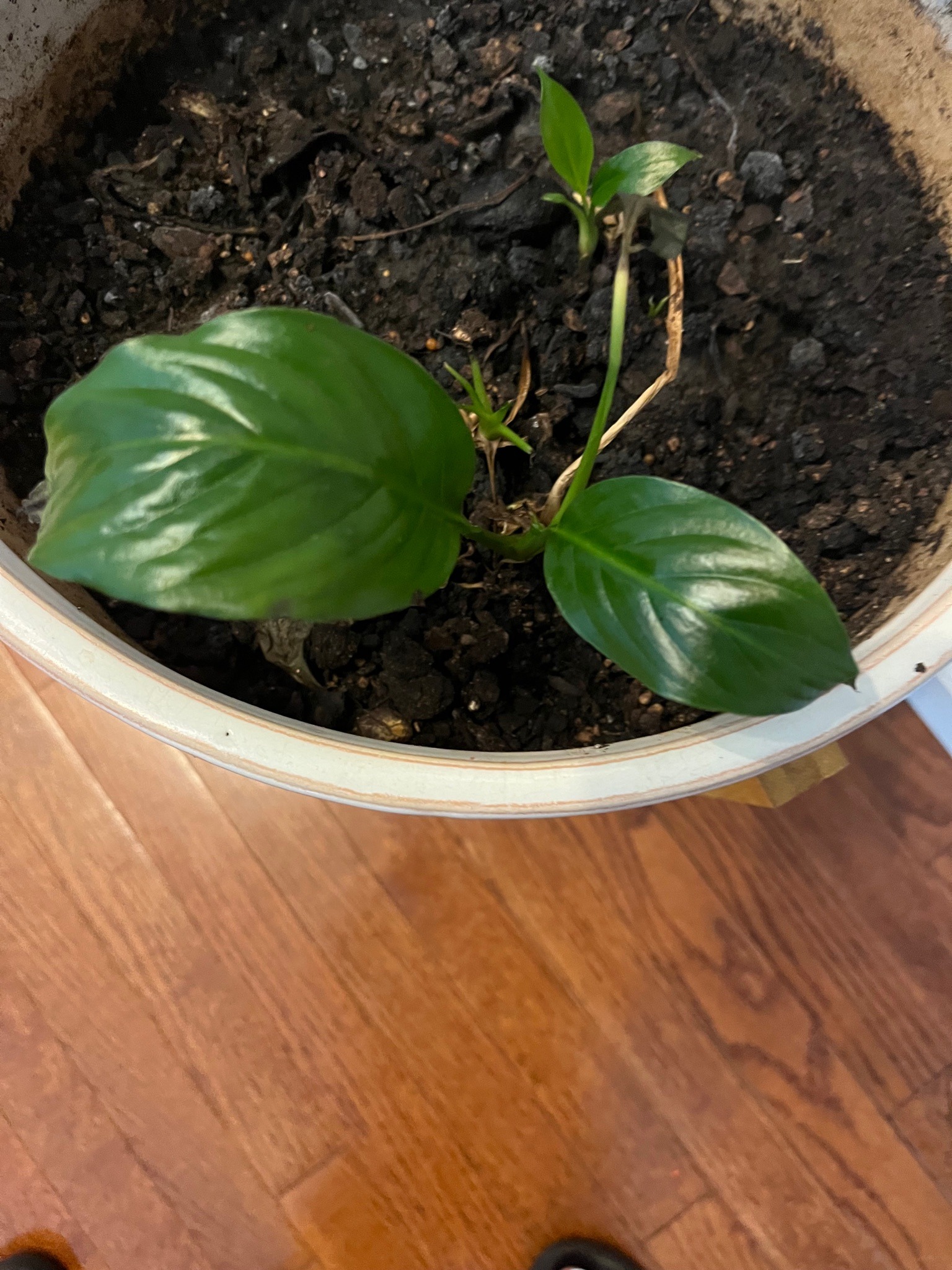
Peace Lily
Spathiphyllum wallisii
An evergreen herbaceous perennial with glossy, dark green, oval leaves featuring prominent veins and emerging directly from the soil.
- Light
- Bright, indirect light, approximately 4 to 6 hours daily; tolerates low indoor light conditions.
- Water
- Water thoroughly whenever the top inch of soil becomes dry. Drooping leaves often indicate the need for water, and recovery is usually rapid after watering.
- Growth
- Clumping herbaceous perennial growing to a mature height and spread of 1 to 3 feet with a moderate growth rate.
Care instructions
Provide bright, indirect sunlight, keep the soil consistently moist but never waterlogged, use well-draining organic potting mix, and feed with a balanced liquid fertilizer during the active growing season.
Growing details
Sunlight
Bright, indirect light, approximately 4 to 6 hours daily; tolerates low indoor light conditions.
Watering
Water thoroughly whenever the top inch of soil becomes dry. Drooping leaves often indicate the need for water, and recovery is usually rapid after watering.
Soil
Rich, loose, well-draining potting mix containing peat and perlite, with a preferred slightly acidic to neutral pH range of 6.0 to 6.5.
Hardiness zone
USDA zones 11 through 12, typically grown as an indoor houseplant in cooler climates.
Growth habit
Clumping herbaceous perennial growing to a mature height and spread of 1 to 3 feet with a moderate growth rate.
Bloom season
Spring and summer, producing a white or yellowish spadix enclosed within a white or pale green spathe (modified leaf).
Propagation
Propagated primarily through division of the root clump during repotting in the spring.
Common pests & issues
Susceptible to spider mites, mealybugs, and fungus gnats. Leaf tip browning can occur due to underwatering, low humidity, or chemical sensitivity in tap water.
Similar species
Anthurium species, which can be distinguished by brightly colored spathes in shades of red, pink, or orange rather than pure white.