
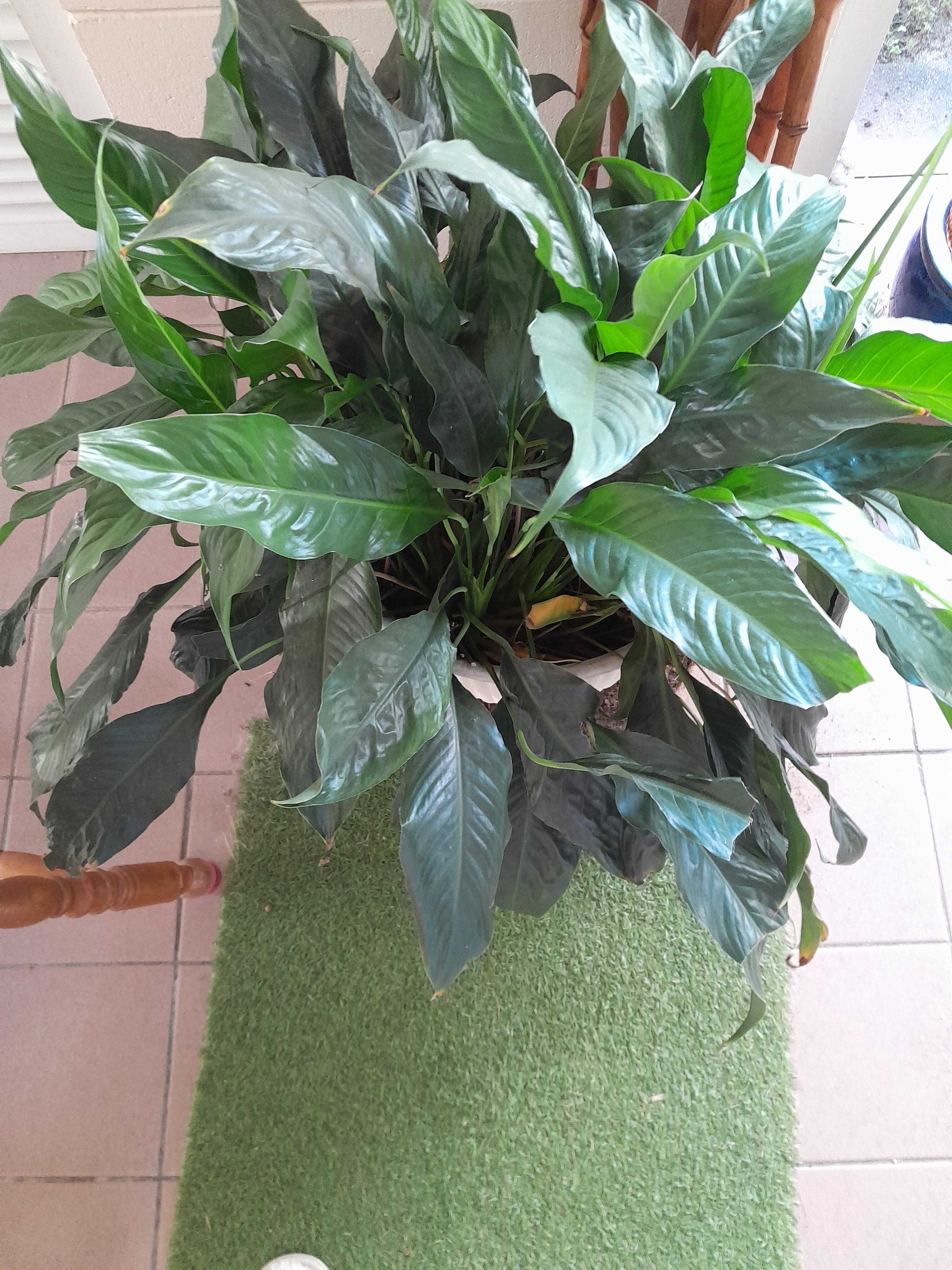
Peace Lily
Spathiphyllum wallisii
A lush, popular houseplant featuring large, glossy, dark green lance-shaped leaves that emerge directly from the soil. It produces characteristic white spathes enclosing a spadix when flowering.
- Light
- Thrives in bright, indirect light, approximately 6 to 8 hours per day. It can tolerate lower light conditions, though flowering may decrease.
- Water
- Water thoroughly whenever the top inch of soil feels dry to the touch. The plant is sensitive to drought, often drooping noticeably when dry, but recovers quickly upon watering. Avoid letting it sit in standing water.
- Growth
- An evergreen perennial herbaceous plant with a clumping growth habit. Typically reaches a mature height and spread of 1 to 4 feet depending on the specific cultivar and pot size, exhibiting a moderate growth rate.
Care instructions
Provide bright, indirect light and keep the soil consistently moist but never waterlogged. Feed with a balanced, water-soluble fertilizer diluted to half strength every six weeks during the spring and summer growing season.
Growing details
Sunlight
Thrives in bright, indirect light, approximately 6 to 8 hours per day. It can tolerate lower light conditions, though flowering may decrease.
Watering
Water thoroughly whenever the top inch of soil feels dry to the touch. The plant is sensitive to drought, often drooping noticeably when dry, but recovers quickly upon watering. Avoid letting it sit in standing water.
Soil
Requires a rich, loose, and well-draining potting mix that retains moisture while allowing excess water to escape easily. Optimal soil pH ranges from 5.5 to 6.5.
Hardiness zone
USDA hardiness zones 11 to 12. Grown primarily as an indoor houseplant in cooler temperate climates as it cannot tolerate frost or freezing temperatures.
Growth habit
An evergreen perennial herbaceous plant with a clumping growth habit. Typically reaches a mature height and spread of 1 to 4 feet depending on the specific cultivar and pot size, exhibiting a moderate growth rate.
Bloom season
Can bloom in spring and sporadically throughout the year under optimal conditions. Features a white or yellowish-white spadix wrapped in a prominent white or pale green modified leaf called a spathe.
Propagation
Easily propagated through division during repotting in the spring. Carefully separate the root clumps, ensuring each section has several healthy leaves and an intact root system, then plant them in individual containers.
Common pests & issues
Prone to occasional pests such as mealybugs, spider mites, and scale insects, which can be managed with insecticidal soap. Root rot may occur if the soil is kept overly wet or lacks adequate drainage.
Similar species
Often confused with Anthurium species, which have similar glossy foliage, but Anthuriums are distinguished by brightly colored, heart-shaped spathes in shades of red, pink, or orange rather than pure white.