
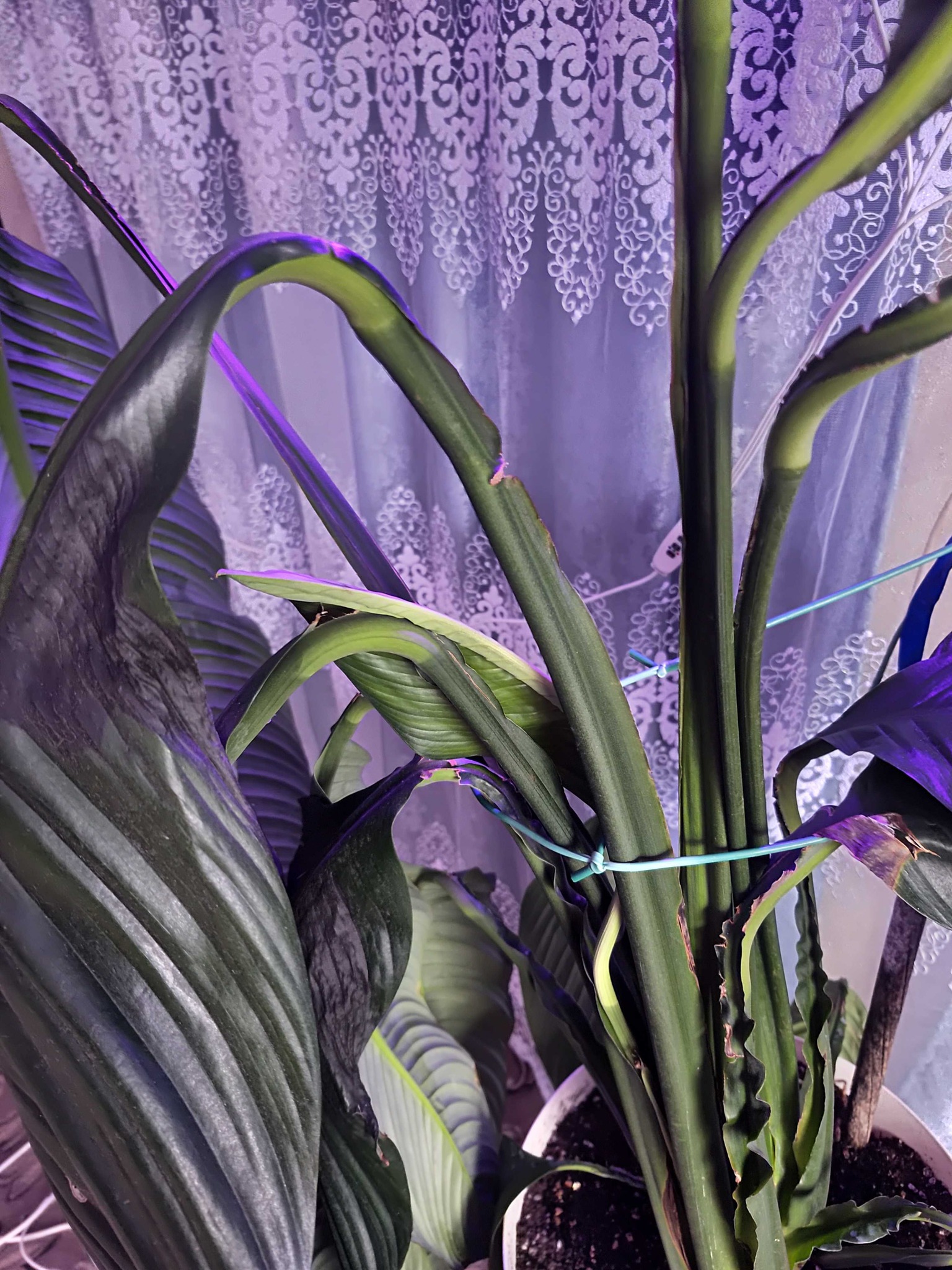
Peace Lily
Spathiphyllum wallisii
A popular indoor plant known for its dark green, glossy, lance-shaped leaves and distinctive white spathes that look like flowers.
- Light
- Medium to bright indirect light; direct sunlight can scorch the leaves, while too little light prevents blooming.
- Water
- Water when the top inch of soil is dry. The plant 'tells' you it is thirsty by wilting dramatically, but quickly recovers after watering.
- Growth
- Clumping herbaceous perennial; typically grows to 1-4 feet depending on the cultivar.
Care instructions
Place in bright, indirect light; keep soil consistently moist but never soggy; feed every 6 weeks in spring/summer.
Growing details
Sunlight
Medium to bright indirect light; direct sunlight can scorch the leaves, while too little light prevents blooming.
Watering
Water when the top inch of soil is dry. The plant 'tells' you it is thirsty by wilting dramatically, but quickly recovers after watering.
Soil
Well-draining, peat-based potting mix with a pH between 5.8 and 6.5.
Hardiness zone
USDA zones 11-12; grown indoors elsewhere.
Growth habit
Clumping herbaceous perennial; typically grows to 1-4 feet depending on the cultivar.
Bloom season
Spring and occasionally late summer; features a white hood-like spathe around a creamy-yellow spadix.
Propagation
Propagation is easiest by division of the root clump during repotting in the spring.
Common pests & issues
Brown leaf tips (low humidity or chemicals in tap water), root rot (overwatering), and pests like mealybugs or spider mites.
Similar species
Calla Lily (Zantedeschia) has similar flowers but different leaf structure; Anthurium has similar spadix/spathe but typically heart-shaped leaves.