
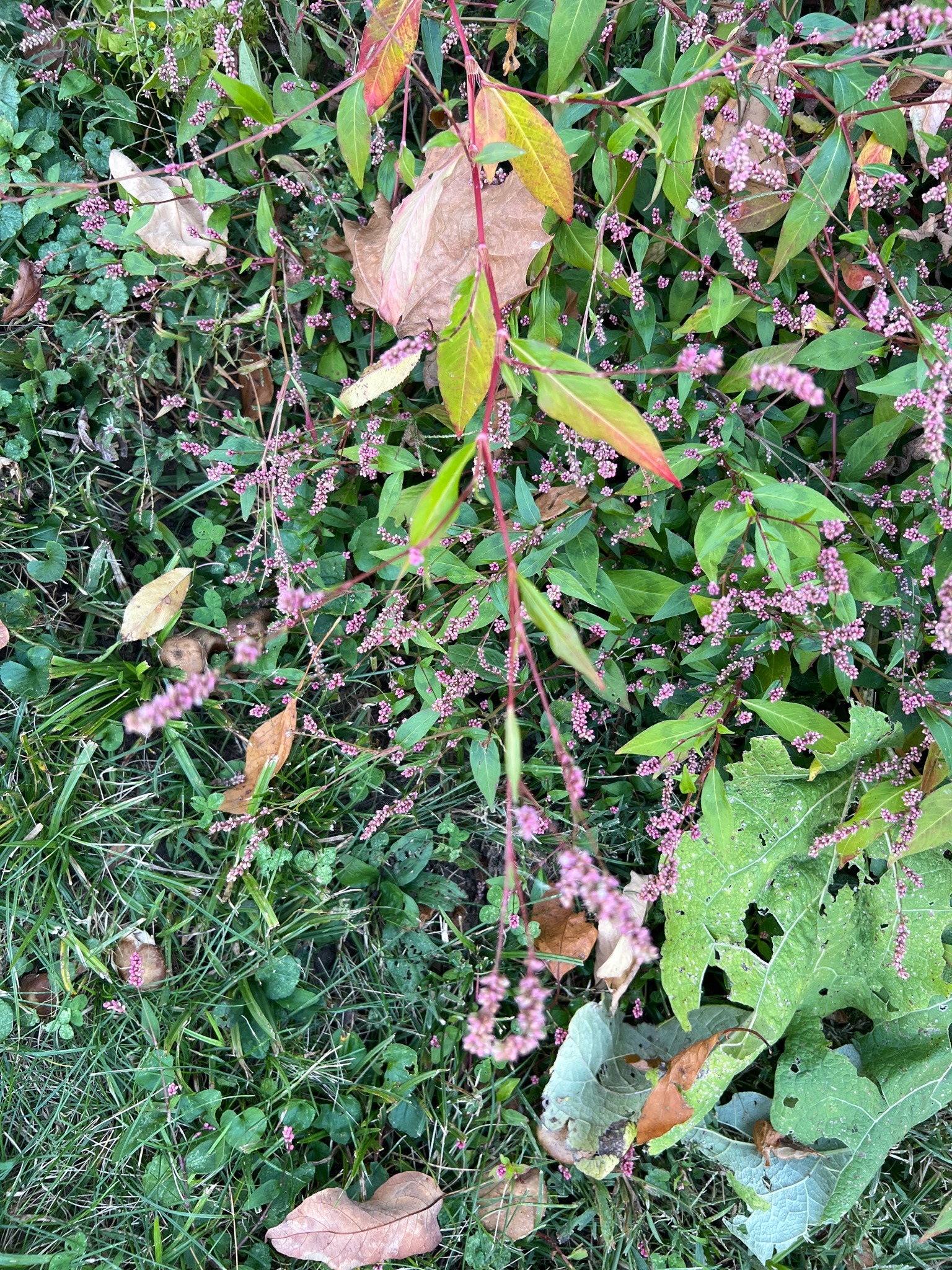
Pennsylvania Smartweed
Polygonum pensylvanicum
An annual herbaceous plant featuring alternate, lance-shaped leaves, swollen stem nodes, and slender, upright terminal clusters of small pink to rose-red flowers.
- Light
- Full sun to partial shade, requiring at least six hours of direct sunlight daily for optimal flowering.
- Water
- High water requirements. Prefers consistently moist to wet soil and does not tolerate extended drought periods.
- Growth
- An upright annual herb growing from 2 to 4 feet in height with a moderate to fast growth rate, branching stems, and a fibrous root system.
Care instructions
Thrives in moist to wet soils with full sun exposure. Requires consistent moisture and minimal maintenance, adapting well to damp ditches and disturbed ground.
Growing details
Sunlight
Full sun to partial shade, requiring at least six hours of direct sunlight daily for optimal flowering.
Watering
High water requirements. Prefers consistently moist to wet soil and does not tolerate extended drought periods.
Soil
Prefers rich, moist, loamy to clay soils with good organic content and a slightly acidic to neutral pH range of 6.0 to 7.0.
Hardiness zone
USDA zones 3 through 9, demonstrating strong cold hardiness across temperate regions.
Growth habit
An upright annual herb growing from 2 to 4 feet in height with a moderate to fast growth rate, branching stems, and a fibrous root system.
Bloom season
Blooms from mid-summer through mid-autumn, producing dense, cylindrical spikes of tiny pink or rose-colored flowers.
Propagation
Propagates readily through seed dispersal, which can be collected in autumn and sown directly in moist soil during spring.
Common pests & issues
Generally resilient, though susceptible to occasional fungal leaf spots and minor insect herbivory in overly damp or crowded conditions.
Similar species
Lady's thumb (Polygonum persicaria), which can be distinguished by the dark triangular blotches typically found on its leaves and ciliate fringes on the ochrea.