
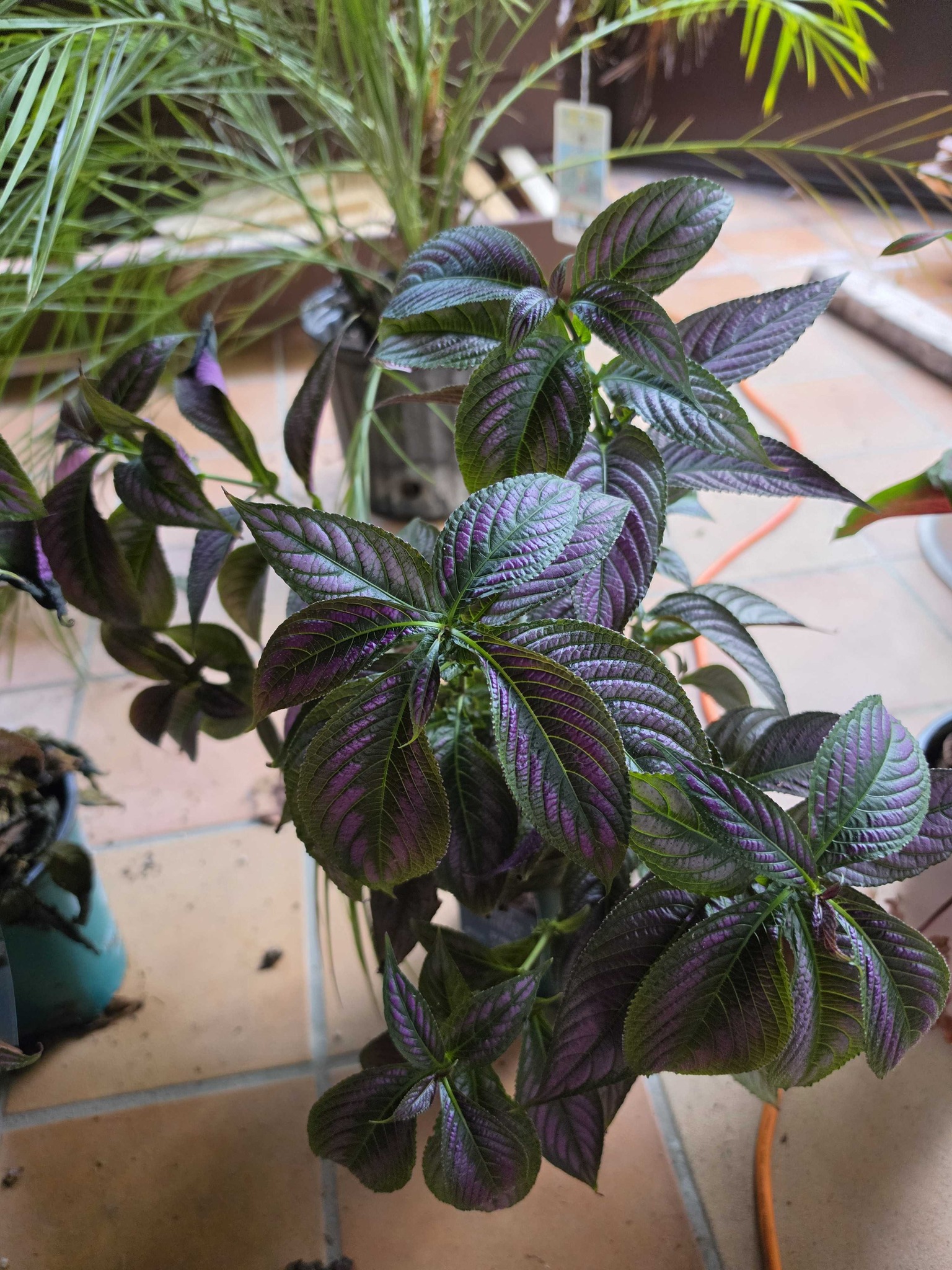
Persian Shield
Strobilanthes dyeriana
A striking ornamental tropical plant known for its iridescent, metallic purple and dark green lance-shaped leaves with prominent veining.
- Light
- Bright, indirect light for 6 to 8 hours daily. Avoid harsh, direct afternoon sun to prevent leaf scorch, though some morning sun enhances the purple coloration.
- Water
- Water thoroughly whenever the top inch of soil feels dry. Maintain consistent moisture. Drooping leaves often indicate the plant needs water, and it will usually recover quickly after a thorough watering.
- Growth
- Perennial subshrub in frost-free climates. Generally grows 2 to 3 feet tall and 1 to 2 feet wide with an upright, branching habit. Moderate growth rate.
Care instructions
Provide bright, indirect sunlight to maintain vibrant leaf coloration. Keep the soil consistently moist but never waterlogged. Feed with a balanced, water-soluble fertilizer every four weeks during the active growing season.
Growing details
Sunlight
Bright, indirect light for 6 to 8 hours daily. Avoid harsh, direct afternoon sun to prevent leaf scorch, though some morning sun enhances the purple coloration.
Watering
Water thoroughly whenever the top inch of soil feels dry. Maintain consistent moisture. Drooping leaves often indicate the plant needs water, and it will usually recover quickly after a thorough watering.
Soil
Rich, well-draining potting mix with high organic matter. Prefers a slightly acidic to neutral pH range of 6.0 to 7.0.
Hardiness zone
USDA zones 10 to 11. Typically grown as an annual or indoor houseplant in cooler temperate regions.
Growth habit
Perennial subshrub in frost-free climates. Generally grows 2 to 3 feet tall and 1 to 2 feet wide with an upright, branching habit. Moderate growth rate.
Bloom season
Infrequently blooms indoors, but may produce small, pale blue or violet funnel-shaped flowers in late winter or early spring when grown outdoors in ideal tropical conditions.
Propagation
Easily propagated through stem cuttings taken in spring or summer. Cuttings root readily in water or directly in moist potting soil within a few weeks.
Common pests & issues
Susceptible to aphids, mealybugs, and spider mites, especially when kept indoors. Prevent infestations by maintaining good air circulation and inspecting foliage regularly. Overwatering can lead to root rot.
Similar species
Strobilanthes atropurpurea, which features broader, more uniformly purple-toned foliage, and other Strobilanthes species which typically lack the distinctive metallic iridescent sheen of the Persian Shield.