
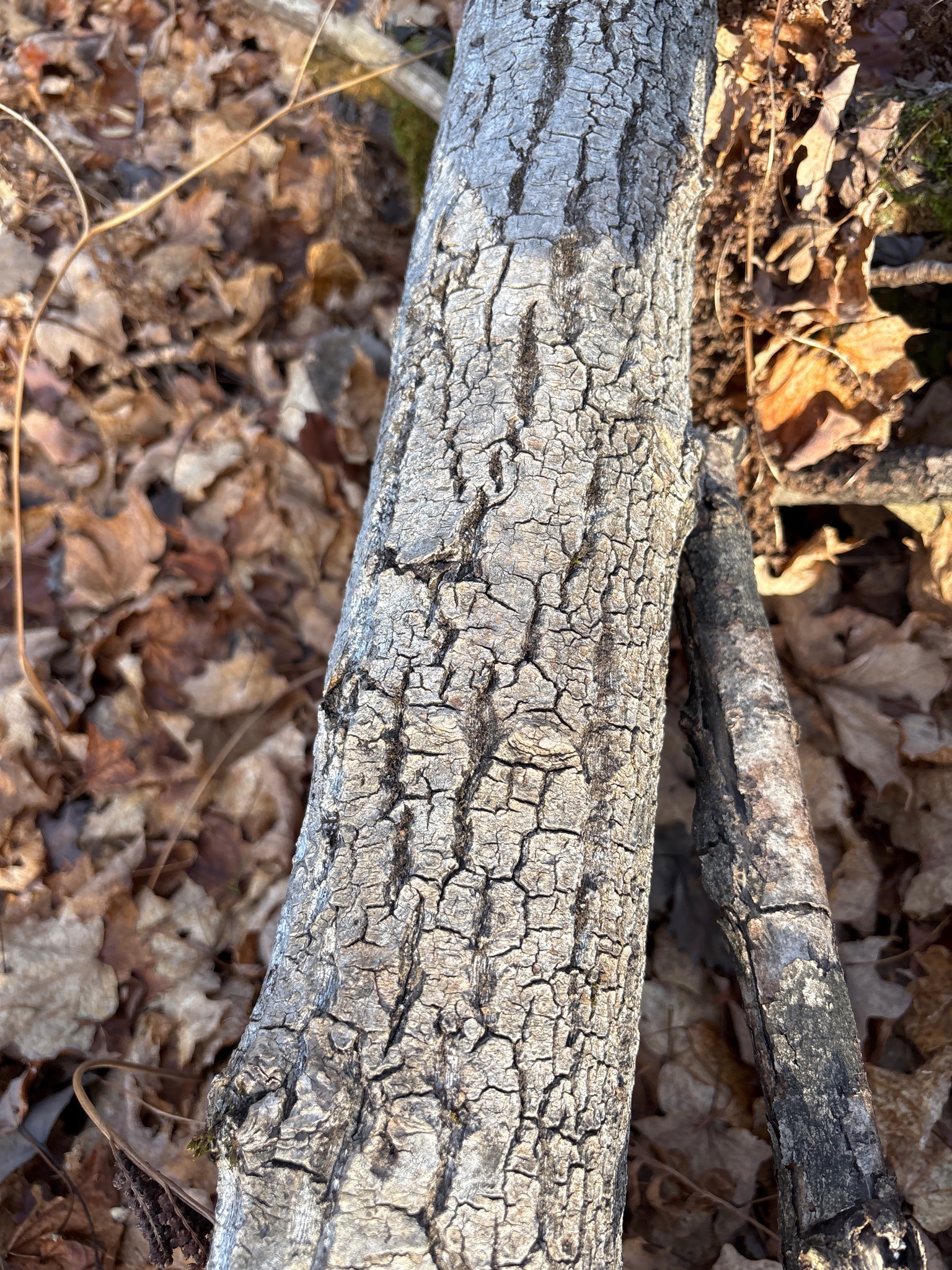
Persimmon (Bark)
Diospyros virginiana
A medium to large deciduous tree featuring a very distinctive, deeply furrowed, dark gray to almost black bark that breaks into small, square, scaly blocks, often compared to alligator hide.
- Light
- Full sun to partial shade, requiring at least 6 hours of direct sunlight daily.
- Water
- Moderate water needs once established. Highly drought-tolerant once mature; water deeply when the top few inches of soil become dry.
- Growth
- Perennial deciduous tree with an upright, rounded crown, reaching a mature height of 35 to 60 feet and a spread of 20 to 35 feet, with a moderate growth rate.
Care instructions
Grow in full sun to partial shade in well-drained soil. Water deeply during establishment, and provide occasional supplemental moisture during prolonged dry spells.
Growing details
Sunlight
Full sun to partial shade, requiring at least 6 hours of direct sunlight daily.
Watering
Moderate water needs once established. Highly drought-tolerant once mature; water deeply when the top few inches of soil become dry.
Soil
Adaptable to a wide range of well-drained soil types including clay, loam, and sandy soils, with a preferred pH range of 6.0 to 7.5.
Hardiness zone
USDA Zones 4 through 9
Growth habit
Perennial deciduous tree with an upright, rounded crown, reaching a mature height of 35 to 60 feet and a spread of 20 to 35 feet, with a moderate growth rate.
Bloom season
Flowers in late spring with small, bell-shaped, greenish-yellow flowers that are largely inconspicuous.
Propagation
Propagated primarily from seeds sown in autumn or via root cuttings and grafting for specific varieties.
Common pests & issues
Generally resilient against major pests and diseases, though occasionally susceptible to leaf spots, twig girdlers, and scale insects.
Similar species
Flowering Dogwood (Cornus florida) also features blocky bark, but the blocks are typically smaller and more distinctly rounded, resembling alligator skin less uniformly than Diospyros virginiana.