
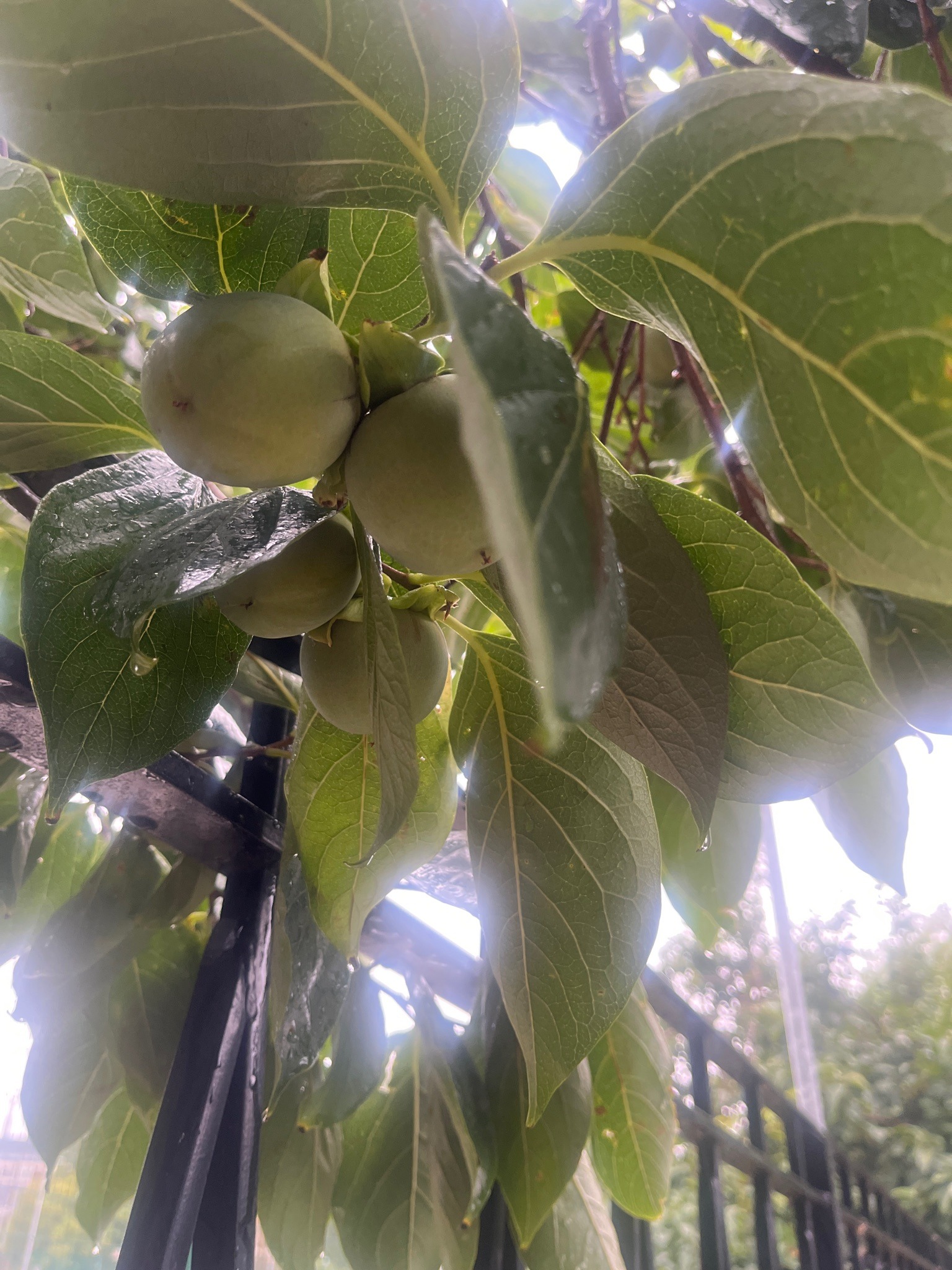
Persimmon
Diospyros kaki
A deciduous tree featuring large, glossy, dark green leaves with prominent veins and developing round to oval green fruits hanging beneath the foliage.
- Light
- Full sun, requiring at least 6 to 8 hours of direct sunlight daily.
- Water
- Moderate and regular watering, about an inch of water per week. Drought tolerant once established, but requires consistent moisture to prevent premature fruit drop.
- Growth
- Deciduous tree with a rounded or spreading canopy, reaching mature heights of 15 to 30 feet and a similar spread with a moderate growth rate.
Care instructions
Provide full sun and regular watering during the growing season. Plant in well-draining, fertile soil with a neutral pH. Apply a balanced fertilizer in early spring as new growth begins.
Growing details
Sunlight
Full sun, requiring at least 6 to 8 hours of direct sunlight daily.
Watering
Moderate and regular watering, about an inch of water per week. Drought tolerant once established, but requires consistent moisture to prevent premature fruit drop.
Soil
Well-draining sandy loam, loamy, or clay soils with a preferred pH range of 6.0 to 6.5.
Hardiness zone
USDA Hardiness Zones 7 through 10
Growth habit
Deciduous tree with a rounded or spreading canopy, reaching mature heights of 15 to 30 feet and a similar spread with a moderate growth rate.
Bloom season
Flowers in late spring with small, inconspicuous, bell-shaped yellowish-green blossoms.
Propagation
Typically propagated through grafting onto suitable rootstocks, or by sowing seeds in stratified conditions, though seedlings may not mirror the parent traits.
Common pests & issues
Susceptible to pests like scale insects and mealybugs, and fungal issues such as leaf spot or powdery mildew, manageable with good air circulation and appropriate horticultural oils.
Similar species
Diospyros virginiana (American persimmon), which features smaller leaves and smaller fruits compared to the larger foliage and fruits of Diospyros kaki.