
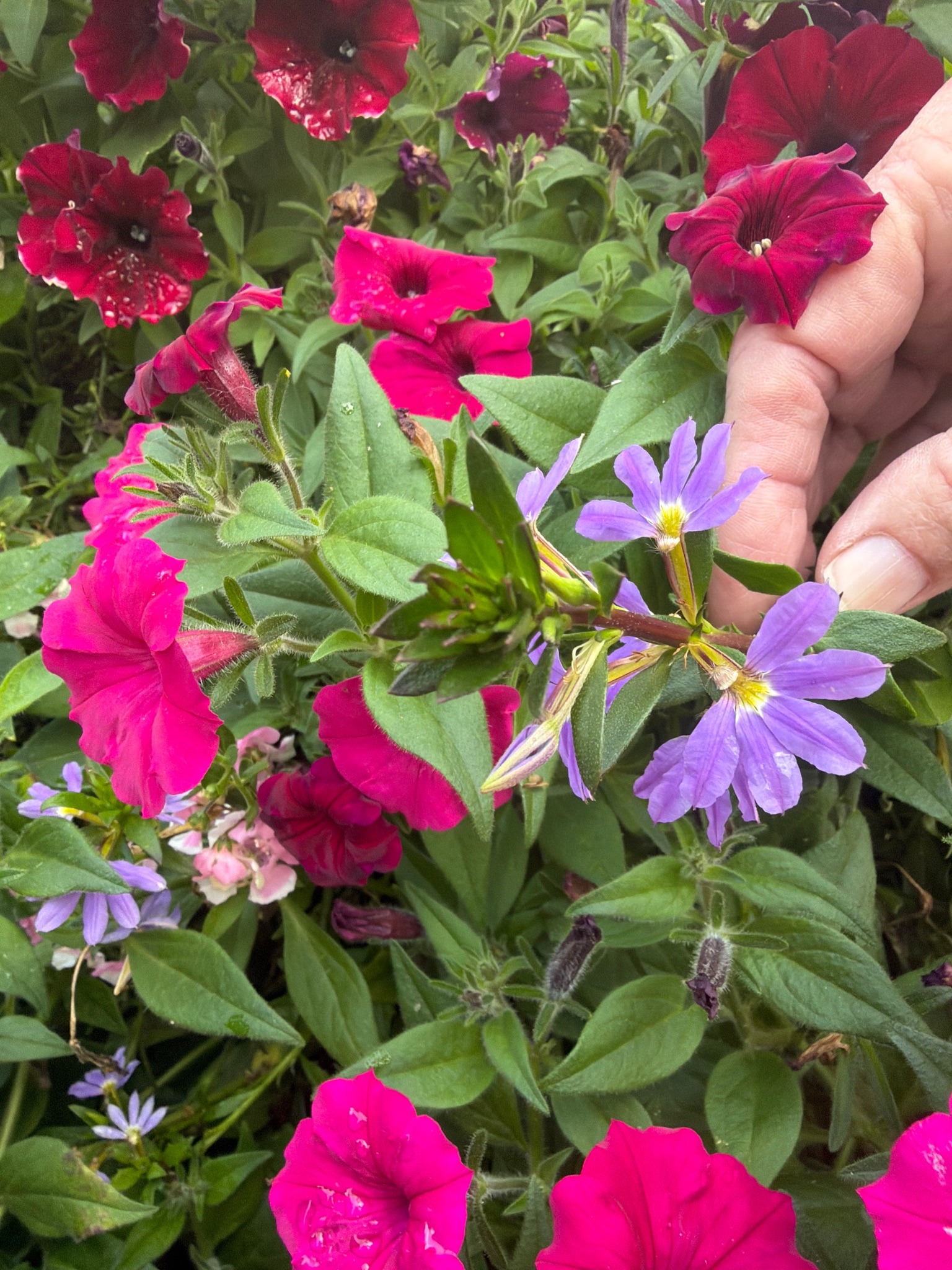
Petunia and Fan Flower
Petunia x hybrida and Scaevola aemula
The image shows a vibrant mixed planting featuring bright magenta and deep red funnel-shaped petunia flowers alongside distinct, fan-shaped light purple flowers of the fan flower plant, set against lush green foliage.
- Light
- Full sun, requiring six to eight hours of direct sunlight per day.
- Water
- Moderate water needs; water deeply whenever the top layer of soil dries out, avoiding waterlogged conditions.
- Growth
- Herbaceous flowering plants with a spreading or mounding growth habit, typically reaching a height of 6 to 18 inches and a spread of 12 to 36 inches.
Care instructions
Provide full sun exposure with at least six hours of direct sunlight daily. Maintain consistent moisture by watering regularly when the top inch of soil feels dry. Plant in well-draining, rich soil and apply a balanced liquid fertilizer every two to three weeks during the active growing season to encourage continuous blooming.
Growing details
Sunlight
Full sun, requiring six to eight hours of direct sunlight per day.
Watering
Moderate water needs; water deeply whenever the top layer of soil dries out, avoiding waterlogged conditions.
Soil
Well-draining, fertile loamy soil with a slightly acidic to neutral pH range of 6.0 to 7.0.
Hardiness zone
USDA hardiness zones 9 to 11 when grown as perennials, frequently cultivated as annuals in zones 2 to 8.
Growth habit
Herbaceous flowering plants with a spreading or mounding growth habit, typically reaching a height of 6 to 18 inches and a spread of 12 to 36 inches.
Bloom season
Blooms continuously from late spring through the first autumn frosts, featuring trumpet-shaped and fan-shaped flowers in shades of pink, purple, and red.
Propagation
Propagated primarily through stem cuttings taken in spring or summer, or grown from seed sown indoors before the final frost date.
Common pests & issues
Susceptible to root rot in poorly draining soils, as well as occasional infestations of aphids, whiteflies, and slugs. Prevent issues by ensuring adequate spacing, good air circulation, and proper watering habits.
Similar species
Calibrachoa, which resembles miniature petunias but has smaller leaves and woodier stems, and other Lobelia species which also feature blue to purple flowers but differ in floral structure.