
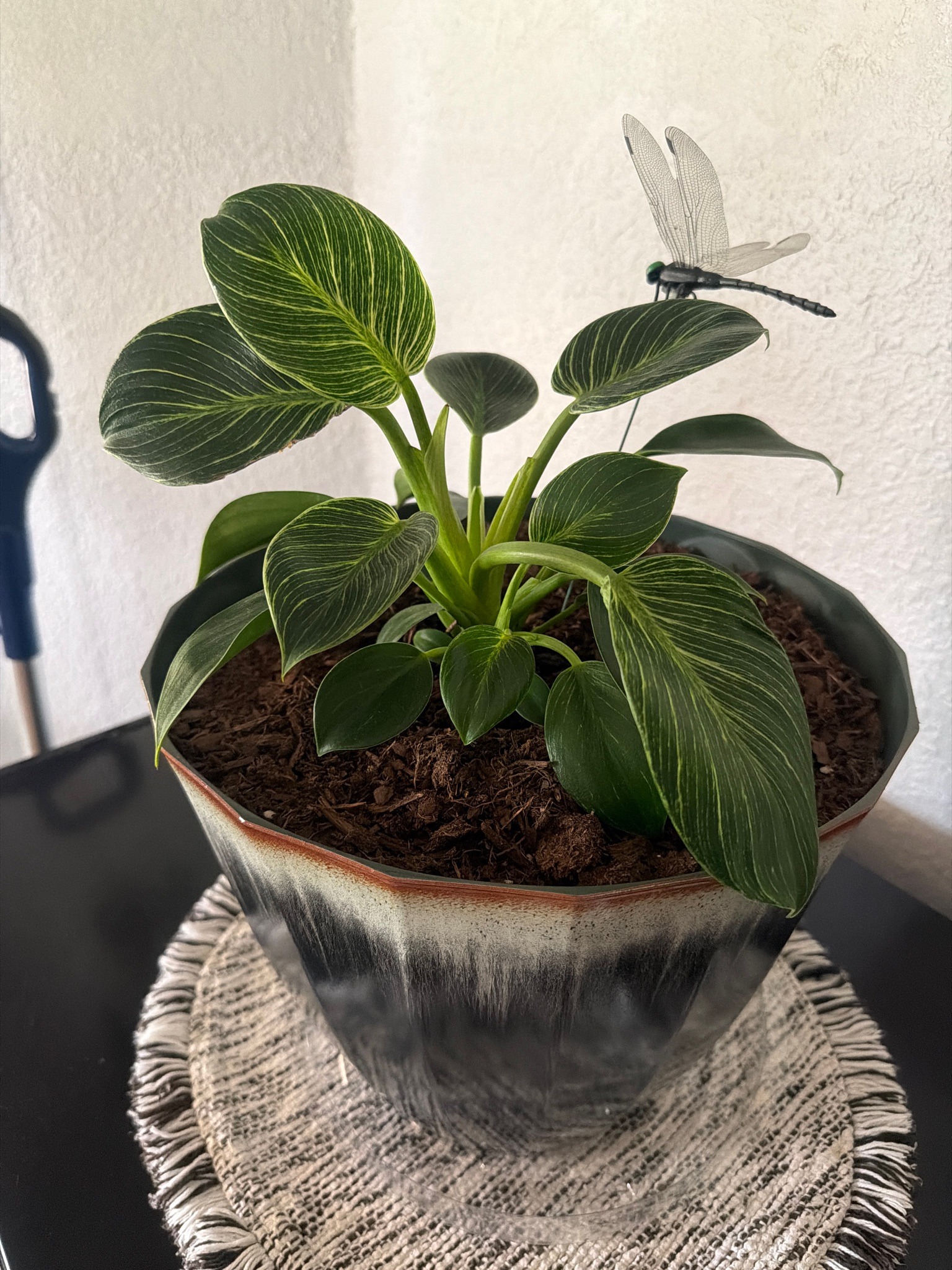
Philodendron Birkin
Philodendron 'Birkin'
A popular houseplant known for its striking dark green leaves featuring thin, creamy white or yellow pinstripe variegation. It is a slow-growing self-heading philodendron.
- Light
- Bright, indirect light for 6 to 8 hours daily; avoid direct sunlight which can scorch the leaves.
- Water
- Water when the top 50% of soil feels dry. Thrives in high humidity and requires less water in the winter. Drooping leaves often indicate under-watering.
- Growth
- Perennial evergreen with a compact, self-heading growth habit. Can reach approximately 2 to 3 feet in height and width.
Care instructions
Provide bright, indirect sunlight and water when the top inch of soil is dry. Use a well-draining potting mix and fertilize monthly during the growing season with a balanced liquid fertilizer.
Growing details
Sunlight
Bright, indirect light for 6 to 8 hours daily; avoid direct sunlight which can scorch the leaves.
Watering
Water when the top 50% of soil feels dry. Thrives in high humidity and requires less water in the winter. Drooping leaves often indicate under-watering.
Soil
Well-aerated, moisture-retentive but free-draining soil mix, typically containing peat moss, perlite, and pine bark; pH 5.0 to 7.0.
Hardiness zone
USDA zones 10-11; best kept indoors between 65°F and 85°F (18°C-29°C).
Growth habit
Perennial evergreen with a compact, self-heading growth habit. Can reach approximately 2 to 3 feet in height and width.
Bloom season
Rarely flowers indoors; produce spathes and spadices typical of aroids under ideal conditions.
Propagation
Propagated via stem cuttings or division, though stem cuttings can be difficult due to the compact growth habit.
Common pests & issues
Susceptible to spider mites, mealybugs, and root rot if over-watered. Variegation may revert to solid green if light levels are too low.
Similar species
Philodendron 'Rojo Congo' (the parent plant from which it mutated), which has similar leaf shapes but deep burgundy/red foliage without pinstripes.