
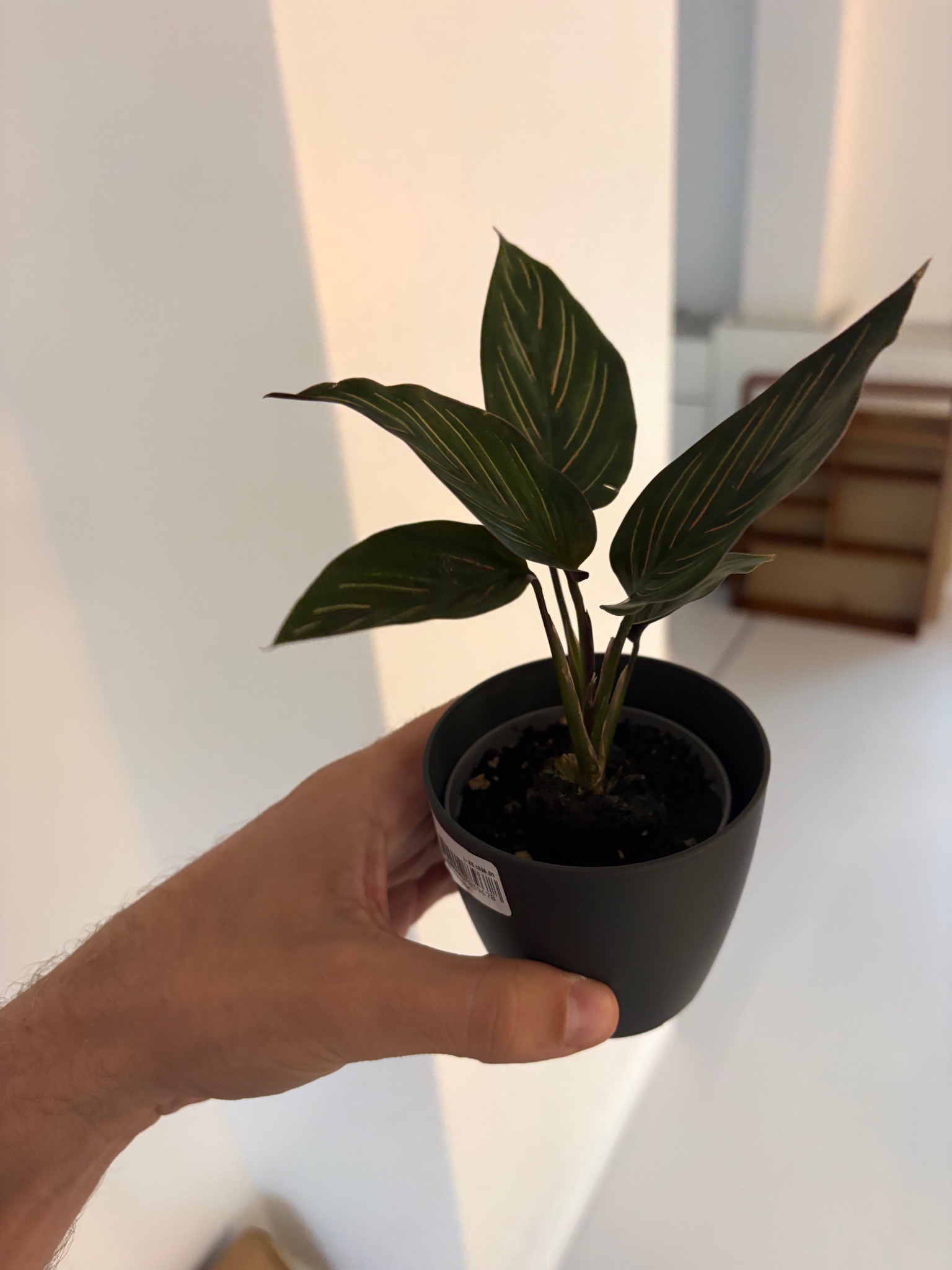
Pin-stripe Calathea
Goeppertia ornata
A compact perennial houseplant featuring dark green, glossy, elliptical leaves adorned with distinct pink or white linear pinstripes running parallel from the central midrib.
- Light
- Bright, indirect light for 6 to 8 hours daily; avoid direct sunlight which can scorch the foliage.
- Water
- Water thoroughly when the top inch of soil feels slightly dry. Use filtered, room-temperature water to prevent leaf tip browning from mineral buildup.
- Growth
- Clump-forming herbaceous perennial houseplant reaching a mature height and spread of 1 to 2 feet with a moderate growth rate.
Care instructions
Provide bright, indirect sunlight, keep the soil consistently moist but never waterlogged, maintain high ambient humidity, and apply a balanced liquid fertilizer diluted to half strength monthly during the spring and summer growing season.
Growing details
Sunlight
Bright, indirect light for 6 to 8 hours daily; avoid direct sunlight which can scorch the foliage.
Watering
Water thoroughly when the top inch of soil feels slightly dry. Use filtered, room-temperature water to prevent leaf tip browning from mineral buildup.
Soil
Rich, well-draining potting mix containing peat moss, perlite, and organic matter with a slightly acidic pH range of 5.5 to 6.5.
Hardiness zone
USDA zones 10 to 12; typically grown strictly as an indoor houseplant in cooler climates.
Growth habit
Clump-forming herbaceous perennial houseplant reaching a mature height and spread of 1 to 2 feet with a moderate growth rate.
Bloom season
Non-flowering when grown indoors as a foliage houseplant; produces infrequent white or pale purple spikes in native tropical habitats.
Propagation
Propagated successfully through root division during repotting in the spring, ensuring each division has several healthy leaves and an intact root system.
Common pests & issues
Prone to spider mites and fungus gnats if humidity is too low or soil remains waterlogged. Leaf tip browning often results from dry air, fluoridated tap water, or irregular watering.
Similar species
Goeppertia roseopicta, which features broader, rounder leaves with broader pink bandings rather than fine linear pinstripes.