
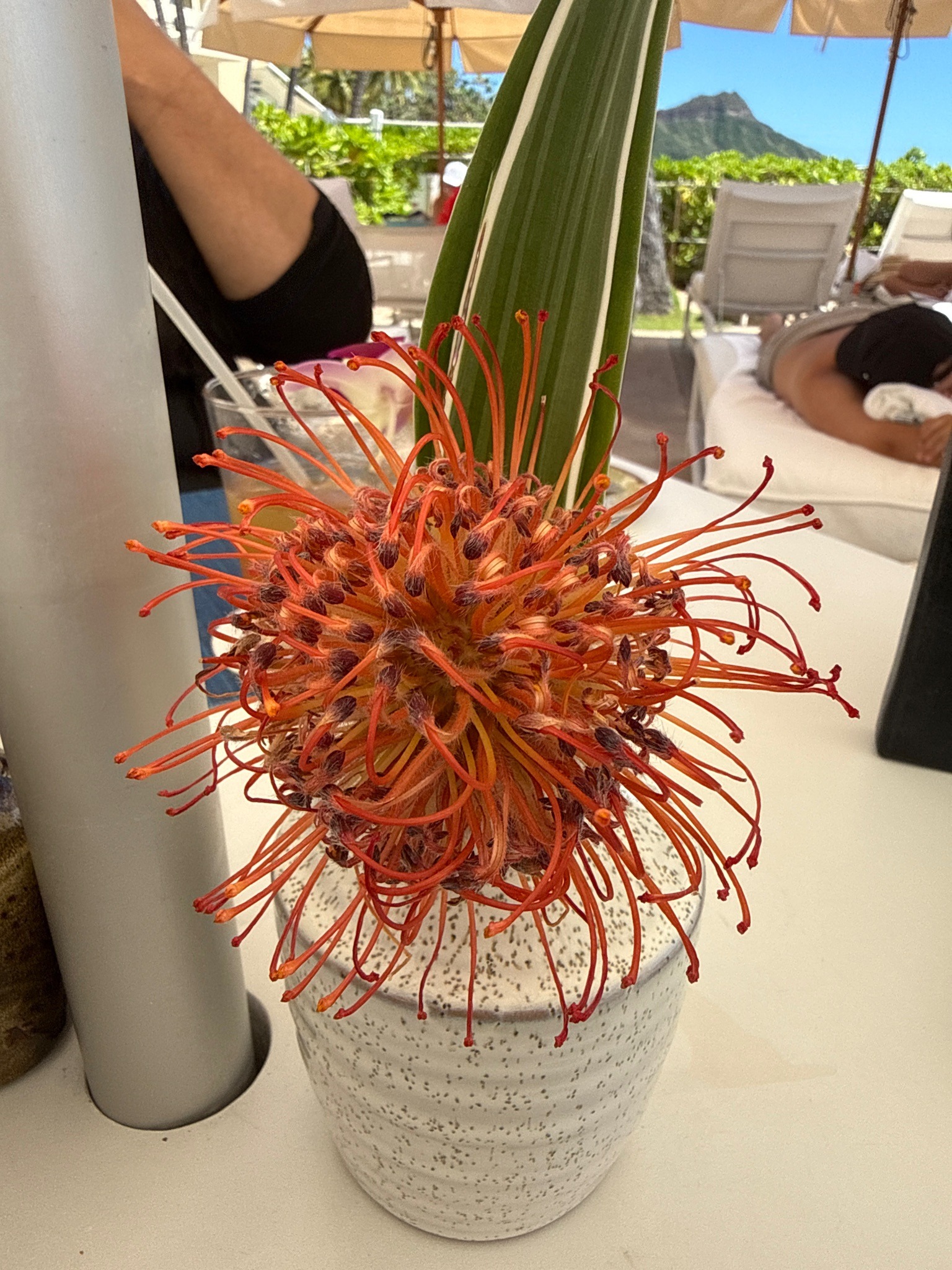
Pincushion Protea
Leucospermum cordifolium
An evergreen shrub featuring striking, spherical flower heads with prominent, protruding styles that resemble pins in a pincushion, surrounded by stiff, leathery leaves.
- Light
- Full sun, requiring at least 6 to 8 hours of direct sunlight daily.
- Water
- Low water needs once established. Water deeply when the top few inches of soil become dry, but never allow the plant to sit in standing water.
- Growth
- An evergreen, rounded shrub that typically grows to a height and spread of 3 to 8 feet with a moderate growth rate.
Care instructions
Provide full sun and excellent air circulation. Plant in sandy, acidic, nutrient-poor soil with very sharp drainage. Water deeply but infrequently, allowing the soil to dry out between waterings. Avoid high-phosphorus fertilizers.
Growing details
Sunlight
Full sun, requiring at least 6 to 8 hours of direct sunlight daily.
Watering
Low water needs once established. Water deeply when the top few inches of soil become dry, but never allow the plant to sit in standing water.
Soil
Requires very well-draining, sandy or gravelly loam with an acidic pH range between 5.5 and 6.5.
Hardiness zone
USDA Hardiness Zones 9 through 11, with low tolerance for hard freezes.
Growth habit
An evergreen, rounded shrub that typically grows to a height and spread of 3 to 8 feet with a moderate growth rate.
Bloom season
Blooms from late winter through spring, producing large, vibrant orange-red or yellow pincushion-like flower heads.
Propagation
Propagated primarily through semi-hardwood stem cuttings taken in late summer or autumn, or from seeds which often require specific environmental triggers like smoke or heat to germinate successfully.
Common pests & issues
Susceptible to root rot if drainage is poor or if overwatered. Fungal leaf spots may occur in humid conditions with poor air circulation. Pests such as aphids can occasionally affect new growth.
Similar species
Other members of the Protea and Leucadendron genera, distinguished primarily by the unique curved styles and cylindrical or rounded inflorescence structure of Leucospermum.