
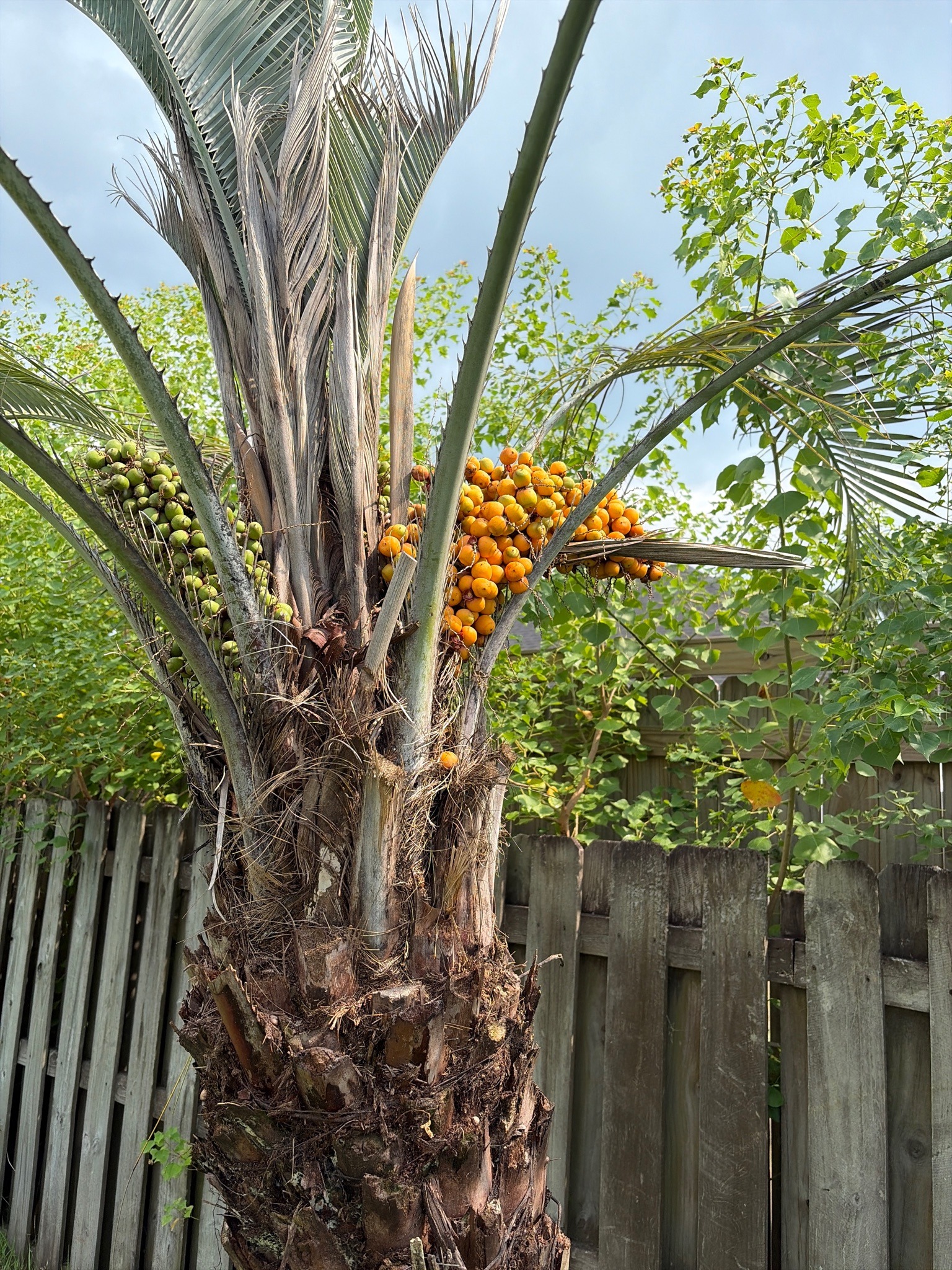
Pindo Palm
Butia capitata
A slow-growing feather palm featuring striking blue-grey, gracefully arching pinnate fronds. It forms a thick trunk covered with persistent leaf bases and produces dense hanging clusters of bright yellow to orange round fruits.
- Light
- Full sun to light shade; performs best with at least 6 hours of direct sunlight daily.
- Water
- Moderate watering requirements. Prefers even moisture during active growth, but allows the upper layers of soil to dry out between waterings. Highly drought tolerant once mature.
- Growth
- Perennial palm tree with a solitary, robust trunk. Reaches mature heights of 12 to 20 feet (3.6 to 6 meters) with a frond spread of 10 to 15 feet. Has a slow growth rate.
Care instructions
Plant in full sun for the robust form and foliage. Water regularly until established, after which it exhibits good drought tolerance. Ensure soil is well-draining, and apply a specialized palm fertilizer containing micro-nutrients during spring and summer.
Growing details
Sunlight
Full sun to light shade; performs best with at least 6 hours of direct sunlight daily.
Watering
Moderate watering requirements. Prefers even moisture during active growth, but allows the upper layers of soil to dry out between waterings. Highly drought tolerant once mature.
Soil
Prefers sandy, well-draining soils with an acidic to neutral pH (5.5 to 7.0). Tolerates clay or loam if drainage is adequate.
Hardiness zone
USDA Zones 8b through 11
Growth habit
Perennial palm tree with a solitary, robust trunk. Reaches mature heights of 12 to 20 feet (3.6 to 6 meters) with a frond spread of 10 to 15 feet. Has a slow growth rate.
Bloom season
Spring blooming; produces long, branching flower stalks carrying tiny yellow to pinkish blossoms, followed by orange oval-to-round fruits in late summer.
Propagation
Propagated via seed, which can take several months to over a year to germinate.
Common pests & issues
Susceptible to micronutrient deficiencies (like manganese or potassium deficiency) causing leaf yellowing. Pests include palm aphids, scales, and spider mites. Root rot can occur in poorly drained soils.
Similar species
Queen Palm (Syagrus romanzoffiana), which grows taller with greener, softer fronds and lacks the distinct stiffly arched blue-grey leaves; and Canary Island Date Palm (Phoenix canariensis), which is significantly larger with long sharp spines at the base of fronds.