
Pineapple Sage
Salvia elegans
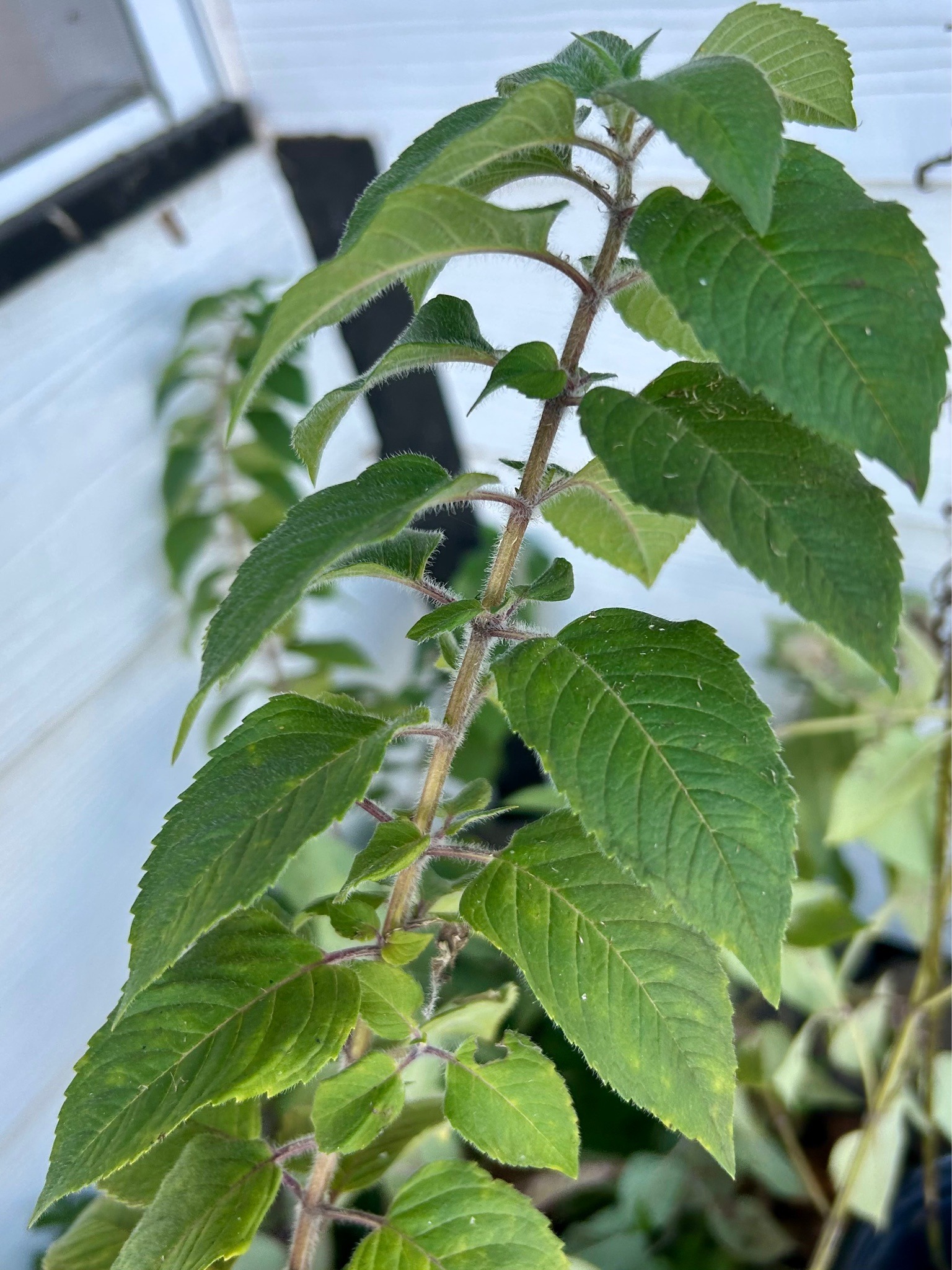
An herbaceous perennial subshrub featuring square stems, opposite ovate leaves with serrated margins, and a soft pubescense covering the foliage and stems.
- Light
- Full sun to partial shade, ideally 6 or more hours of direct sunlight per day.
- Water
- Moderate water needs; water deeply when the topsoil feels dry to the touch. Drought tolerant once established, but extended dry periods will cause wilting.
- Growth
- Upright, branching perennial subshrub growing to a mature height of 2 to 4 feet with a spread of 2 to 3 feet, exhibiting a moderate to fast growth rate.
Care instructions
Provide full sun to partial shade, regular watering allowing the top inch of soil to dry out, and well-draining soil rich in organic matter. Feed lightly with a balanced, water-soluble fertilizer during the active growing season.
Growing details
Sunlight
Full sun to partial shade, ideally 6 or more hours of direct sunlight per day.
Watering
Moderate water needs; water deeply when the topsoil feels dry to the touch. Drought tolerant once established, but extended dry periods will cause wilting.
Soil
Well-draining loam or sandy soil with a neutral pH range between 6.0 and 7.0.
Hardiness zone
USDA zones 8 through 11, treated as an annual in cooler climates.
Growth habit
Upright, branching perennial subshrub growing to a mature height of 2 to 4 feet with a spread of 2 to 3 feet, exhibiting a moderate to fast growth rate.
Bloom season
Late summer to autumn, producing tubular, bright red flowers arranged in terminal whorls.
Propagation
Easily propagated through stem cuttings taken in spring or summer, or by division of established root clumps.
Common pests & issues
Susceptible to aphids, whiteflies, and spider mites. Root rot can occur in poorly draining soils or with overwatering.
Similar species
Salvia coccinea (Scarlet Sage), which features smoother foliage and lacks the distinctive leaf texture of Salvia elegans.