
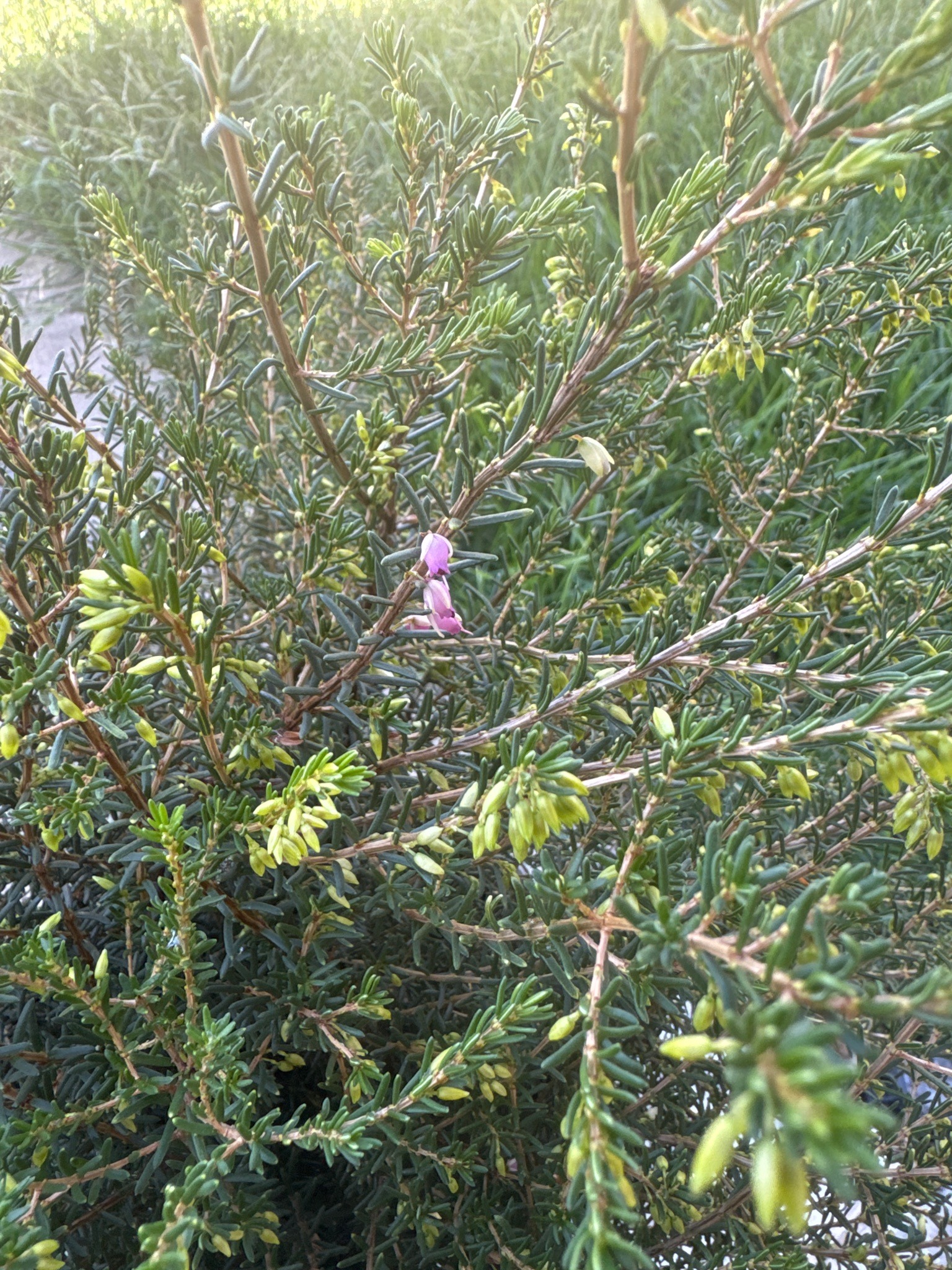
Pink Swamp Heath
Richea glauca
An evergreen shrub featuring rigid, needle-like or narrow linear leaves, woody stems, and small clustered terminal flowers often in shades of pink or white.
- Light
- Full sun to partial shade, requiring at least 6 hours of direct sunlight daily for optimal flowering.
- Water
- Requires regular watering to keep the soil evenly moist. It has low drought tolerance and will suffer if allowed to dry out completely.
- Growth
- Perennial evergreen shrub with an upright, branching growth form, reaching a mature height of 1 to 2 meters with a similar spread.
Care instructions
Provide full sun to partial shade with consistently moist, well-draining acidic soil. Avoid letting the soil dry out completely, and feed sparingly with a slow-release fertilizer formulated for acid-loving plants.
Growing details
Sunlight
Full sun to partial shade, requiring at least 6 hours of direct sunlight daily for optimal flowering.
Watering
Requires regular watering to keep the soil evenly moist. It has low drought tolerance and will suffer if allowed to dry out completely.
Soil
Prefers acidic, sandy or peaty soils with excellent drainage and a pH range of 4.5 to 6.0.
Hardiness zone
USDA Hardiness Zones 8 through 10, tolerating mild frosts but needing protection from extreme freezes.
Growth habit
Perennial evergreen shrub with an upright, branching growth form, reaching a mature height of 1 to 2 meters with a similar spread.
Bloom season
Blooms from late spring through summer, producing small tubular pink or whitish flowers.
Propagation
Propagated primarily through semi-hardwood cuttings taken in summer or by seed sown in specialized acidic propagating media.
Common pests & issues
Generally resilient, but susceptible to root rot if grown in poorly draining, waterlogged soil. Fungal leaf spots may occur in humid, stagnant conditions.
Similar species
Can be confused with other members of the Ericaceae family, such as Epacris species, but is distinguished by its specific foliage arrangement and floral structure native to Tasmanian alpine and subalpine regions.