
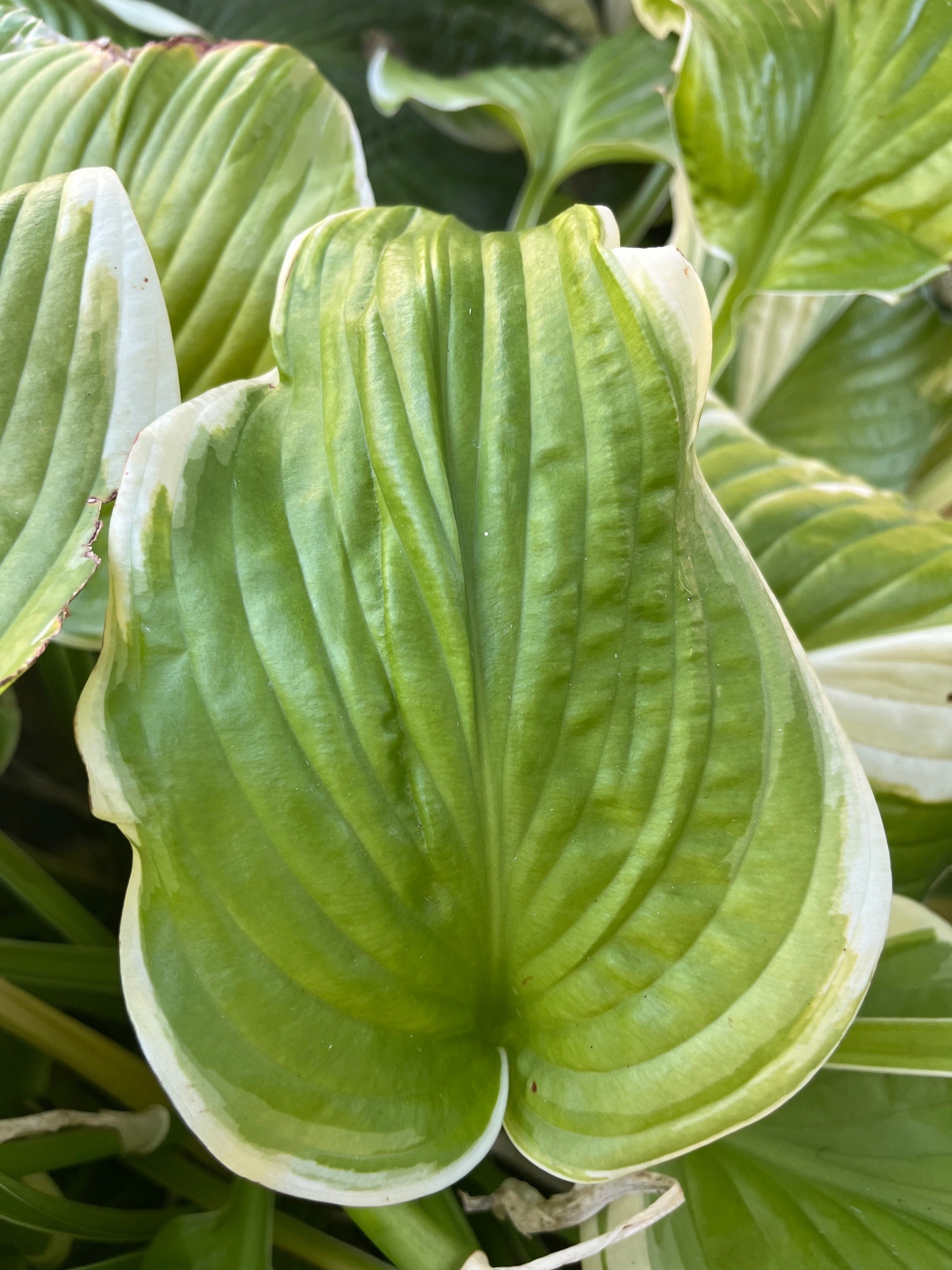
Plantain Lily
Hosta sp.
A herbaceous perennial grown primarily for its lush, patterned foliage, featuring large, broad, ribbed leaves with contrasting margins.
- Light
- Partial shade to full shade, receiving roughly 3 to 6 hours of indirect light or morning sun per day.
- Water
- Water deeply about once a week, increasing frequency during extended dry periods. Maintain consistently moist soil without allowing it to become waterlogged.
- Growth
- Clump-forming herbaceous perennial with a mounding growth habit, typically reaching 1 to 3 feet in height and 2 to 4 feet in spread with a moderate growth rate.
Care instructions
Provide partial to full shade with moist, well-draining soil rich in organic matter. Water regularly to maintain even moisture, avoiding overhead watering to protect foliage.
Growing details
Sunlight
Partial shade to full shade, receiving roughly 3 to 6 hours of indirect light or morning sun per day.
Watering
Water deeply about once a week, increasing frequency during extended dry periods. Maintain consistently moist soil without allowing it to become waterlogged.
Soil
Rich, moist, well-drained loamy soil with a slightly acidic to neutral pH between 6.0 and 7.0.
Hardiness zone
USDA zones 3 through 9.
Growth habit
Clump-forming herbaceous perennial with a mounding growth habit, typically reaching 1 to 3 feet in height and 2 to 4 feet in spread with a moderate growth rate.
Bloom season
Mid to late summer, producing scapes of bell-shaped, funnel-shaped flowers in shades of purple, lavender, or white.
Propagation
Propagated primarily through division of established clumps in early spring or late summer.
Common pests & issues
Susceptible to foliar damage from slugs and snails, as well as foliar nematodes and occasional fungal leaf spots.
Similar species
Daylilies (Hemerocallis) can appear somewhat similar in leaf shape, but differ by having longer, grass-like leaves and parallel veining without the broad puckered blades of hostas.