
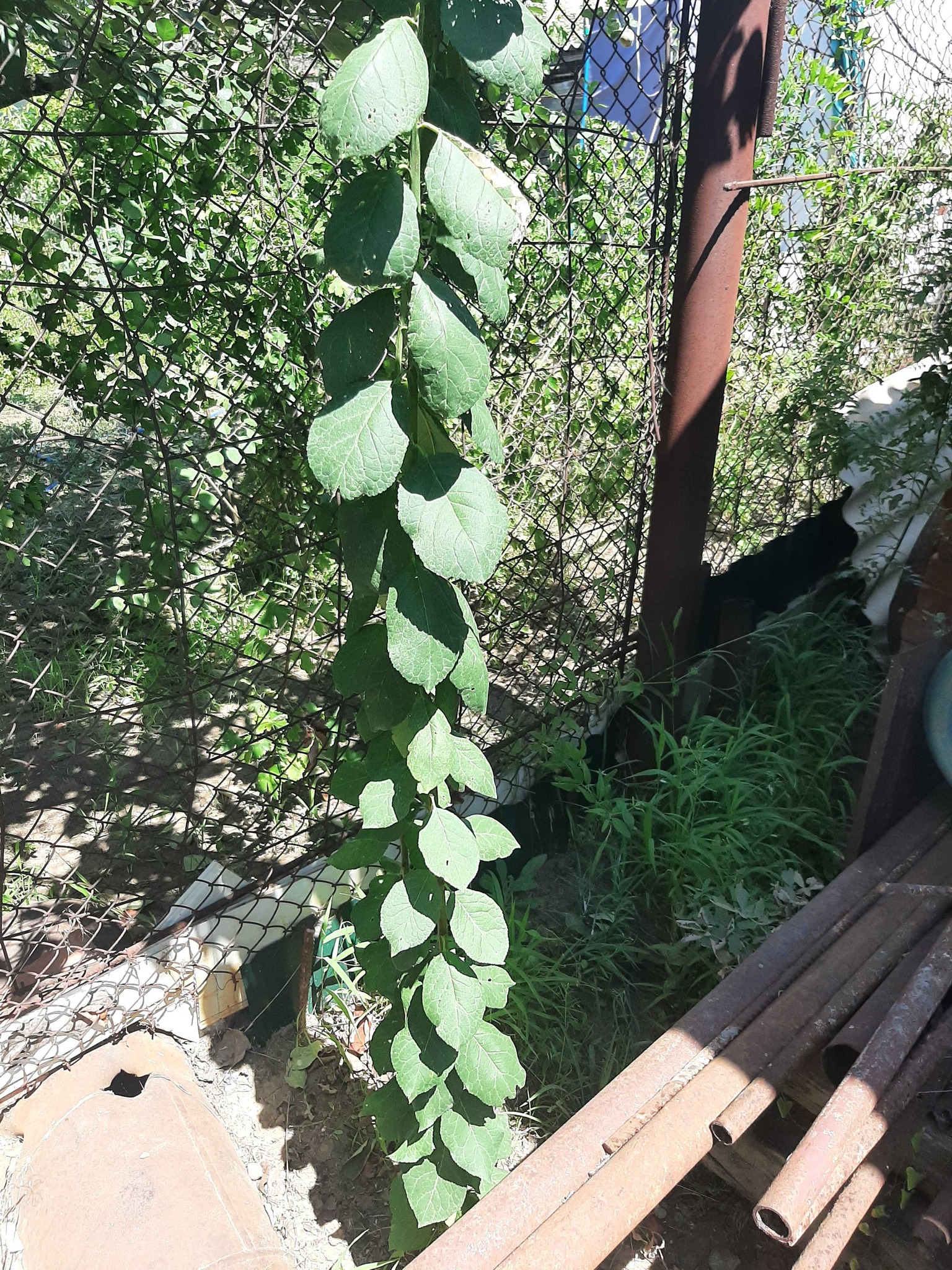
Plum tree (shoot/sucker growth)
Prunus domestica
A vigorous upright vertical shoot or root sucker arising from a stone fruit tree, displaying densely arranged alternate leaves with serrated margins along a straight green-to-brown stem.
- Light
- Full sun, requiring at least six to eight hours of direct sunlight daily.
- Water
- Moderate watering needs. Water deeply when the top few inches of soil become dry, allowing the soil to dry slightly between waterings to prevent root rot.
- Growth
- Perennial woody plant forming vigorous upright vegetative shoots and suckers from the root system, capable of growing several feet in a single season.
Care instructions
Provide full sun exposure, well-draining loamy soil, and regular watering during dry periods. Prune unwanted root suckers annually at the base to maintain tree vigor and desired form.
Growing details
Sunlight
Full sun, requiring at least six to eight hours of direct sunlight daily.
Watering
Moderate watering needs. Water deeply when the top few inches of soil become dry, allowing the soil to dry slightly between waterings to prevent root rot.
Soil
Prefers fertile, well-draining loamy soils with a neutral pH ranging from 6.0 to 7.0.
Hardiness zone
USDA hardiness zones 4 through 9.
Growth habit
Perennial woody plant forming vigorous upright vegetative shoots and suckers from the root system, capable of growing several feet in a single season.
Bloom season
Spring, producing clusters of small white to pale pink flowers before or alongside foliage development.
Propagation
Typically propagated through grafting onto rootstocks, or through budding and tissue culture methods.
Common pests & issues
Susceptible to aphids, scale insects, and fungal issues such as black knot or leaf spot, managed through proper sanitation and seasonal pruning.
Similar species
Other Prunus species such as cherries or peaches, distinguished primarily by precise floral structures, gland arrangements on petioles, and mature bark characteristics.