
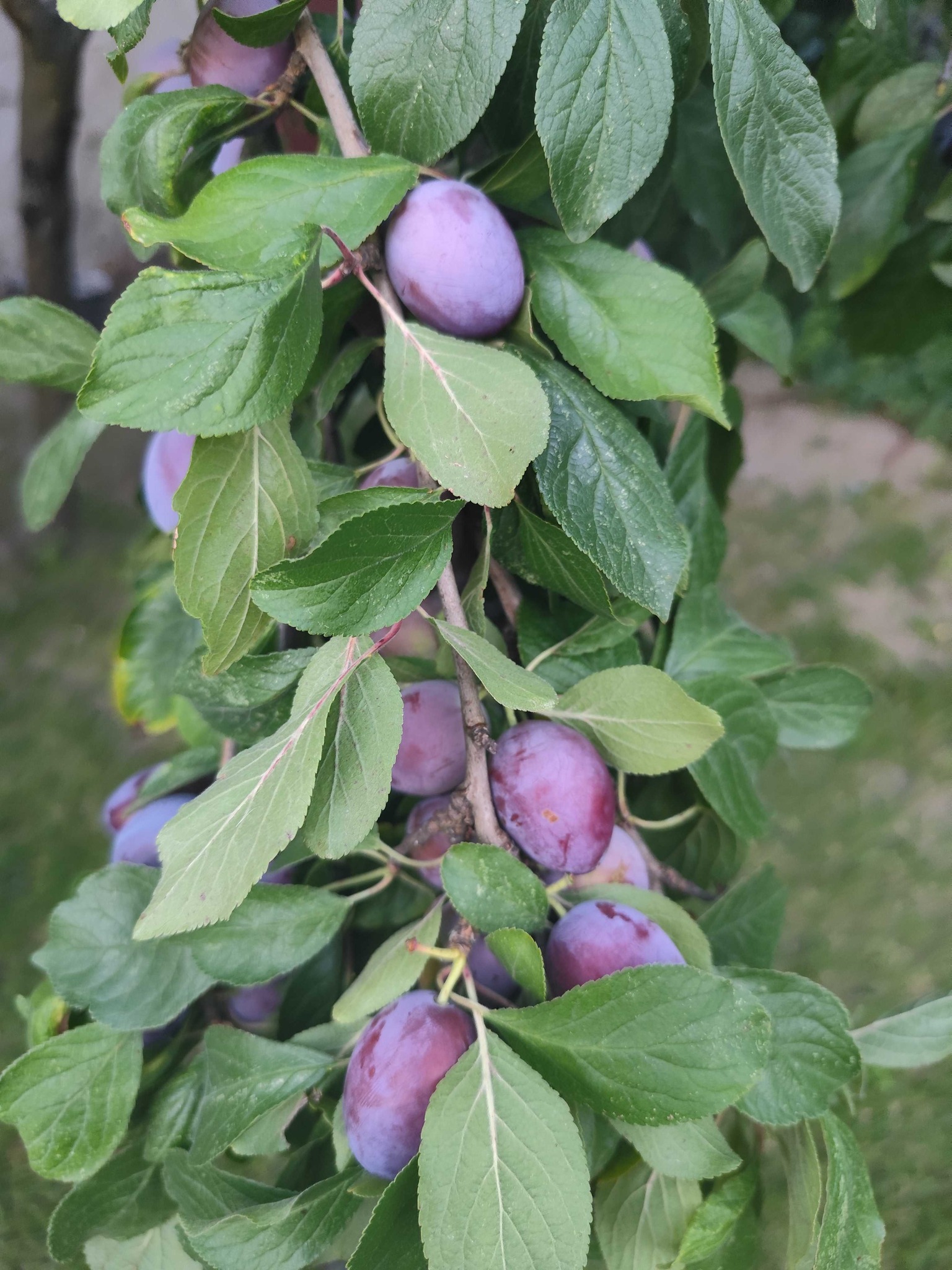
Plum tree
Prunus domestica
A deciduous tree featuring alternate, serrated green leaves and producing oval-shaped drupe fruits that mature to a purple or blue color with a whitish waxy coating.
- Light
- Full sun, requiring 6 to 8 hours of direct sunlight daily for optimal development and fruit production.
- Water
- Moderate water needs; regular deep watering is necessary, allowing the top couple of inches of soil to dry out between waterings. Drought tolerance is low to moderate once established.
- Growth
- Perennial deciduous tree with an upright to spreading canopy, typically reaching a mature height and spread of 15 to 25 feet with a moderate growth rate.
Care instructions
Provide full sun with at least six hours of direct sunlight daily. Water consistently to maintain evenly moist soil, especially during dry periods. Apply a balanced fertilizer in early spring and ensure well-draining soil to prevent root issues.
Growing details
Sunlight
Full sun, requiring 6 to 8 hours of direct sunlight daily for optimal development and fruit production.
Watering
Moderate water needs; regular deep watering is necessary, allowing the top couple of inches of soil to dry out between waterings. Drought tolerance is low to moderate once established.
Soil
Prefers fertile, loamy, well-draining soil with a neutral pH ranging from 6.0 to 7.0.
Hardiness zone
USDA Hardiness Zones 4 through 9, exhibiting good tolerance to cold winters.
Growth habit
Perennial deciduous tree with an upright to spreading canopy, typically reaching a mature height and spread of 15 to 25 feet with a moderate growth rate.
Bloom season
Blooms in early spring with small, five-petaled white or pale pink fragrant flowers before the leaves fully emerge.
Propagation
Typically propagated through grafting onto specific rootstocks or through hardwood cuttings and root suckers.
Common pests & issues
Susceptible to fungal infections such as black knot and brown rot, as well as pests like aphids and borers. Prevent through proper air circulation via pruning and keep the area free of fallen debris.
Similar species
Prunus cerasifera (Cherry plum), which generally features smaller fruits and a rounder growth habit, and Prunus spinosa (Blackthorn), which has much smaller, astringent fruits and thorny branches.