
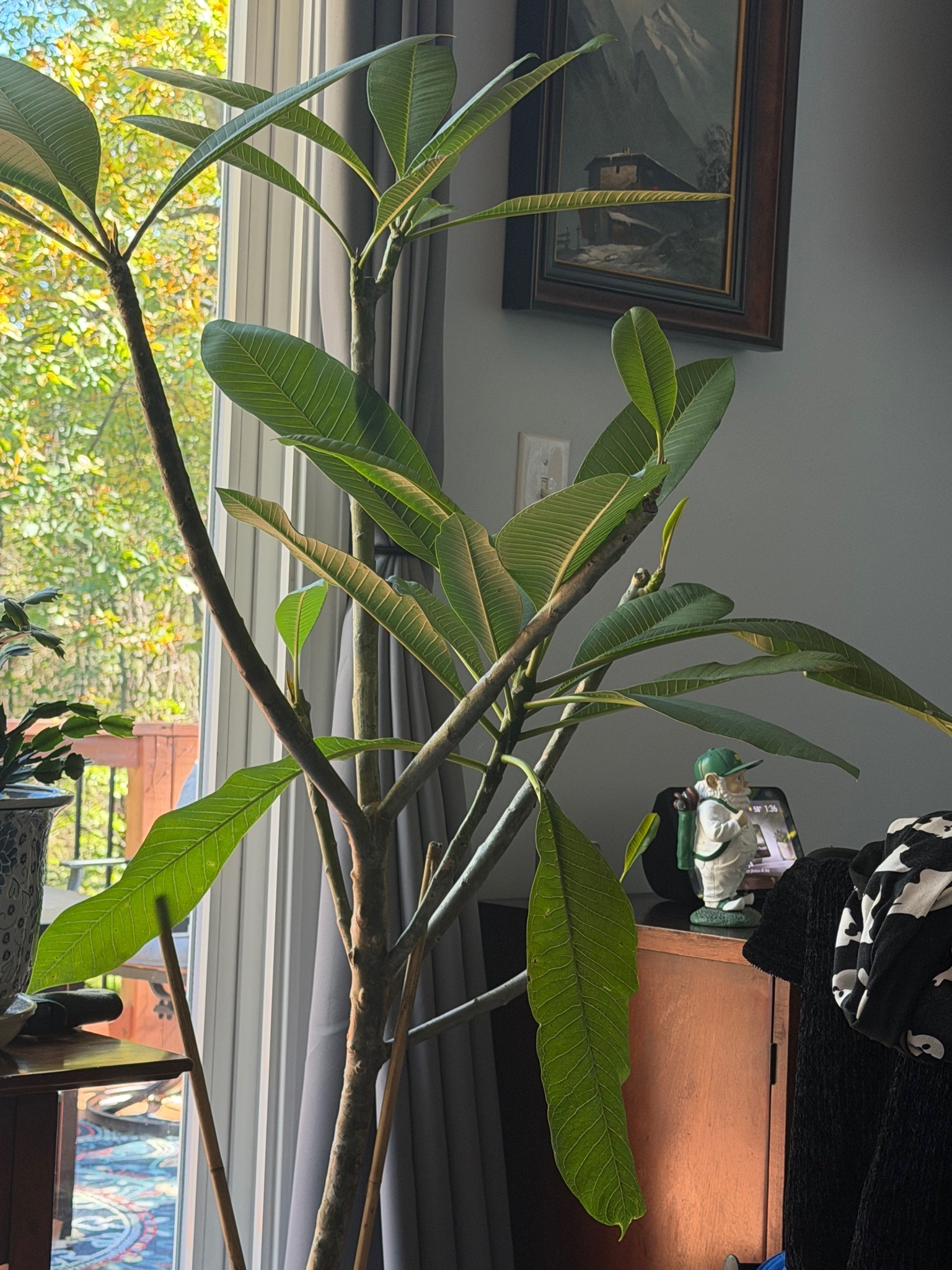
Plumeria
Plumeria rubra
A deciduous shrub or small tree characterized by thick, succulent stems, prominent leaf scars, and large, leathery, lance-shaped leaves clustered at the ends of the branches.
- Light
- Full sun, requiring a minimum of six hours of direct sunlight daily.
- Water
- Water deeply when the soil is completely dry to the touch. Highly drought-tolerant once established, but susceptible to root rot if overwatered or kept in poorly draining soil.
- Growth
- Perennial deciduous small tree or large shrub with an upright, branching habit, growing up to 15 to 25 feet tall outdoors, and smaller when grown in containers with a moderate growth rate.
Care instructions
Provide bright, direct sunlight for at least six hours a day. Water thoroughly only when the soil has completely dried out, reducing watering significantly during the cooler months. Use a well-draining, sandy or loamy potting mix and feed with a high-phosphorus fertilizer during the active growing season.
Growing details
Sunlight
Full sun, requiring a minimum of six hours of direct sunlight daily.
Watering
Water deeply when the soil is completely dry to the touch. Highly drought-tolerant once established, but susceptible to root rot if overwatered or kept in poorly draining soil.
Soil
Well-draining sandy, loamy, or potting mix with a neutral to slightly acidic pH range of 6.0 to 7.0.
Hardiness zone
USDA zones 10 through 12, sensitive to frost and freezing temperatures.
Growth habit
Perennial deciduous small tree or large shrub with an upright, branching habit, growing up to 15 to 25 feet tall outdoors, and smaller when grown in containers with a moderate growth rate.
Bloom season
Spring through autumn, producing highly fragrant flowers in shades of white, yellow, pink, and red, arranged in terminal clusters.
Propagation
Propagated easily from stem cuttings allowed to callus over for several days before planting in a well-draining rooting medium, or by seeds.
Common pests & issues
Susceptible to mealybugs, spider mites, and scale insects, as well as rust fungus and root rot caused by excessive moisture.
Similar species
Adenium obesum (desert rose), which shares thick succulent stems and showy flowers but typically maintains a shorter, more compact stature with smaller, more rounded leaves.