
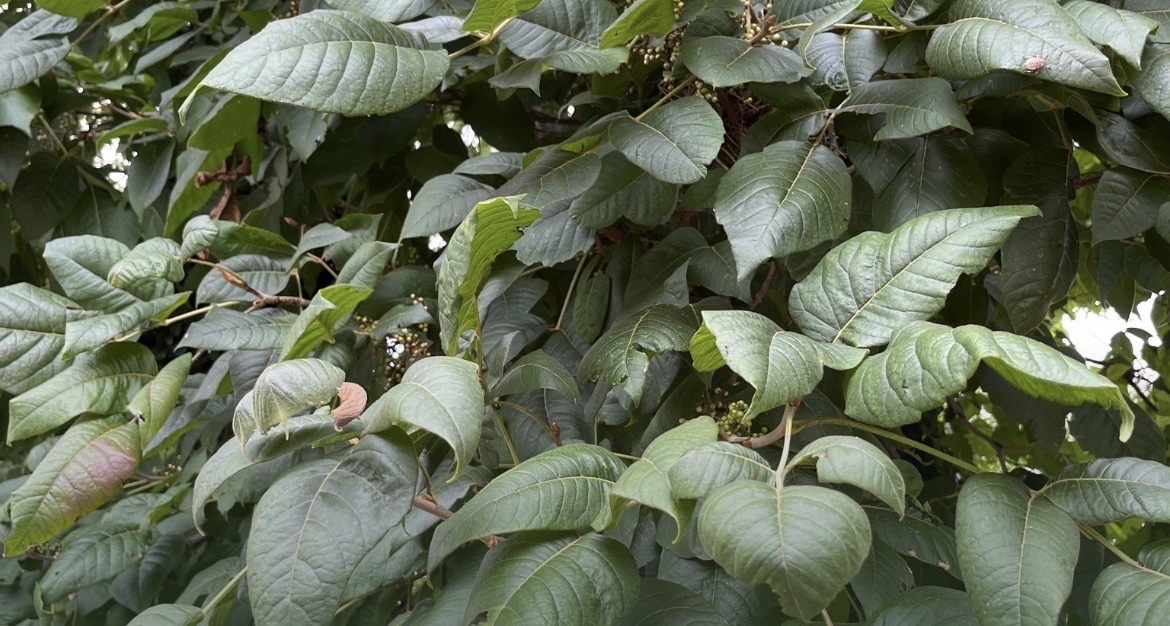
Poison Ivy
Toxicodendron radicans
A woody vine or shrub featuring compound leaves typically composed of three leaflets, with variable leaf margins and clusters of small greenish-white structures.
- Light
- Adapts to full sun, partial shade, and full shade conditions, receiving light across various hours of the day.
- Water
- Performs well with natural rainfall, exhibiting high drought tolerance once established.
- Growth
- Perennial climbing vine or low-growing shrub, capable of reaching significant heights up to 10 meters or more when supported by trees.
Care instructions
Thrives naturally in wild or woodland settings with variable light conditions and standard moisture levels. Best managed with protective measures when controlling growth in landscape settings.
Growing details
Sunlight
Adapts to full sun, partial shade, and full shade conditions, receiving light across various hours of the day.
Watering
Performs well with natural rainfall, exhibiting high drought tolerance once established.
Soil
Adaptable to a wide range of well-draining soil types, including sandy, loamy, and clay soils, across various pH levels.
Hardiness zone
USDA hardiness zones 3 through 9.
Growth habit
Perennial climbing vine or low-growing shrub, capable of reaching significant heights up to 10 meters or more when supported by trees.
Bloom season
Flowers in late spring to early summer, producing small, inconspicuous greenish-white clusters.
Propagation
Propagates naturally via seed dispersal by wildlife and underground rhizomes.
Common pests & issues
Generally resilient against major pests and diseases in natural environments.
Similar species
Can be confused with Virginia Creeper (Parthenocissus quinquefolia), which typically has five leaflets, and Boxelder (Acer negundo) seedlings, which have opposite branching.
User notes
Vine growing on tree. Small green clusters of seeds. Vine has yellow hair-like growths.