
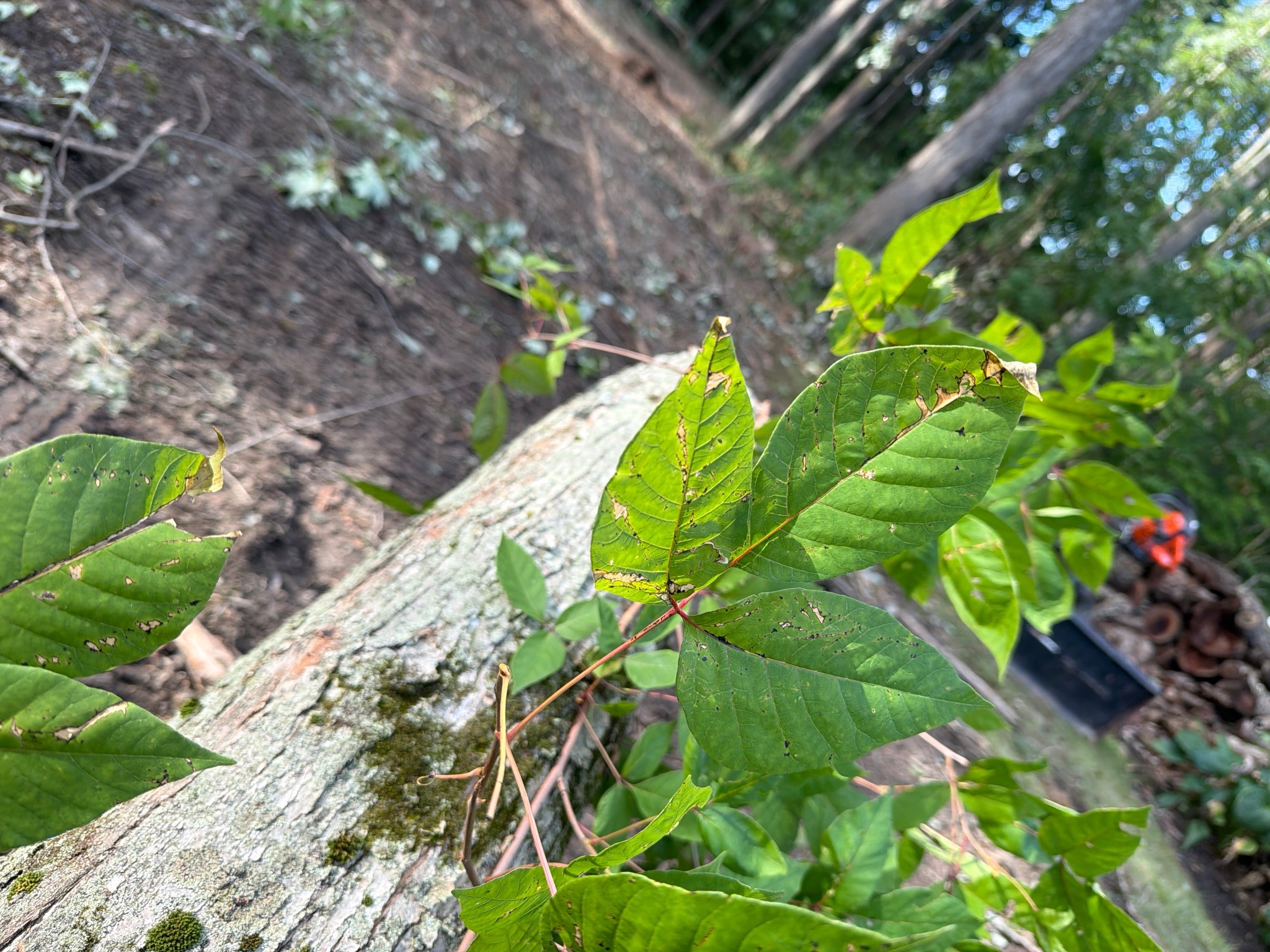
Poison Ivy
Toxicodendron radicans
A woody vine or shrub with alternate compound leaves divided into three leaflets, known for its ability to climb surfaces or grow as a ground cover.
- Light
- Adapts to full sun, partial shade, and full shade conditions.
- Water
- Moderate water requirements once established, highly resilient and tolerant of various moisture levels.
- Growth
- Perennial vine or low shrub, climbing up to 10-25 meters via aerial rootlets or forming dense ground covers.
Care instructions
This species typically grows wild in wooded areas, thickets, and disturbed soils without human cultivation. It thrives in various light conditions and adapts to diverse soil types.
Growing details
Sunlight
Adapts to full sun, partial shade, and full shade conditions.
Watering
Moderate water requirements once established, highly resilient and tolerant of various moisture levels.
Soil
Prefers well-draining soils and tolerates sand, loam, or clay with a wide pH range.
Hardiness zone
USDA hardiness zones 3 through 9.
Growth habit
Perennial vine or low shrub, climbing up to 10-25 meters via aerial rootlets or forming dense ground covers.
Bloom season
Spring to early summer, producing small, inconspicuous greenish-white flowers followed by whitish-yellow drupes.
Propagation
Propagates naturally via seeds dispersed by wildlife and through underground rhizomes or rooting stems.
Common pests & issues
Generally resilient against major pests and diseases in its native habitat.
Similar species
Box elder (Acer negundo) seedlings and Virginia creeper (Parthenocissus quinquefolia), distinguished by having five leaflets instead of three.