
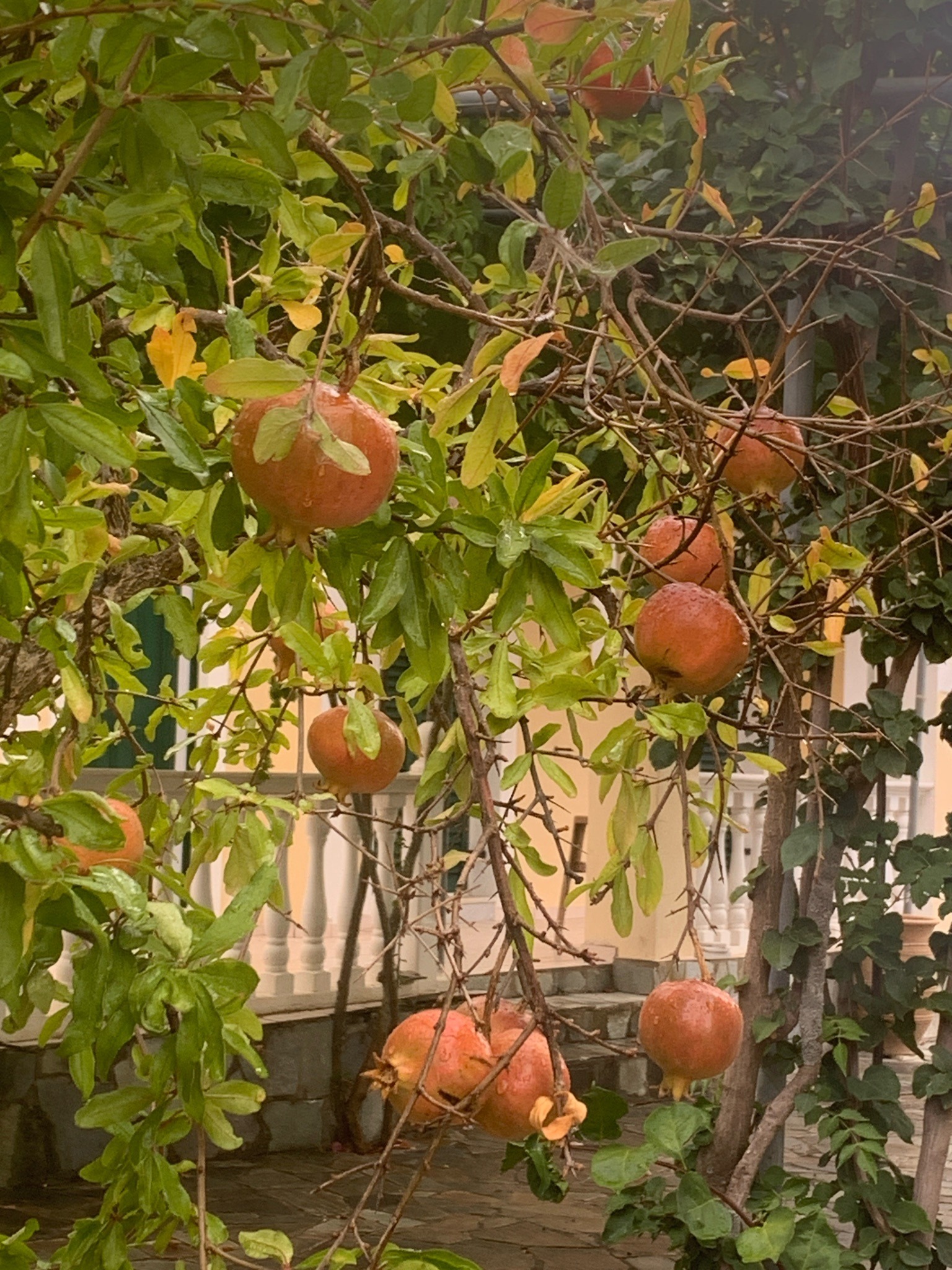
Pomegranate
Punica granatum
A deciduous shrub or small tree featuring glossy, lance-shaped green leaves, thorny branches, showy trumpet-shaped flowers, and large, round fruit enclosed in a tough, leathery rind.
- Light
- Full sun, requiring at least 6 to 8 hours of direct sunlight daily.
- Water
- Requires regular watering during the growing season to maintain soil moisture, letting the soil dry out slightly between waterings. Mature specimens tolerate moderate drought, but consistent watering prevents fruit splitting.
- Growth
- A perennial, multi-stemmed deciduous shrub or small tree growing typically 10 to 20 feet tall with a similar spread, exhibiting a moderate growth rate.
Care instructions
Provide full sun for optimal flowering and fruit formation. Water deeply when the topsoil feels dry, allowing it to be moderately drought-tolerant once established. Plant in well-draining soil and apply a balanced, slow-release fertilizer in early spring.
Growing details
Sunlight
Full sun, requiring at least 6 to 8 hours of direct sunlight daily.
Watering
Requires regular watering during the growing season to maintain soil moisture, letting the soil dry out slightly between waterings. Mature specimens tolerate moderate drought, but consistent watering prevents fruit splitting.
Soil
Prefers loamy, sandy, or clay soils with excellent drainage and a neutral to slightly alkaline pH range of 5.5 to 7.0.
Hardiness zone
USDA Hardiness Zones 8 through 11, tolerating winter lows down to approximately 10 degrees Fahrenheit (-12 degrees Celsius).
Growth habit
A perennial, multi-stemmed deciduous shrub or small tree growing typically 10 to 20 feet tall with a similar spread, exhibiting a moderate growth rate.
Bloom season
Blooms from late spring through mid-summer, producing vibrant bright orange-red, trumpet-shaped flowers that appear singly or in small clusters.
Propagation
Propagated primarily through hardwood or softwood stem cuttings taken during the dormant season or growing period, and occasionally via seeds.
Common pests & issues
Susceptible to fungal leaf spots, twig dieback, and root rot in poorly draining soils. Pests include aphids, whiteflies, and fruit borers, which can be managed with proper sanitation and appropriate horticultural oils.
Similar species
Persimmon (Diospyros kaki), which features larger, broader leaves and lacks the distinct leathery calyx crown characteristic of this species.