
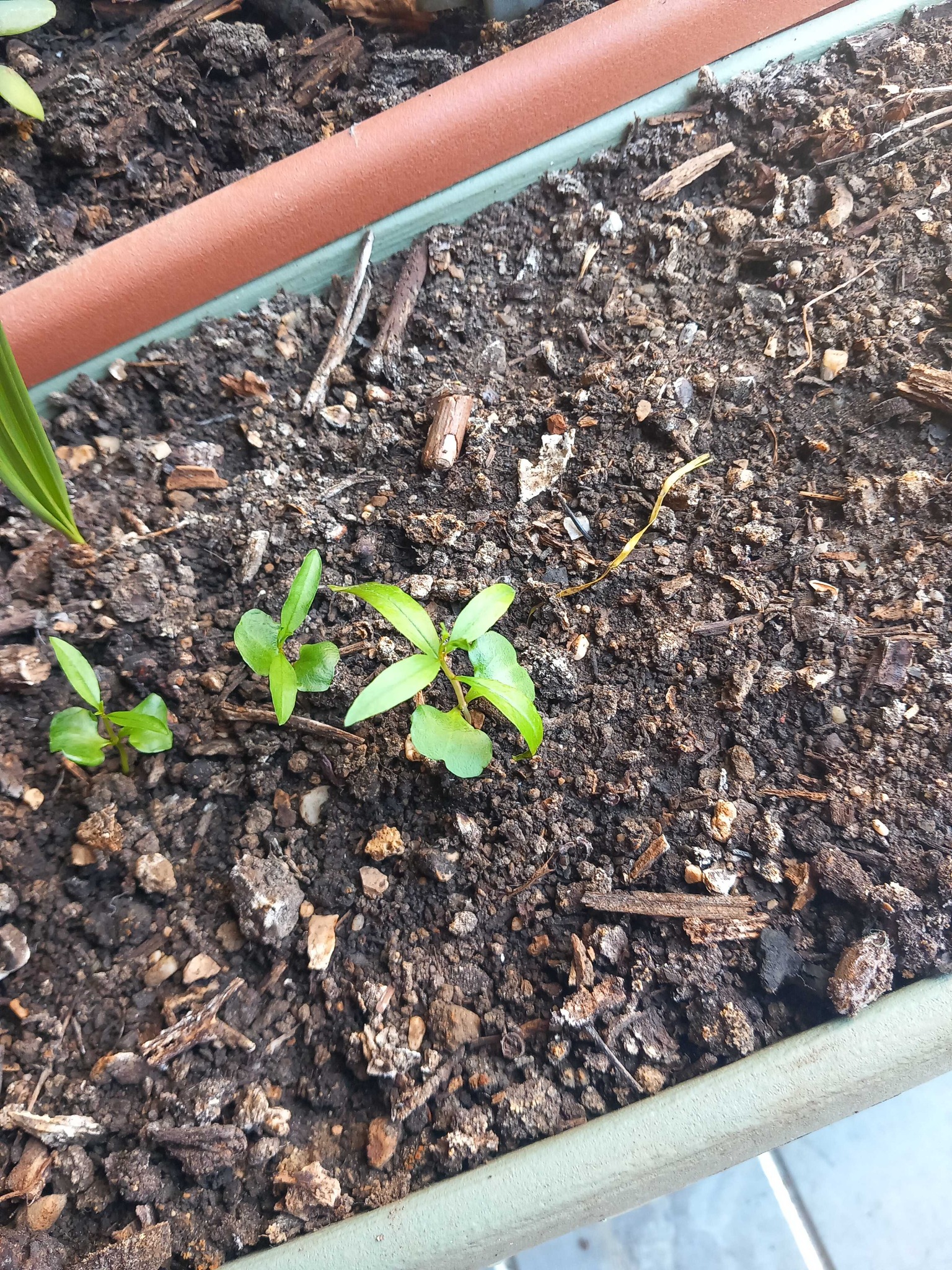
Pomegranate
Punica granatum
A deciduous shrub or small tree. Seedlings exhibit small, lanceolate, glossy green leaves that emerge from reddish stems. The cotyledons (seed leaves) are rounded, while the true leaves are narrower and pointed.
- Light
- Full sun, requiring at least 6 to 8 hours of direct sunlight per day for optimal growth and fruit production.
- Water
- Frequent watering for seedlings to keep soil lightly moist. Mature plants are drought-tolerant but produce better fruit with deep, weekly watering during dry spells. Avoid over-watering to prevent root rot.
- Growth
- Perennial deciduous shrub or small tree, typically reaching 6-20 feet in height. Seedlings have a slow to moderate growth rate.
Care instructions
Pomegranates thrive in full sun and well-draining soil. As seedlings, they need consistent moisture but should not be waterlogged. Once established, they are drought-tolerant and require minimal fertilization, ideally in early spring.
Growing details
Sunlight
Full sun, requiring at least 6 to 8 hours of direct sunlight per day for optimal growth and fruit production.
Watering
Frequent watering for seedlings to keep soil lightly moist. Mature plants are drought-tolerant but produce better fruit with deep, weekly watering during dry spells. Avoid over-watering to prevent root rot.
Soil
Adaptable to various soils but prefers well-draining, loamy soil with a pH between 5.5 and 7.0.
Hardiness zone
8-11 (USDA). Most varieties can tolerate temperatures down to 10-15°F (-12 to -9°C).
Growth habit
Perennial deciduous shrub or small tree, typically reaching 6-20 feet in height. Seedlings have a slow to moderate growth rate.
Bloom season
Spring and early summer; flowers are funnel-shaped, typically bright red or orange, though some cultivars have white or variegated blooms.
Propagation
Easily grown from seeds, hardwood cuttings, or air layering. Seed-grown plants may take 3-5 years to fruit and may not be identical to the parent.
Common pests & issues
Aphids, whiteflies, and pomegranate butterfly larvae. Fungal issues like leaf spot or fruit rot can occur in humid climates with poor drainage.
Similar species
Crepe Myrtle (Lagerstroemia) seedlings look similar but lack the specific leaf venation and reddish tint of pomegranate stems.