
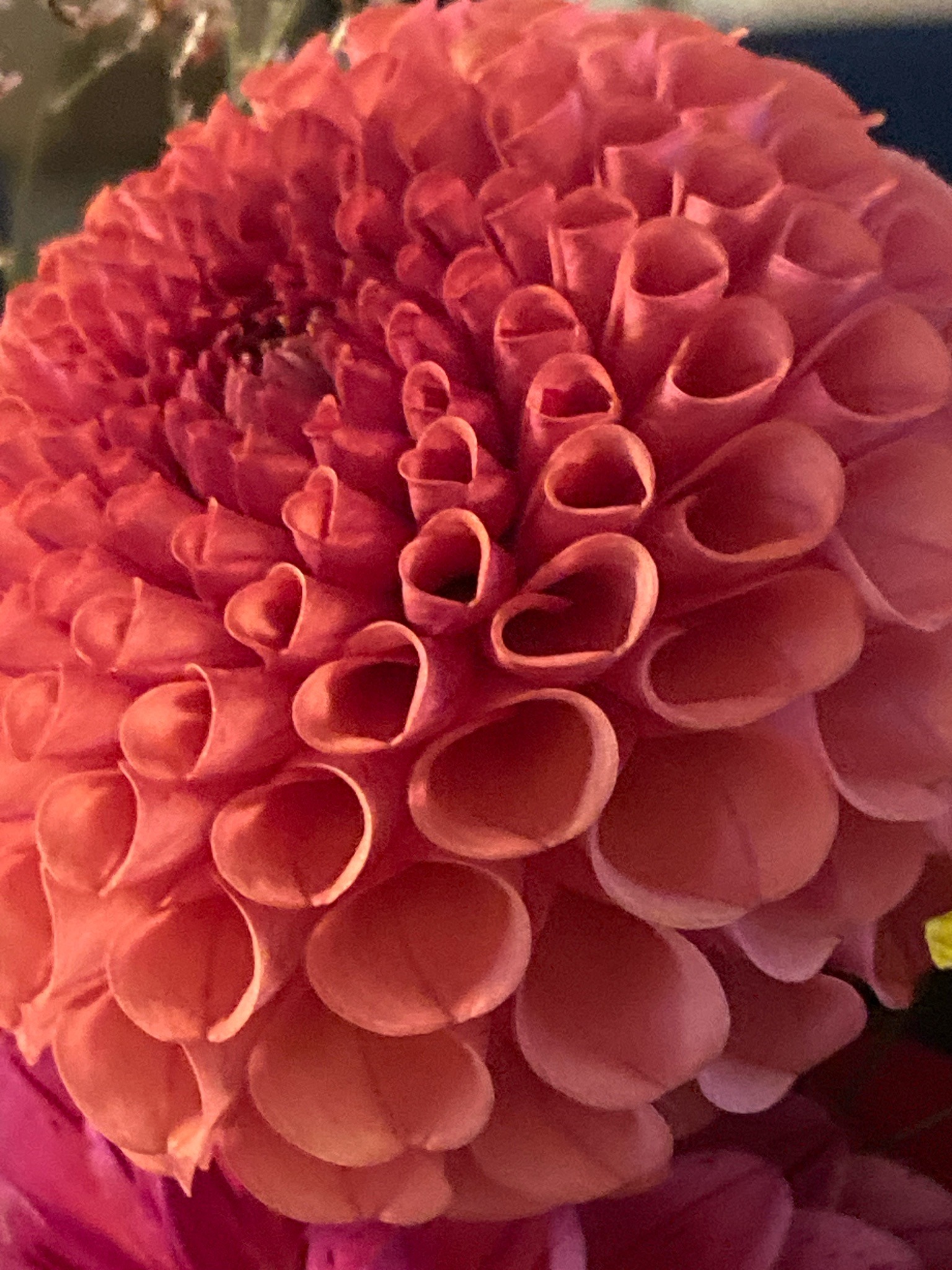
Pompom Dahlia
Dahlia pinnata
A striking perennial plant featuring globular, ball-shaped flower heads composed of tightly rolled, tubular petals arranged in a precise, geometric pattern.
- Light
- Full sun, requiring 6 to 8 hours of direct sunlight daily
- Water
- Water deeply 1 to 2 times per week depending on rainfall and heat. Increase frequency during extended dry periods, ensuring the soil drains well to prevent root saturation.
- Growth
- Tender herbaceous perennial with an upright, bushy growth habit, reaching mature heights of 2 to 5 feet and spreads of 2 to 3 feet with a moderate growth rate
Care instructions
Provide full sun with at least six to eight hours of direct light daily. Plant in well-draining soil enriched with organic matter. Water deeply when the top inch of soil becomes dry, avoiding overhead watering to keep foliage dry. Apply a low-nitrogen, high-phosphorus fertilizer monthly during the growing season to encourage abundant flowering.
Growing details
Sunlight
Full sun, requiring 6 to 8 hours of direct sunlight daily
Watering
Water deeply 1 to 2 times per week depending on rainfall and heat. Increase frequency during extended dry periods, ensuring the soil drains well to prevent root saturation.
Soil
Rich, loamy, well-draining soil with a neutral pH between 6.0 and 7.0
Hardiness zone
USDA zones 8 to 11 as a perennial; tubers can be dug up and stored indoors over winter in colder zones (zones 3 to 7)
Growth habit
Tender herbaceous perennial with an upright, bushy growth habit, reaching mature heights of 2 to 5 feet and spreads of 2 to 3 feet with a moderate growth rate
Bloom season
Mid-summer through the first autumn frost, producing spherical, pompom-shaped flower heads in shades of pink, red, orange, yellow, and purple
Propagation
Propagated primarily through spring division of overwintered tubers ensuring each section has an active 'eye', or through stem cuttings taken in spring
Common pests & issues
Susceptible to powdery mildew in humid conditions and root rot in poorly draining soils. Common insect pests include aphids, spider mites, and slugs, which can be managed with appropriate horticultural soaps or cultural practices
Similar species
Ball Dahlias, which are similar in form but feature slightly larger and more flattened flower heads compared to the smaller, fully spherical Pompom varieties