
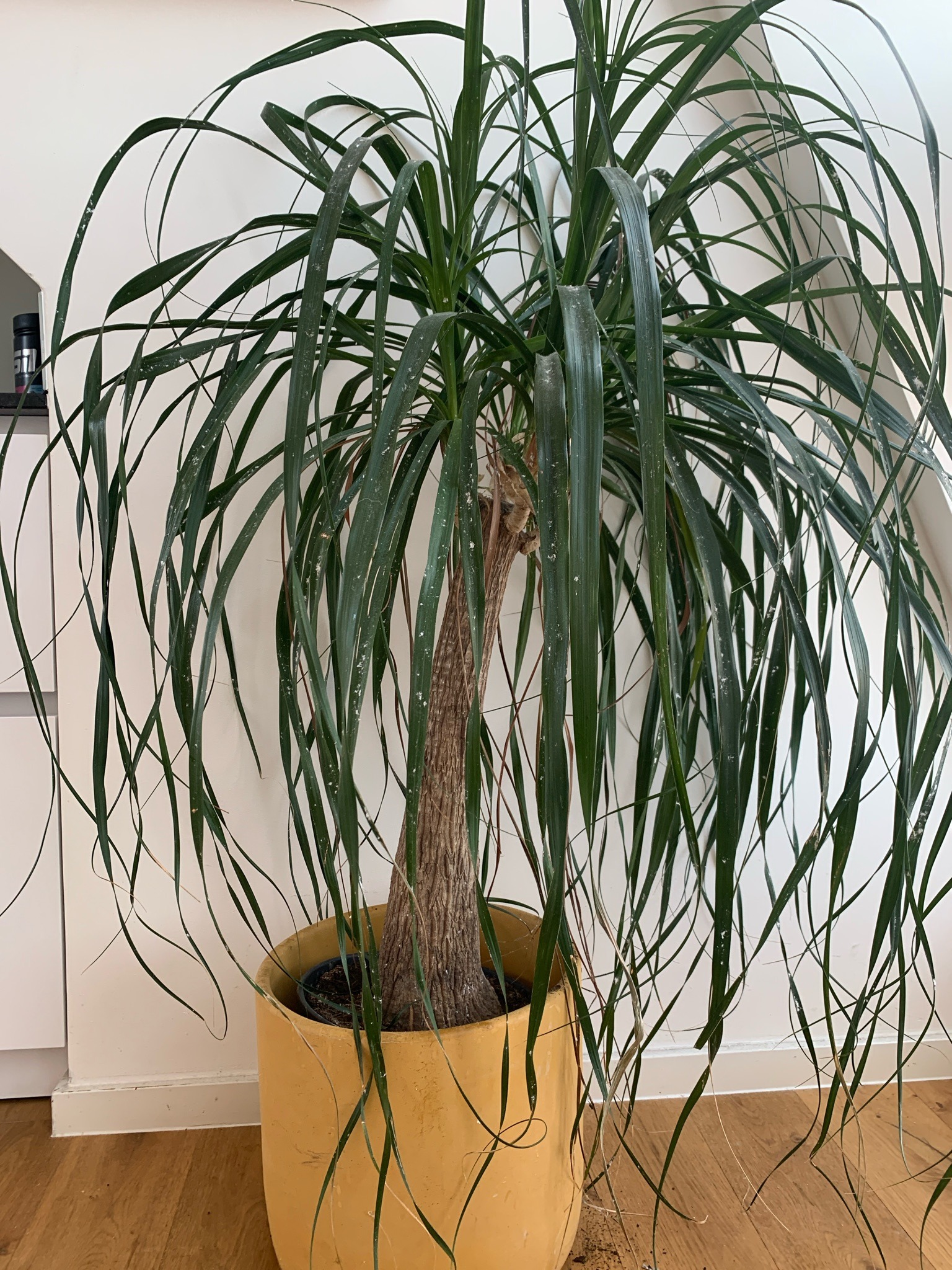
Ponytail Palm
Beaucarnea recurvata
An evergreen succulent tree characterized by a swollen, bulbous base that stores water, topped with a crown of long, narrow, ribbon-like green leaves that cascade downward.
- Light
- Full sun to bright indirect light, ideally 6 or more hours of bright light daily.
- Water
- Water deeply but infrequently. Allow the soil to dry out completely between watering sessions due to its high drought tolerance and water-storing trunk. Reduce watering significantly during the winter months.
- Growth
- Slow-growing perennial tree form, reaching mature indoor heights of 3 to 8 feet and outdoor heights of up to 20 to 30 feet, with a spread of 3 to 10 feet.
Care instructions
Provide bright, indirect to direct light, water thoroughly only when the soil has dried out completely, use a well-draining cactus or succulent soil mix, and feed sparingly during the spring and summer growing season with a balanced, diluted liquid fertilizer.
Growing details
Sunlight
Full sun to bright indirect light, ideally 6 or more hours of bright light daily.
Watering
Water deeply but infrequently. Allow the soil to dry out completely between watering sessions due to its high drought tolerance and water-storing trunk. Reduce watering significantly during the winter months.
Soil
Fast-draining, sandy or gravelly soil mix designed for cacti and succulents, with a neutral to slightly acidic pH range of 6.0 to 7.5.
Hardiness zone
USDA zones 10 to 11. It is sensitive to frost and must be kept indoors or protected in cooler climates.
Growth habit
Slow-growing perennial tree form, reaching mature indoor heights of 3 to 8 feet and outdoor heights of up to 20 to 30 feet, with a spread of 3 to 10 feet.
Bloom season
Rarely blooms indoors. When grown outdoors in optimal mature conditions, it produces large panicles of small, creamy-white flowers during the summer.
Propagation
Propagated primarily by removing small offsets or pups that grow at the base of the plant during the spring, or occasionally from seed.
Common pests & issues
Prone to root rot if overwatered or kept in poorly draining soil. May occasionally attract mealybugs or spider mites, which can be treated with insecticidal soap.
Similar species
Often confused with true palms (Arecaceae) or Dracaena species, but distinguished easily by its distinctly swollen, woody caudex base at the soil line.